In this important book of Quaker spirituality, Jim Newby writes about his spiritual journey and the ways he has sought to navigate an increasingly complex world and understand his purpose in it.
That American forces should torture prisoners in their "e;war"e; on terror is disturbing, but more shocking still is that the highest officials of the Bush-Cheney administration planned, authorized, encouraged, and concealed these war crimes.
Together at the Table is the personal story and public message of Bishop Karen Oliveto, the first openly LGBTQ person to be elected a bishop in The United Methodist Church.
Too often, all oppressed people in America are lumped together under the moniker "e;people of color,"e; as if each group's experience under the yoke of systemic racism has the same economic and social repercussions.
Packed with over 200 color photos, this visual journey through Black history and the Civil Rights Movement is told through the objectsbuttons, badges, flyers, pennants, posters, and moredesigned by activists as tools to advance the fight for justice and freedom, offering a unique perspective on the Civil Rights Movement from Emancipation through the present day.
Shaker Fancy Goods tells the story of the Shaker Sisters of the nineteenth and early twentieth century who responded to the economic perils of the Industrial Revolution by inventing a lucrative industry of their ownFancy Goods, a Victorian term for small adorned household objects made by women for women.
This special issue of Studies in Law, Politics and Society focuses on law and the liberal state; presenting an interdisciplinary and multifaceted approach to analysis of law and liberty.
An underground sensation, Secret and Suppressed confronts the reader with disquieting revelations on mind control, secret societies, media disinformation, cults and elite cabals.
Introduction to Global Social Problems introduces undergraduate students to national and international social problems from a critical sociological perspective.
From the Great Depression in the twentieth century to the Great Recession in the twenty-first, systemic banking crises have been a recurring problem for both developing and developed countries.
This book offers a comprehensive theory of invisibility as a critical sociological concept, addressing the relationship between social suffering and invisibilization.
This book examines the forms and practices of Irish confinement from the 19th century to present-day to explore the social and political failings of 20th and 21st century postcolonial Ireland.
This book investigates how the externalisation of EU migration policies is implemented in Tunisia after the fall of the Ben Ali regime in 2011 through the involvement of civil society organisations.
This edited volume discusses critically discursive claims about the theological foundations connecting Islam to certain manifestations of violent extremism.
This book seeks to understand how to internationalize curriculum without imperializing or imposing the old, colonial, and so-called first-world conceptualizations of education, teaching, and learning.
This book offers a materialist critique of mainstream human rights discourse in the period following 9/11, examining literary works, critical histories, international declarations, government statutes, NGO manifestos, and a documentary film.
This volume seeks to understand the role and function of religious-based organizations in strengthening associational life through the provision of social services, thereby legitimizing a new role for faith in the formerly secular public sphere.
This volume engages in conversation with the thinking and work of Max Charlesworth as well as the many questions, tasks and challenges in academic and public life that he posed.
Amidst ongoing allegations of inappropriate behavior and trafficking during UN peacekeeping missions, this volume takes a step back to analyze the post-war and peacekeeping contexts in which prostitution flourishes.
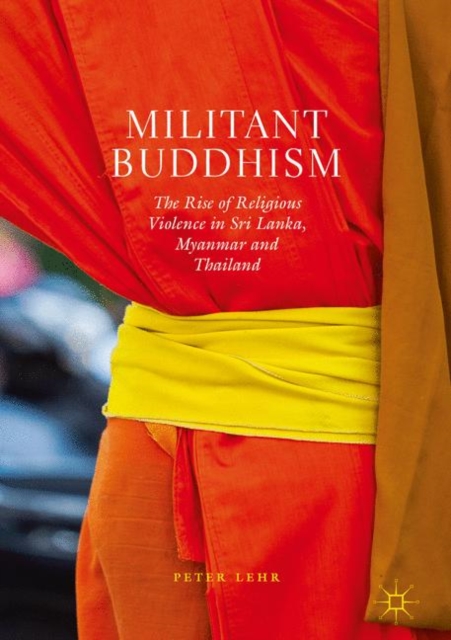
Against the backdrop of the ongoing Rohingya crisis, this book takes a close and detailed look at the rise of militant Buddhism in Sri Lanka, Burma and Thailand, and especially at the issues of 'why' and 'how' around it.