In this edited volume, authors explore the ways in which departments, programs, and centers at public research universities are working to better engage students in the work of citizenship and social justice.
The aim of this book is to delve into the impact of the Information and Communications Technologies in the criminal prevention and investigation, by addressing the state of the art of different measures and its implementation in different legal systems vis a vis the protection of human rights.
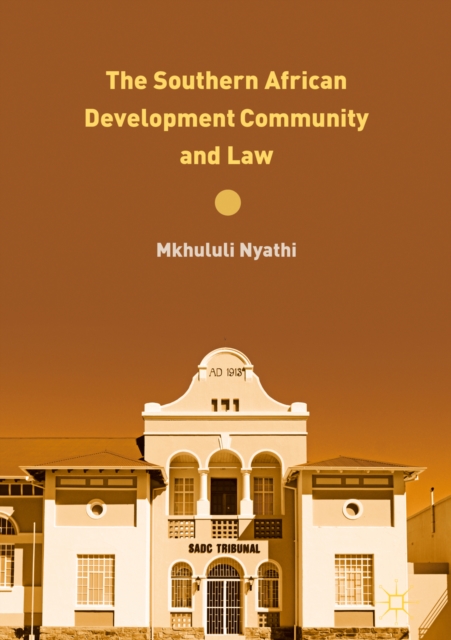
This book analyses whether the design of the institutions of Southern African Development Community (SADC) reflects the community's treaty objectives and principles of democracy and the rule of law.
This book provides original and controversial contributions into specific areas of Johannine studies, along with defenses of various traditional theological interpretations of John that are commonly overlooked in New Testament scholarship.
This edited collection evaluates the relationship between Marxism and religion in two ways: Marxism's treatment of religion and the religious aspects of Marxism.
This book offers fresh insights to enhance and diversify our understanding of the modern history of the state and societies in today's Jordan, while also providing examples of why and how scholars can challenge the static and discursively government-minded approaches to minorities and minoritisation - especially the traditional emphasis on demographic balances.
This book brings together leading authorities from the fields of international human rights law, criminology, legal medicine, and political science with international human rights judges and UN experts to analyze the current situation of detainees in Europe, the Americas and Africa.
This volume brings together tributes to Judith Ennew's work and approach based on issues related to children she once referred to as 'out of place', that is to say children whose living conditions and ways of life appear far removed from Western images of childhood.
This new edited collection brings together historians and social scientists to engage with the global history of Universal Basic Income (UBI) and offer historically-rich perspectives on contemporary debates about the future of work.
This book maps various national legal responses to gender mobility, including sex and name registration, access to gender modification interventions, and anti-discrimination protection (or lack thereof) and regulations.
This book focuses on human rights education (HRE) in higher education, with an emphasis on supporting undergraduate education for social justice and global citizenship at the institutional, classroom, and community levels.
This book argues that political Islam (represented by its moderate and militant forms) has failed to govern effectively or successfully due to its inability to reconcile its discursive understanding of Islam, centered on literal justice, with the dominant neo-liberal value of freedom.
This is an autobiography of an unusual and versatile woman, focusing on her academic development and achievements as well as her international activism.
This book addresses the 'three moments' in lesbian, gay, bisexual, transgender and intersex (LGBTI) asylum seekers' and refugees' efforts to secure protection: The reasons for their flight, the Refugee Status Determination process, and their integration into the host community once they are recognized refugee status.
Human trafficking has come to be seen as a growing threat, and transnational advocacy networks opposed to human trafficking have succeeded in establishing trafficking as a pressing political problem.
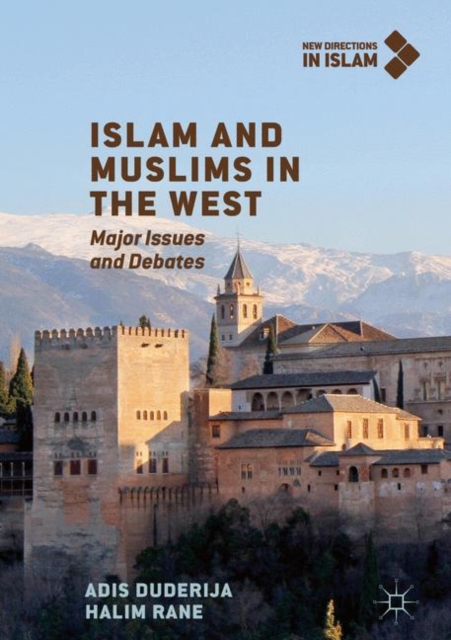
This book analyzes the development of Islam and Muslim communities in the West, including influences from abroad, relations with the state and society, and internal community dynamics.
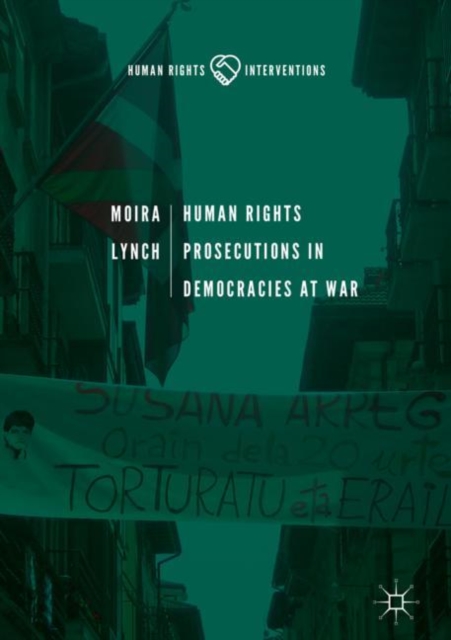
Though many of the longest and most devastating internal armed conflicts have been fought within the boundaries of democratic states, these countries employ some of the highest numbers of human rights prosecutions.
This volume presents insights from five years of intensive Holocaust, genocide, and mass atrocity education at Queensborough Community College (QCC) of the City University of New York (CUNY), USA, to offer four approaches-Arts-Based, Textual, Outcomes-Based, and Social Justice-to designing innovative, integrative, and differentiated pedagogies for today's college students.
This edited collection explores how contemporary Latin American cinema has dealt with and represented issues of human rights, moving beyond many of the recurring topics for Latin American films.
This book attempts to establish how courts of general jurisdiction differ from specialized human rights courts in their approach to the implementation and development of international human rights.
This book provides an overview of theoretical, empirical, and clinical conceptualizations of mental health following exposure to human rights violations (HRV).
This volume provides a wide spectrum description analysis of the contemporary and well established child protection systems in a range of countries, such as Australia, Canada, Netherlands and Spain.
In its portrayal of Judaism as a worldwide conspiracy dedicated to the destruction of Christian civilization, the Protocols of the Learned Elders of Zion remains one of the most infamous documents ever written.
This book offers a unique insight into the ways in which education systems, governance, and actors at multiple scales interact in initial steps towards building peace.
This book examines how the prison environment, architecture and culture can affect mental health as well as determine both the type and delivery of mental health services.
With the transformation of the role of the welfare state, the "e;social engagement"e; and "e;active participation"e; were taking the place of passive benefits.
This book examines human rights as political battlefields, spaces that are undergoing constant changes in which political conflicts are expressed by a translation process within networks of interactions.
Despite a popular view that trials are the focal point of the criminal justice process, in reality, the most frequent way a criminal matter resolves is not through a fiercely fought battle between state and defendant, but instead through a process of negotiation between the prosecution and defence, resulting in a defendant pleading guilty in exchange for agreed concessions from the prosecution.