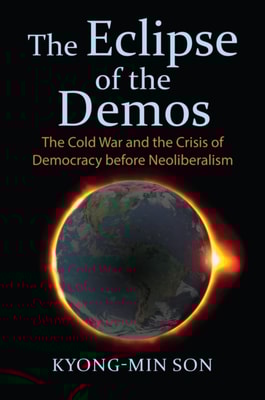
In March 1977, John "e;Johnny Rotten"e; Lydon of the punk band the Sex Pistols looked over the Berlin wall onto the grey, militarized landscape of East Berlin, which reminded him of home in London.
In March 1977, John "e;Johnny Rotten"e; Lydon of the punk band the Sex Pistols looked over the Berlin wall onto the grey, militarized landscape of East Berlin, which reminded him of home in London.
With the passage of the Social Security Act in 1935, the US government ushered in a new era of social welfare policies, to counteract the devastation of The Great Depression.
Periodizing contemporary fiction against the backdrop of neoliberalism, After Critique identifies a notable turn away from progressive politics among a cadre of key twenty-first-century authors.
In this sequel to his prize-winning book, The Eyes of the People, Jeffrey Edward Green draws on philosophy, history, social science, and literature to ask what democracy can mean in a world where it is understood that socioeconomic status to some degree will always determine opportunities for civic engagement and career advancement.
Since Gideon Rose's 1998 review article in the journal World Politics and especially following the release of Lobell, Ripsman, and Taliaferro's 2009 edited volume Neoclassical Realism, the State, and Foreign Policy, neoclassical realism has emerged as major theoretical approach to the study of foreign policy on both sides of the Atlantic.
As Frances Fox Piven and Richard Cloward argued in the early seventies, in a capitalist economy, social welfare policies alternatingly serve political and economic ends as circumstances dictate.
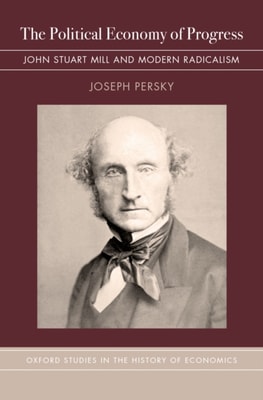
While there had been much radical thought before John Stuart Mill, Joseph Persky argues it was Mill, as he moved to the left, who provided the radical wing of liberalism with its first serious analytical foundation, a political economy of progress that still echoes today.
While there had been much radical thought before John Stuart Mill, Joseph Persky argues it was Mill, as he moved to the left, who provided the radical wing of liberalism with its first serious analytical foundation, a political economy of progress that still echoes today.
Periodizing contemporary fiction against the backdrop of neoliberalism, After Critique identifies a notable turn away from progressive politics among a cadre of key twenty-first-century authors.
This spirited analysis--and defense--of American liberalism demonstrates the complex and rich traditions of political, economic, and social discourse that have informed American democratic culture from the seventeenth century to the present.
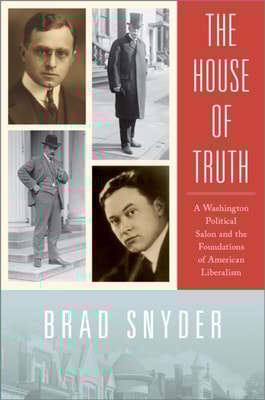
In 1912, a group of ambitious young men, including future Supreme Court justice Felix Frankfurter and future journalistic giant Walter Lippmann, became disillusioned by the sluggish progress of change in the Taft Administration.
In 1912, a group of ambitious young men, including future Supreme Court justice Felix Frankfurter and future journalistic giant Walter Lippmann, became disillusioned by the sluggish progress of change in the Taft Administration.
As Frances Fox Piven and Richard Cloward argued in the early seventies, in a capitalist economy, social welfare policies alternatingly serve political and economic ends as circumstances dictate.
In this sequel to his prize-winning book, The Eyes of the People, Jeffrey Edward Green draws on philosophy, history, social science, and literature to ask what democracy can mean in a world where it is understood that socioeconomic status to some degree will always determine opportunities for civic engagement and career advancement.
A GUARDIAN, NEW STATESMAN AND SPECTATOR BOOK OF THE YEAR 'A whodunnit political page-turner' Melissa Benn, New Statesman 'The best political book I have read for a long while' Rod Liddle, The Spectator From the No.
Two of the UK's leading economists call for an end to extreme individualism as the engine of prosperity 'provocative but thought-provoking and nuanced' TelegraphThroughout history, successful societies have created institutions which channel both competition and co-operation to achieve complex goals of general benefit.
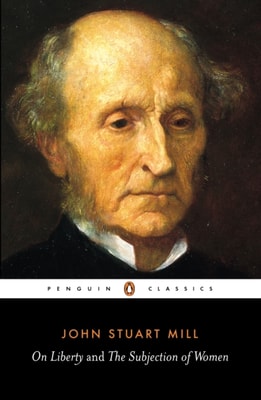
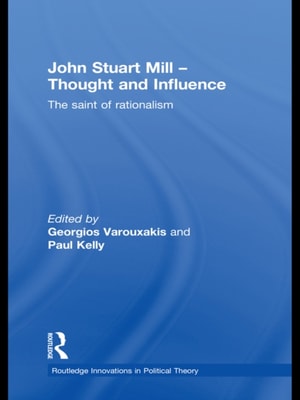
A prodigiously brilliant thinker who sharply challenged the beliefs of his age, the political and social radical John Stuart Mill was the most influential English-speaking philosopher of the nineteenth century.
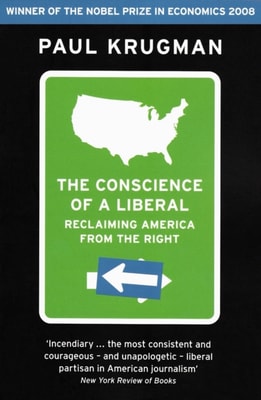
In The Conscience of a Liberal Paul Krugman, one of the US s most respected economists and outspoken commentators, lays out his vision of a New Deal for a fairer society.
The American conservative movement as we know it faces an existential crisis as the nations demographics shift away from its core constituentsolder white middle-class Christians.
More than two hundred years after his birth, and 150 years after the publication of his most famous essay On Liberty, John Stuart Mill remains one of the towering intellectual figures of the Western tradition.
The story of black conservatives in the Republican Party from the New Deal to Ronald ReaganCovering more than four decades of American social and political history, The Loneliness of the Black Republican examines the ideas and actions of black Republican activists, officials, and politicians, from the era of the New Deal to Ronald Reagan's presidential ascent in 1980.
One of the most important and controversial books in modern American politics, The Emerging Republican Majority (1969) explained how Richard Nixon won the White House in 1968-and why the Republicans would go on to dominate presidential politics for the next quarter century.
This book discusses a broadly understood phenomenon of protest from several perspectives, including historical, cultural, social, political, environmental and semiotic.
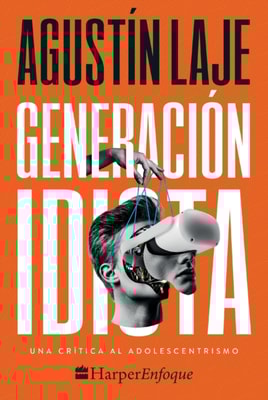
Generación idiota nos ofrece una inmersión profunda en la desaparición de la sociedad intergeneracional y el auge de la mentalidad adolescente, que ha causado un gran daño a la política y a la sociedad.
The most complete picture to date of the moral worlds of the political left and right and how their different views relate to specific political issues The left and right will always have strong policy disagreements, but constructive debate and negotiation are not possible when each side demonizes the other.
*A Waterstones, Financial Times and New Statesman Book of the Year*'A tremendous book, timely, wise, authoritative and clear' Stephen Fry'The most excellent book substantive and beautifully expressed suggestions for improving almost everything James O'Brien 'Clear, brave, compelling' David Miliband'Inspiring .
A Brookings Institution Press and the Hoover Institution publicationAmerica's polarized politics are largely disconnected from mainstream public preferences.
Winner: Foundations of Political Theory First Book AwardAs populism presaging authoritarianism surges worldwide and political rights and civil liberties erode, pundits, politicians, and political scientists agree: democracy is in crisis.