Unashamedly polemical, this reissue of Freedom & Equality, first published in 1986, presents a strong and persuasively argued case for democratic socialism.
Unashamedly polemical, this reissue of Freedom & Equality, first published in 1986, presents a strong and persuasively argued case for democratic socialism.
The first edition of this work was in 1839, and presents the thoughts of John Francis Bray who was a radical, chartist, writer on socialist economics, and activist in both Britain and his native America in the 19th century.
This centenary anthology of Tony Benn's speeches, writings and interviews is a timely reminder of his political potency and the urgency of his agenda across a wide set of issues: the consequences of empire, the need to embrace industrial change, reform of the state machine and the management of politics.
Framed by critical globalisation theory and David Harvey's 'co-revolutionary moments' as a theory of social change, this book brings together a multi-disciplinary team of researchers to empirically analyse how socialism is being constructed in contemporary Latin America and the Caribbean, and beyond.
Framed by critical globalisation theory and David Harvey's 'co-revolutionary moments' as a theory of social change, this book brings together a multi-disciplinary team of researchers to empirically analyse how socialism is being constructed in contemporary Latin America and the Caribbean, and beyond.
The failure of the left in Britain to achieve its objectives in the past, and the rapidly changing nature of popular involvement in politics in recent years, both suggest the need for a reappraisal of socialist strategy in the 1980s.
The failure of the left in Britain to achieve its objectives in the past, and the rapidly changing nature of popular involvement in politics in recent years, both suggest the need for a reappraisal of socialist strategy in the 1980s.
In this book the author proposes that parties are indispensable to modern politics and that the absence of parties suggests that a system is governed by a traditional elite which has yet to come to terms with the modern world.
In this book the author proposes that parties are indispensable to modern politics and that the absence of parties suggests that a system is governed by a traditional elite which has yet to come to terms with the modern world.
This book, originally published in 1949 (but here re-issuing the second edition of 1966) presents a history of international socialism, not just from the political but also the economic standpoint.
This book, originally published in 1949 (but here re-issuing the second edition of 1966) presents a history of international socialism, not just from the political but also the economic standpoint.
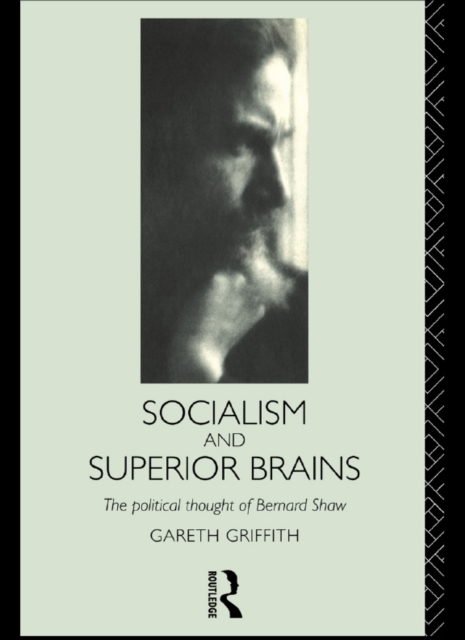
Available in paperback for the first time, Gareth Griffith's book provides a comprehensive critical account of the political ideas of one of the most influential commentators of the twentieth century.
Available in paperback for the first time, Gareth Griffith's book provides a comprehensive critical account of the political ideas of one of the most influential commentators of the twentieth century.
Contrary to much Marxist thought, Everling does not view socialism as an antithesis to capitalism, and argues that socialism is, among other things, an objective development of capitalism.
Contrary to much Marxist thought, Everling does not view socialism as an antithesis to capitalism, and argues that socialism is, among other things, an objective development of capitalism.
This book addresses the contemporary debate about the 'third way' in European social democracy, by analysing the exemplar case of social democracy - 'the Swedish model' - this book challenges the recent 'third way' perspective.
This book addresses the contemporary debate about the 'third way' in European social democracy, by analysing the exemplar case of social democracy - 'the Swedish model' - this book challenges the recent 'third way' perspective.
The major problems facing the world as it gets used to the twenty-first century are global inequality, poverty, war and militarism, oppression, exploitation and ecological sustainability.
The major problems facing the world as it gets used to the twenty-first century are global inequality, poverty, war and militarism, oppression, exploitation and ecological sustainability.
Presenting a detailed explanation of party politics in the European Union, this new book uses the Party of European Socialists (PES) as a key case study, and tests the relevance of existing theoretical work on the meaning, significance, and prospects for realising other 'Europarties'.
Presenting a detailed explanation of party politics in the European Union, this new book uses the Party of European Socialists (PES) as a key case study, and tests the relevance of existing theoretical work on the meaning, significance, and prospects for realising other 'Europarties'.
Stalinism surveys the efforts made in recent years by professional historians, in Russia and the West, to better understand what really went on in the USSR between 1929 and 1953, when the country's affairs were shrouded in secrecy.
Stalinism surveys the efforts made in recent years by professional historians, in Russia and the West, to better understand what really went on in the USSR between 1929 and 1953, when the country's affairs were shrouded in secrecy.