Over the course of the last 1400 years, Islam has grown from a small band of followers on the Arabian peninsula into a global religion of over a billion believers.
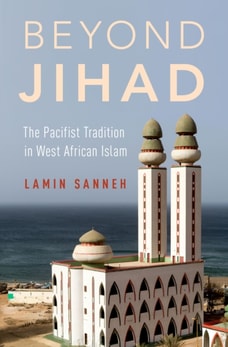
Over the course of the last 1400 years, Islam has grown from a small band of followers on the Arabian peninsula into a global religion of over a billion believers.
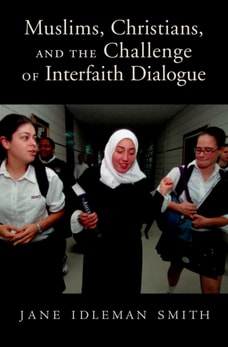
Since 2001, there has been a tremendous backlash against the very idea that it is possible to be both American and Muslim-the controversy over the so-called "e;Ground Zero Mosque"e; and the attempts to ban shari'a law are examples.
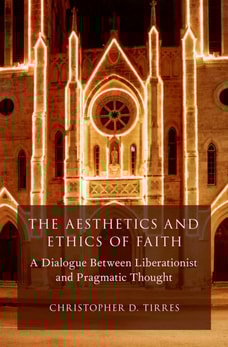
In the face of ongoing religious conflicts and unending culture wars, what are we to make of liberalism's promise that it alone can arbitrate between church and state?
The terrorist attacks of September 11, 2001 reopened what many people in America had long assumed was a settled ethical question: Is torture ever morally permissible?
Sam Haselby offers a new and persuasive account of the role of religion in the formation of American nationality, showing how a contest within Protestantism reshaped American political culture and led to the creation of an enduring religious nationalism.
National governments around the world are turning to branding consultants, public relations advisers and strategic communications experts to help them "e;brand"e; their jurisdiction.
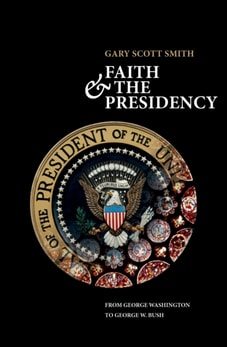
This volume offers a timely and dynamic study of the rise of religion in American politics, examining the public messages of political leaders over the past seventy-five years.
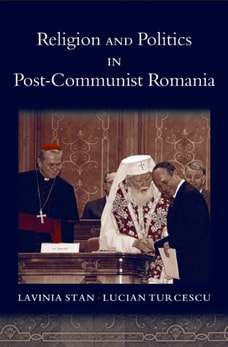
In the post-communist era it has become evident that the emerging democracies in Eastern Europe will be determined by many factors, only some of them political.
In the wake of the 2004 election, pundits were shocked at exit polling that showed that 22% of voters thought 'moral values' was the most important issue at stake.
During the Paris Peace Conference of 1919, while key decisions were debated by the victorious Allied powers, a multitude of smaller nations and colonies held their breath, waiting to see how their fates would be decided.
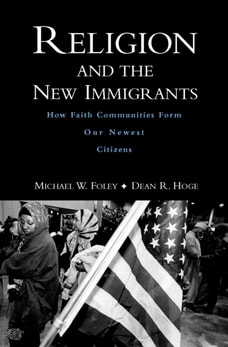
The explosive growth of the immigrant population since the 1960s has raised concerns about its impact on public life, but only recently have scholars begun to ask how religion affects the immigrant experience in our society.
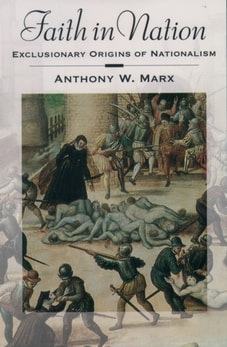
Common wisdom has long held that the ascent of the modern nation coincided with the flowering of Enlightenment democracy and the decline of religion, ringing in an age of tolerant, inclusive, liberal states.
Reporting from the heartland of Yugoslavia in the 1970s, Washington Post correspondent Dusko Doder described "e;a landscape of Gothic spires, Islamic mosques, and Byzantine domes.
The Kharijites were the first sectarian movement in Islamic history, a rebellious splinter group that separated itself from mainstream Muslim society and set about creating, through violence, an ideal community of the saved.
In this sequel to his Morality, Politics, and Law, Michael Perry addresses the proper relation of moral convictions to the politics of a morally pluralistic society.
Christian Giudice's Occult Imperium explores Italian national forms of Occultism, chiefly analyzing Arturo Reghini (1878-1946), his copious writings, and Roman Traditionalism.
Christian Giudice's Occult Imperium explores Italian national forms of Occultism, chiefly analyzing Arturo Reghini (1878-1946), his copious writings, and Roman Traditionalism.