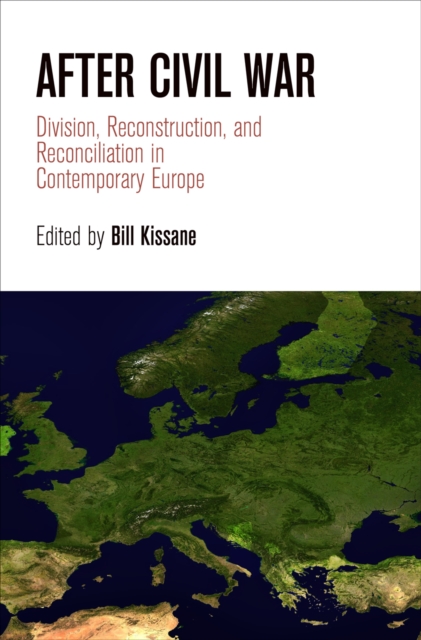
Civil war inevitably causes shifts in state boundaries, demographics, systems of rule, and the bases of legitimate authoritymany of the markers of national identity.
SUNDAY TIMES NUMBER ONE BESTSELLER'The most important book of the year' Daily MailThe brilliant and provocative new book from one of the world's foremost political writers'The anti-Western revisionists have been out in force in recent years.
The feminist book they tried to ban in France'A delightful book' Roxane GayWomen, especially feminists and lesbians, have long been accused of hating men.
A Financial Times Best Book of the YearAn inside view of Chinese academia and what it reveals about China's political systemOn January 1, 2017, Daniel Bell was appointed dean of the School of Political Science and Public Administration at Shandong Universitythe first foreign dean of a political science faculty in mainland China's history.
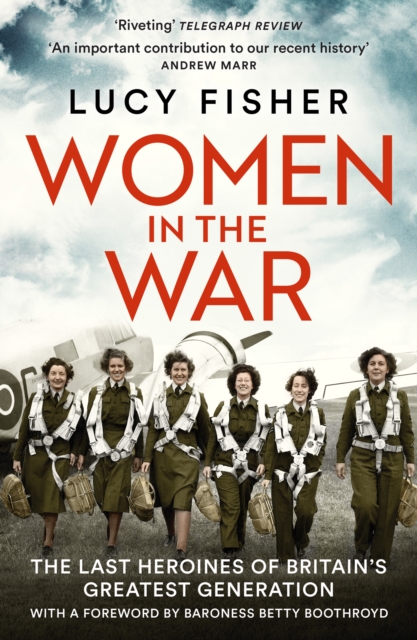
'An important contribution to our recent history' ANDREW MARR'Absorbing and important' JOAN BAKEWELL'One of my favourite reads of 2021' GARETH RUSSELLPoignant and inspiring, Women in the War tells the first-hand stories of ten of the last surviving female members of Britain's 'Greatest Generation'.
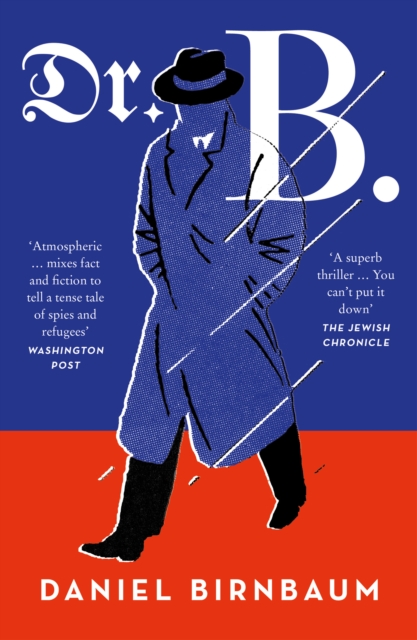
The former director of the Museum of Modern Art in Stockholm makes his literary debut with this dramatic and riveting novel of book publishing, emigres, spies, and diplomats in World War II Sweden based on his grandfather's lifeIn 1933, after Hitler and the Nazi Party consolidated power in Germany, Immanuel Birnbaum, a German-Jewish journalist based in Warsaw, is forbidden from writing for newspapers in his homeland.
The Battle for Milne Bay - Japan's first defeat on land in the Second World War - was a defining moment in the evolution of the indomitable Australian fighting spirit.
Established after World War I by the Royal Australian Navy, the Coast Watchers were a loose organisation of several hundred European settlers, missionaries, patrol officers and planters living in British and Australian Pacific Island territories whose job it was to observe and report on the enemy.
The riveting story of the missing piece of Australia's World War II history, told by bestselling historian Mat McLachlan (Walking with the Anzacs, Gallipoli: The Battlefield Guide).
A SUNDAY TIMES HISTORY BOOK OF THE YEAR 2017'A brilliant, compelling, propulsively written, magnificent tour de force' Simon Sebag Montefiore, Evening Standard'The second volume of what will surely rank as one of the greatest historical achievements of our age .
The magnificent new biography that revolutionizes our understanding of Stalin and his worldIn January 1928 Stalin, the ruler of the largest country in the world, boarded a train bound for Siberia where he would embark upon the greatest gamble of his political life.
How Donald Trump laid waste to American politics, culture, and social orderAfter Donald Trump's rise to power, after the 2020 presidential election, after January 6, is American politics past the point of no return?
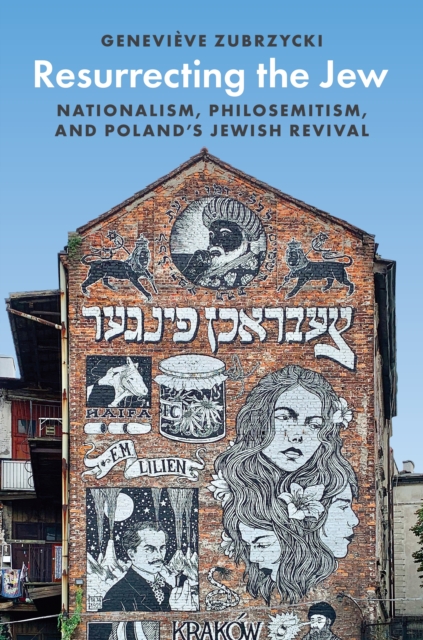
An in-depth look at why non-Jewish Poles are trying to bring Jewish culture back to life in Poland todaySince the early 2000s, Poland has experienced a remarkable Jewish revival, largely driven by non-Jewish Poles with a passionate new interest in all things Jewish.
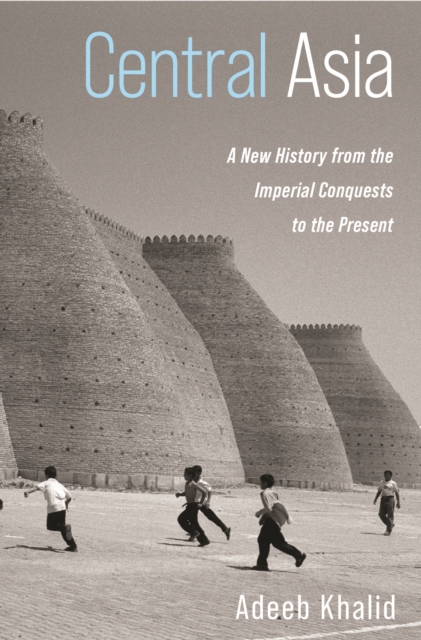
A major history of Central Asia and how it has been shaped by modern world eventsCentral Asia is often seen as a remote and inaccessible land on the peripheries of modern history.
What drives anti-immigrant biasand how it can be mitigatedIn the aftermath of the refugee crisis caused by conflicts in the Middle East and an increase in migration to Europe, European nations have witnessed a surge in discrimination targeted at immigrant minorities.
A timely defense of liberalism that draws vital lessons from its greatest midcentury proponentsToday, liberalism faces threats from across the political spectrum.
How middle-class economic dependence on the state impedes democratization and contributes to authoritarian resilienceConventional wisdom holds that the rising middle classes are a force for democracy.
A wide-ranging reevaluation of utopian literature and philosophy, from Plato to Chang-Rae LeeExamining literary and philosophical writing about ideal societies from Greek antiquity to the present, Inventions of Nemesis offers a striking new take on utopia's fundamental project.
New perspectives on the role of collective responsibility in modern politicsStates are commonly blamed for wars, called on to apologize, held liable for debts and reparations, bound by treaties, and punished with sanctions.
A fresh and sharp-eyed history of political conservatism from its nineteenth-century origins to today's hard RightFor two hundred years, conservatism has defied its reputation as a backward-looking creed by confronting and adapting to liberal modernity.
From acclaimed historian Michael Brenner, a mesmerizing portrait of Munich in the early years of Hitler's quest for powerIn the aftermath of Germany's defeat in World War I and the failed November Revolution of 1918-19, the conservative government of Bavaria identified Jews with left-wing radicalism.
An anthropologist's groundbreaking account of how Islamic religious authority is assembled through the unceasing labor of community building on the island of JavaThis compelling book draws on Ismail Fajrie Alatas's unique insights as an anthropologist to provide a new understanding of Islamic religious authority, showing how religious leaders unite diverse aspects of life and contest differing Muslim perspectives to create distinctly Muslim communities.
A groundbreaking look at how group expectations unify Black Americans in their support of the Democratic partyBlack Americans are by far the most unified racial group in American electoral politics, with 80 to 90 percent identifying as Democrats-a surprising figure given that nearly a third now also identify as ideologically conservative, up from less than 10 percent in the 1970s.
A new theoretical framework for understanding how social, economic, and political conflicts influence international institutions and their place in the global order Today's liberal international institutional order is being challenged by the rising power of illiberal states and by domestic political changes inside liberal states.
How challenger parties, acting as political entrepreneurs, are changing European democraciesChallenger parties are on the rise in Europe, exemplified by the likes of Podemos in Spain, the National Rally in France, the Alternative for Germany, or the Brexit Party in Great Britain.
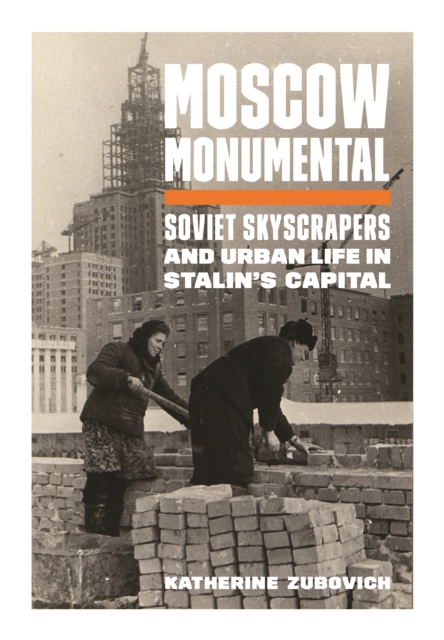
An in-depth history of the Stalinist skyscraperIn the early years of the Cold War, the skyline of Moscow was forever transformed by a citywide skyscraper building project.
A sweeping narrative history of Eastern Europe from the late eighteenth century to todayIn the 1780s, the Habsburg monarch Joseph II decreed that henceforth German would be the language of his realm.
A major new history of how the Enlightenment transformed people's everyday livesThe Secular Enlightenment is a panoramic account of the radical ways that life began to change for ordinary people in the age of Locke, Voltaire, and Rousseau.
Why most modern revolutions have ended in bloodshed and failure-and what lessons they hold for today's world of growing extremismWhy have so many of the iconic revolutions of modern times ended in bloody tragedies?
How referendums can diffuse populist tensions by putting power back into the hands of the peoplePropelled by the belief that government has slipped out of the hands of ordinary citizens, a surging wave of populism is destabilizing democracies around the world.
A spellbinding new biography of Stalin in his formative yearsThis is the definitive biography of Joseph Stalin from his birth to the October Revolution of 1917, a panoramic and often chilling account of how an impoverished, idealistic youth from the provinces of tsarist Russia was transformed into a cunning and fearsome outlaw who would one day become one of the twentieth century's most ruthless dictators.
An enlightening account of the entwined histories of knowledge and nationhood in Latin America-and beyondThe rise of nation-states is a hallmark of the modern age, yet we are still untangling how the phenomenon unfolded across the globe.
What changes in China's modern military policy reveal about military organizations and strategySince the 1949 Communist Revolution, China has devised nine different military strategies, which the People's Liberation Army (PLA) calls "e;strategic guidelines.
Why American founding father John Adams feared the political power of the rich-and how his ideas illuminate today's debates about inequality and its consequencesLong before the "e;one percent"e; became a protest slogan, American founding father John Adams feared the power of a class he called simply "e;the few"e;-the wellborn, the beautiful, and especially the rich.