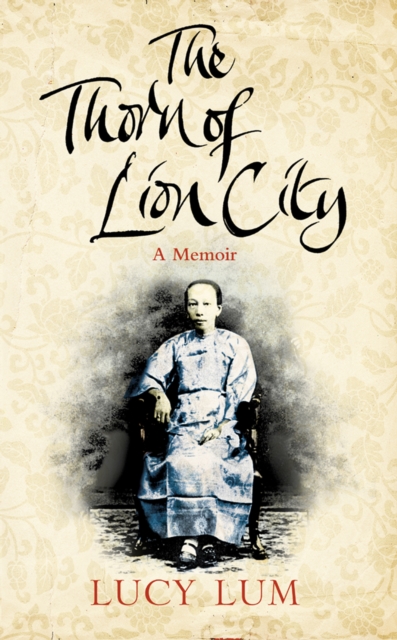
New York Times bestselling author Alex Kershaw has written the first full biography of one of the most remarkable men to have outwitted Hitler - Raoul Wallenberg, the young Swedish diplomat who almost single-handedly saved the lives of countless Hungarian Jews, at unimaginable risk and great cost to himself.
SURVIVOR STORIES FROM DUNKIRK, NOW THE SUBJECT OF A MAJOR FILM FROM CHRISTOPHER NOLANWhen Britain declared war against Germany in September 1939, thousands of young men sailed across the English Channel to fight for their country.
Part of the new Ladybird Expert series, The Bomber War is an accessible, insightful and authoritative introduction to the airborne Allied fight against Nazi Germany.
Set against an extraordinary historical backdrop, The Emperor's General is the all too human story of a young man's turbulent coming of age and of the conflicting demands of duty, honour and love.
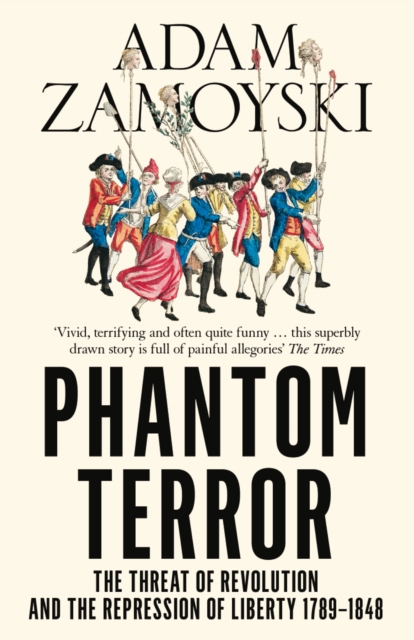
A succinct and comprehensive history of the development of citizenship from the Roman Empire to the present dayCitizenship, Inequality, and Difference offers a concise and sweeping overview of citizenship's complex evolution, from ancient Rome to the present.
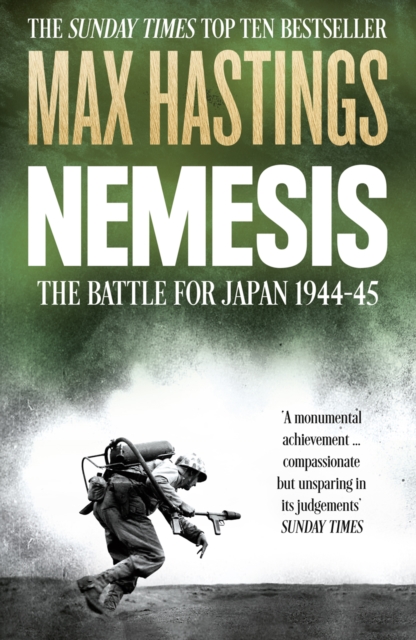
An in-depth look at the consequences of New York City's dramatically expanded policing of low-level offensesFelony conviction and mass incarceration attract considerable media attention these days, yet the most common criminal-justice encounters are for misdemeanors, not felonies, and the most common outcome is not prison.
A new account of modern Iraqi politics that overturns the conventional wisdom about its sectarian divisionsHow did Iraq become one of the most repressive dictatorships of the late twentieth century?
How the conflict between political Islamists and secular-leaning nationalists has shaped the history of the modern Middle EastIn 2013, just two years after the popular overthrow of Hosni Mubarak, the Egyptian military ousted the country's first democratically elected president-Mohamed Morsi of the Muslim Brotherhood-and subsequently led a brutal repression of the Islamist group.
The first book to explore the modern history of Islam in South AsiaThe first modern state to be founded in the name of Islam, Pakistan was the largest Muslim country in the world at the time of its establishment in 1947.
The first English-language biography of the de facto ruler of the late Ottoman Empire and architect of the Armenian GenocideTalaat Pasha (1874-1921) led the triumvirate that ruled the late Ottoman Empire during World War I and is arguably the father of modern Turkey.
How interwar Poland and its Jewish youth were instrumental in shaping the ideology of right-wing ZionismBy the late 1930s, as many as fifty thousand Polish Jews belonged to Betar, a youth movement known for its support of Vladimir Jabotinsky, the founder of right-wing Zionism.
On the 100th anniversary of the Russian Revolution, the epic story of an enormous apartment building where Communist true believers lived before their destructionThe House of Government is unlike any other book about the Russian Revolution and the Soviet experiment.
A groundbreaking investigation into why so many Islamic radicals are engineersThe violent actions of a few extremists can alter the course of history, yet there persists a yawning gap between the potential impact of these individuals and what we understand about them.
The first in-depth account of the historic diplomatic agreement that served as a blueprint for ending the Cold WarThe Helsinki Final Act was a watershed of the Cold War.
A new and comprehensive look at the reasons behind successful or failed nation buildingNation Building presents bold new answers to an age-old question.
How extremism is going mainstream in Germany through clothing brands laced with racist and nationalist symbolsThe past decade has witnessed a steady increase in far right politics, social movements, and extremist violence in Europe.
An engaging invitation to rediscover Henry Millerand to learn how his anarchist sensibility can help us escape ';the air-conditioned nightmare' of the modern worldThe American writer Henry Miller's critical reputationif not his popular readershiphas been in eclipse at least since Kate Millett's blistering critique in Sexual Politics, her landmark 1970 study of misogyny in literature and art.
The gripping stories of ordinary Germans who lived through World War II, the Holocaust, and Cold War partition-but also recovery, reunification, and rehabilitationBroken Lives is a gripping account of the twentieth century as seen through the eyes of ordinary Germans who came of age under Hitler and whose lives were scarred and sometimes destroyed by what they saw and did.
How American westward expansion was governmentally engineered to promote the formation of a white settler nationWestward expansion of the United States is most conventionally remembered for rugged individualism, geographic isolationism, and a fair amount of luck.
Over the past century, democracy spread around the world in turbulent bursts of change, sweeping across national borders in dramatic cascades of revolution and reform.
How the support of patriotic sentiments in Ottoman Egypt led to an emerging Arab nationalismArab Patriotism presents the essential backstory to the formation of the modern nation-state and mass nationalism in the Middle East.
How competing visions of world order in the 1940s gave rise to the modern concept of globalismDuring and after the Second World War, public intellectuals in Britain and the United States grappled with concerns about the future of democracy, the prospects of liberty, and the decline of the imperial system.
How Jewish responses during the Holocaust shed new light on the dynamics of genocide and political violenceFocusing on the choices and actions of Jews during the Holocaust, Ordinary Jews examines the different patterns of behavior of civilians targeted by mass violence.
Few transformations in American politics have been as important as the integration of African Americans into the Democratic Party and the Republican embrace of racial policy conservatism.
In recent years, North American and European nations have sought to legally remake religion in other countries through an unprecedented array of international initiatives.
The first chronicle of Stalin's inner political and social circle-from a leading Soviet historianStalin was the unchallenged dictator of the Soviet Union for so long that most historians have dismissed the officials surrounding him as mere yes-men and political window dressing.
Why churches in some democratic nations wield enormous political power while churches in other democracies don'tIn some religious countries, churches have drafted constitutions, restricted abortion, and controlled education.
A concise and authoritative introduction to Islamic political ideasIn sixteen concise chapters on key topics, this book provides a rich, authoritative, and up-to-date introduction to Islamic political thought from the birth of Islam to today, presenting essential background and context for understanding contemporary politics in the Islamic world and beyond.
Europe's long sixteenth century-a period spanning the years roughly from the voyages of Columbus in the 1490s to the English Civil War in the 1640s-was an era of power struggles between avaricious and unscrupulous princes, inquisitions and torture chambers, and religious differences of ever more violent fervor.
How political incivility broadcast in close-up by the media affects public opinionAmericans are disgusted with watching politicians screaming and yelling at one another on television.
This is the first complete, one-volume English translation of the ancient Chinese text Xunzi, one of the most extensive, sophisticated, and elegant works in the tradition of Confucian thought.
The story of black conservatives in the Republican Party from the New Deal to Ronald ReaganCovering more than four decades of American social and political history, The Loneliness of the Black Republican examines the ideas and actions of black Republican activists, officials, and politicians, from the era of the New Deal to Ronald Reagan's presidential ascent in 1980.
Don't Blame Us traces the reorientation of modern liberalism and the Democratic Party away from their roots in labor union halls of northern cities to white-collar professionals in postindustrial high-tech suburbs, and casts new light on the importance of suburban liberalism in modern American political culture.
One of the most important and controversial books in modern American politics, The Emerging Republican Majority (1969) explained how Richard Nixon won the White House in 1968-and why the Republicans would go on to dominate presidential politics for the next quarter century.
A groundbreaking book that gathers key wartime intelligence reportsDuring the Second World War, three prominent members of the Frankfurt School-Franz Neumann, Herbert Marcuse, and Otto Kirchheimer-worked as intelligence analysts for the Office of Strategic Services, the wartime forerunner of the CIA.
How governmental failure led to the 2008 financial crisis-and what needs to be done to avoid another similar event Behind every financial crisis lurks a "e;political bubble"e;-policy biases that foster market behaviors leading to financial instability.