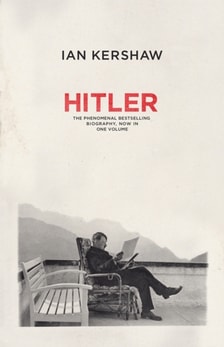
Ian Kershaw's HITLER allows us to come closer than ever before to a serious understanding of the man and of the catastrophic sequence of events which allowed a bizarre misfit to climb from a Viennese dosshouse to leadership of one of Europe's most sophisticated countries.
In the Second World War, Great Britain, the United States and Germany each produced one land force commander who stood out from the rest: Bernard Montgomery, George Patton and Erwin Rommel.
Set in England, Africa and Italy this collection of Steinbeck's World War II news correspondence was written for the New Yolk Herald Tribune in the latter part of 1943.
Since its first publication thirty years ago, Timothy Ware s book has become established throughout the English-speaking world as the standard introduction to the Orthodox Church.
In The Conscience of a Liberal Paul Krugman, one of the US s most respected economists and outspoken commentators, lays out his vision of a New Deal for a fairer society.
In the early days of World War Two when Britain stood alone against the terror of Hitler's all-conquering Third Reich, her future hung in the balance; her defence in the hands of the Spitfires and Hurricanes of the Royal Air Force's Fighter Command.
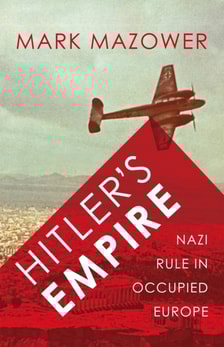
The powerful, disturbing history of Nazi Europe by Mark Mazower, one of Britain's leading historians and bestselling author of Dark Continent and Governing the World Hitler's Empire charts the landscape of the Nazi imperial imagination - from those economists who dreamed of turning Europe into a huge market for German business, to Hitler's own plans for new transcontinental motorways passing over the ethnically cleansed Russian steppe, and earnest internal SS discussions of political theory, dictatorship and the rule of law.
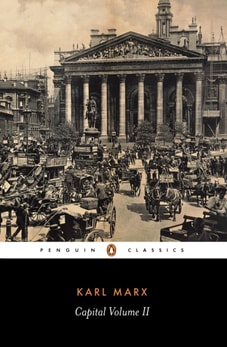
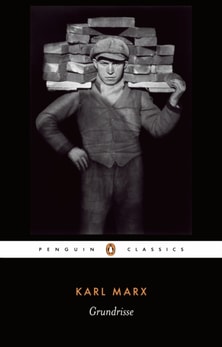
The "e;forgotten"e; second volume of Capital, Marx's world-shaking analysis of economics, politics, and history, contains the vital discussion of commodity, the cornerstone to Marx's theories.
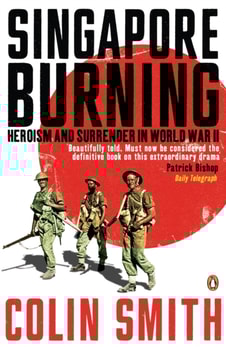
Churchill's description of the fall of Singapore on 15 February 1942, after Lt-Gen Percival's surrender led to over 100,000 British, Australian and Indian troops falling into the hands of the Japanese, was no wartime exaggeration.
Unfinished at the time of Marx's death in 1883 and first published with a preface by Frederick Engels in 1894, the third volume of Das Kapital strove to combine the theories and concepts of the two previous volumes in order to prove conclusively that capitalism is inherently unworkable as a permanent system for society.
THE NUMBER ONE BESTSELLER ON THE LAST DAYS OF THE THIRD REICH'Recounts, in harrowing detail and with formidable skill, the brutal death-throes of Hitler's Reich at the hands of the rampaging Red Army' Boyd Tonkin, Independent'An irresistibly compelling narrative, of events so terrible that they still have the power to provoke wonder and awe' Adam Sisman, Observer__________________ The Red Army had much to avenge when it finally reached the frontiers of the Reich in January 1945.
What changes in China's modern military policy reveal about military organizations and strategySince the 1949 Communist Revolution, China has devised nine different military strategies, which the People's Liberation Army (PLA) calls "e;strategic guidelines.
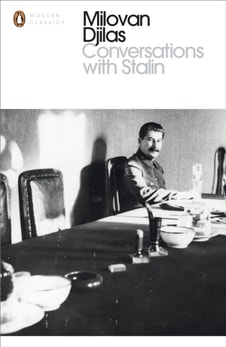
A mesmerising, chilling close-up portrayal of Stalin from Milovan Djilas, a Communist insider - with an introduction from Anne Applebaum, author of Gulag and Iron CurtainThis extraordinarily vivid and unnerving book three meetings held with Stalin during and after the Second World War.
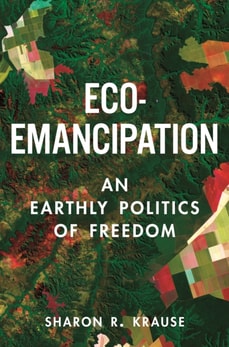
The case for an eco-emancipatory politics to release the Earth from human domination and free us all from lives that are both exploitative and exploitedHuman domination of nature shapes every aspect of our lives today, even as it remains virtually invisible to us.
A panoramic history of American individualism from its nineteenth-century origins to today's bitterly divided politicsIndividualism is a defining feature of American public life.
A trenchant defense of hierarchy in different spheres of our lives, from the personal to the politicalAll complex and large-scale societies are organized along certain hierarchies, but the concept of hierarchy has become almost taboo in the modern world.
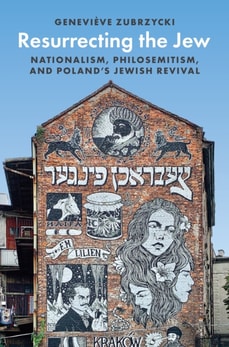
An in-depth look at why non-Jewish Poles are trying to bring Jewish culture back to life in Poland todaySince the early 2000s, Poland has experienced a remarkable Jewish revival, largely driven by non-Jewish Poles with a passionate new interest in all things Jewish.
What drives anti-immigrant biasand how it can be mitigatedIn the aftermath of the refugee crisis caused by conflicts in the Middle East and an increase in migration to Europe, European nations have witnessed a surge in discrimination targeted at immigrant minorities.
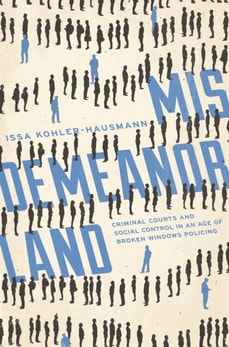
An in-depth look at the consequences of New York City's dramatically expanded policing of low-level offensesFelony conviction and mass incarceration attract considerable media attention these days, yet the most common criminal-justice encounters are for misdemeanors, not felonies, and the most common outcome is not prison.
A new and comprehensive look at the reasons behind successful or failed nation buildingNation Building presents bold new answers to an age-old question.
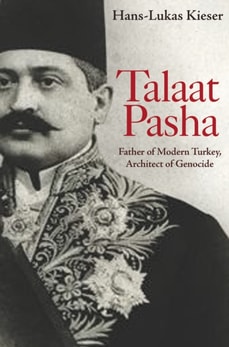
The first English-language biography of the de facto ruler of the late Ottoman Empire and architect of the Armenian GenocideTalaat Pasha (1874-1921) led the triumvirate that ruled the late Ottoman Empire during World War I and is arguably the father of modern Turkey.