The forgotten story of the nineteenth-century freethinkers and twentieth-century humanists who tried to build their own secular religionIn The Church of Saint Thomas Paine, Leigh Eric Schmidt tells the surprising story of how freethinking liberals in nineteenth-century America promoted a secular religion of humanity centered on the deistic revolutionary Thomas Paine (1737-1809) and how their descendants eventually became embroiled in the culture wars of the late twentieth century.
A bold new history showing that the fear of Communism was a major factor in the outbreak of World War IIThe Spectre of War looks at a subject we thought we knew-the roots of the Second World War-and upends our assumptions with a masterful new interpretation.
Keeping the Republic is an eloquent defense of the American constitutional order and a response to its critics, including those who are estranged from the very idea of a fixed constitution in which the living are governed by the dead.
A FEMINIST CLASSICThis classic 1792 political treatise by British writer Mary Wollstonecraft argues that women should be treated with equal dignity and respect to men, especially regarding education.
Although World War II began as a war in Europe, many in the United States, foreseeing the inevitable, began to prepare for war, putting no faith in the Neutrality Act.
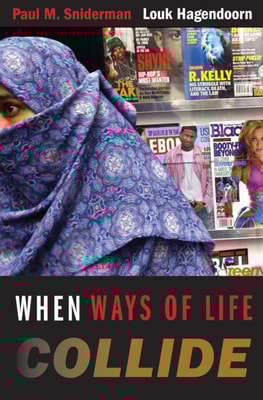
Balancing respect for religious conviction and the values of liberal democracy is a daunting challenge for judges and lawmakers, particularly when religious groups seek exemption from laws that govern others.
A major history of Central Asia and how it has been shaped by modern world eventsCentral Asia is often seen as a remote and inaccessible land on the peripheries of modern history.
How the ideas that animate nationalism influence whether it causes-or calms-conflictWith nationalism on the rise around the world, many worry that nationalistic attitudes could lead to a surge in deadly conflict.
"e;A provocative, arresting, put-you-there account of a forgotten 1940s Army basketball team that we now realize shouldn't be forgotten"e; (Lars Anderson, New York Times-bestselling author).
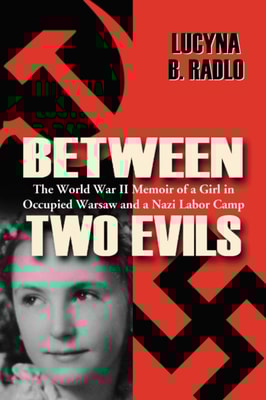
This vivid memoir describes the author's experiences as young girl in Poland, forced to flee to Warsaw after the Nazi bombing of Brest at the outbreak of World War II.
This is an overview of America's first effort in military aid to a foreign sovereign nation at a time when Europe was engaged in open warfare, Asia was facing a series of military confrontations, and most of the world thought global conflagration was inevitable.
A groundbreaking look at how group expectations unify Black Americans in their support of the Democratic partyBlack Americans are by far the most unified racial group in American electoral politics, with 80 to 90 percent identifying as Democrats-a surprising figure given that nearly a third now also identify as ideologically conservative, up from less than 10 percent in the 1970s.
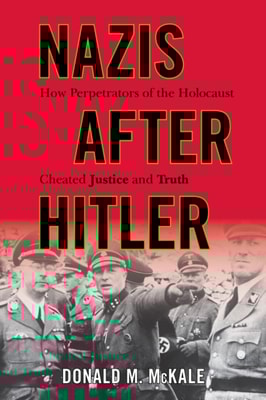
The stories of thirty war criminals who escaped accountability, from a historian praised for his "e;well written, scrupulously researched"e; work (The New York Times).
This introduction to the politics of poststructuralism focuses on two interrelated themes: the culture of Western Marxism and contemporary neoliberal capitalism.
New perspectives on the role of collective responsibility in modern politicsStates are commonly blamed for wars, called on to apologize, held liable for debts and reparations, bound by treaties, and punished with sanctions.
A new theoretical framework for understanding how social, economic, and political conflicts influence international institutions and their place in the global order Today's liberal international institutional order is being challenged by the rising power of illiberal states and by domestic political changes inside liberal states.
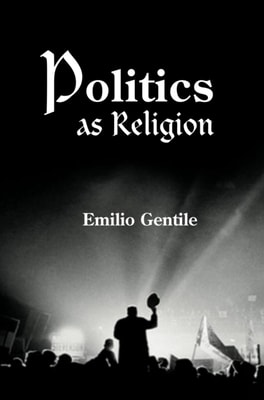
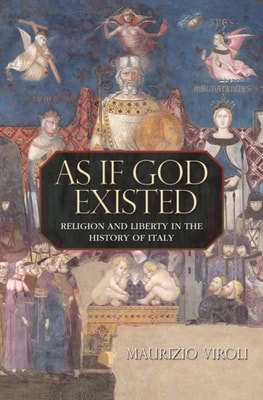
Emilio Gentile, an internationally renowned authority on fascism and totalitarianism, argues that politics over the past two centuries has often taken on the features of religion, claiming as its own the prerogative of defining the fundamental purpose and meaning of human life.
The sheets of paper are as brittle as fallen leaves; the faltering handwriting changes from page to page; the words, a faded brown, are almost indecipherable.
Turkey has leapt to international prominence as an economic and political powerhouse under its elected Muslim government, and is looked on by many as a model for other Muslim countries in the wake of the Arab Spring.
A compelling history of liberalism from the nineteenth century to todayDespite playing a decisive role in shaping the past two hundred years of American and European politics, liberalism is no longer the dominant force it once was.
'Richard Wilson's meticulously researched, powerfully argued and brilliantly written account of Shakespeare's 20th-century fascist followers is not just an important but a genuinely essential book.
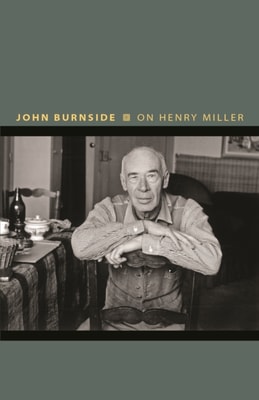
An engaging invitation to rediscover Henry Millerand to learn how his anarchist sensibility can help us escape ';the air-conditioned nightmare' of the modern worldThe American writer Henry Miller's critical reputationif not his popular readershiphas been in eclipse at least since Kate Millett's blistering critique in Sexual Politics, her landmark 1970 study of misogyny in literature and art.
The first in-depth account of the historic diplomatic agreement that served as a blueprint for ending the Cold WarThe Helsinki Final Act was a watershed of the Cold War.
How Red Scare politics undermined the reform potential of the New DealIn the name of protecting Americans from Soviet espionage, the post-1945 Red Scare curtailed the reform agenda of the New Deal.
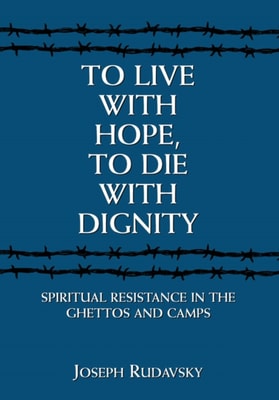
Jewish armed resistance during the Holocaust has been amply documented, debunking the stereotypical view of the Jews as passive victims of Hitler and the Nazis.
Many Americans wish to believe that the United States, founded in religious tolerance, has gradually and naturally established a secular public sphere that is equally tolerant of all religions--or none.
This book investigates cinematic representations of the murder of European Jews and civilian opposition to Nazi occupation from the war up until the twenty-first century.