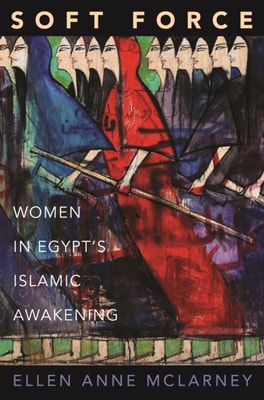
The unheralded contribution of women to Egypt's Islamist movement-and how they talk about women's rights in Islamic termsIn the decades leading up to the Arab Spring in 2011, when Hosni Mubarak's authoritarian regime was swept from power in Egypt, Muslim women took a leading role in developing a robust Islamist presence in the country's public sphere.
How Jewish responses during the Holocaust shed new light on the dynamics of genocide and political violenceFocusing on the choices and actions of Jews during the Holocaust, Ordinary Jews examines the different patterns of behavior of civilians targeted by mass violence.
The first comprehensive political history of the communist partyVanguard of the Revolution is a sweeping history of one of the most significant political institutions of the modern world.
One of the most notorious works of modern times, as well as one of the most influential, Capital is an incisive critique of private property and the social relations it generates.
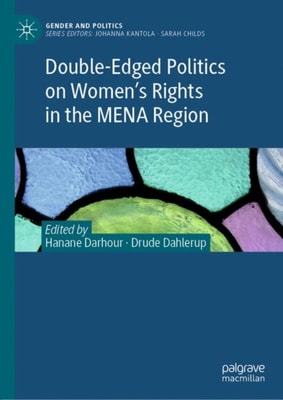
While the Arab Uprisings presented new opportunities for the empowerment of women, the sidelining of women remains a constant risk in the post-revolutionist MENA countries.
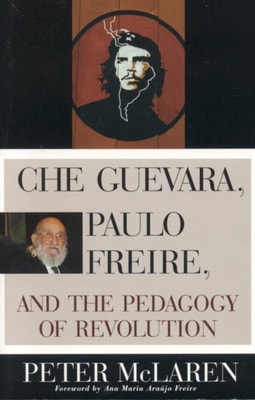
Che Guevara, Paulo Freire, and the Pedagogy of Revolution examines what is currently at stake_culturally, politically, and educationally_in contemporary global capitalist society.
United Airlines Flight 93, which took off fromNewarkAirportthe morning of September 11th, 2001, is perhaps the most famous flight in modern American history: We know of the passenger uprising, but theres so much more to the story besides its harrowing and oft-told climax.
The Histories of Herodotus is one of the first accounts of the rise of the Persian Empire, as well as the events and causes of the Greco-Persian Wars between the Achaemenid Empire and the Greek city-states in the 5th century BC.
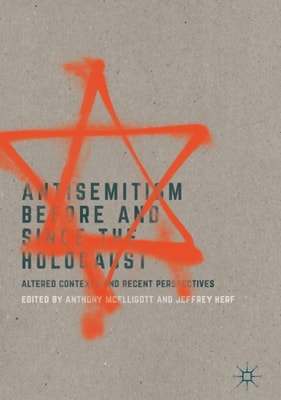
Divided into five discrete sections, this book examines the issue of Holocaust denial, and in some cases "e;Holocaust inversion"e; in North America, Europe, and the Middle East and its relationship to the history of antisemitism before and since the Holocaust.
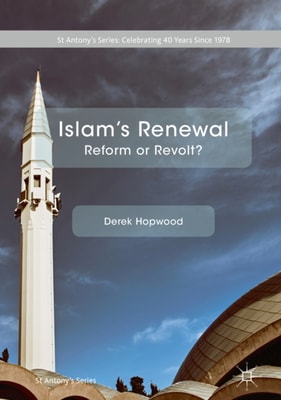
The book considers some of the solutions proposed by Muslim activists and thinkers in their attempts to renew (tajdid) their ways of life and thought in accord with the demands of the age in which they lived.
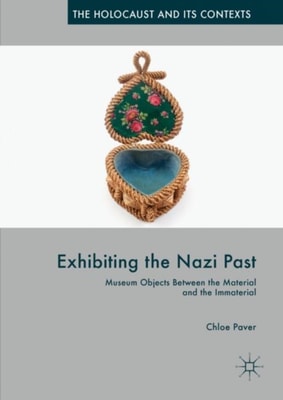
This book is the first full-length study of the museum object as a memory medium in history exhibitions about the Nazi era, the Second World War, and the Holocaust.
Providing an expansive view of the making and meaning of African American conservatism, this volume examines the phenomenon in four spheres: the political realm, the academic world, the black church, and grass-roots activism movements.
This book is a contribution to the emerging field of research-based performance, which seeks to gain a wider audience for issues that are crucial to our understanding of history and to informing our future actions.
This book examines the manner in which the Haram al-Sharif/Temple Mount has been appropriated by both Palestinians and Israelis as a nationalist symbol legitimizing respective claims to the land.
This book examines the unintended consequences of top-down reforms in Iran, analysing how the Iranian reformist governments (1997-2005) sought to utilise gradual reforms to control independent activism, and how citizens responded to such a disciplinary action.
This book presents the first comparative study of the works of Charlotte Delbo, Noor Inayat Khan, and Germaine Tillion in relation to their vigorous struggles against Nazi aggression during World War II and the Holocaust.
This book addresses the discourses, agendas and actions of Muslim faith-based organizations and activists to empower Muslim communities in contemporary sub-Saharan Africa.
The Palgrave Handbook of Holocaust Literature and Culture reflects current approaches to Holocaust literature that open up future thinking on Holocaust representation.
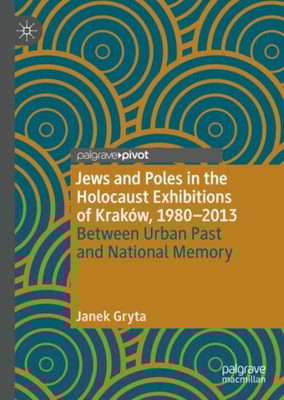
This book offers a unique approach to memory studies by focusing on local memory work conducted across the divide of the fall of Communism, whereas other histories have consistently used 1989 as a watershed moment.
Situated within the wider post-secular turn in politics and international relations, this volume focuses not on religion per se, but rather explicitly on theology.
This book examines the pioneering radio broadcasts and television documentaries about the United States made in the 1950s by the influential West German journalist Peter von Zahn.
This book brings together theories of world society with poststructuralist and postcolonial work on modern subjectivity to understand the universalising and particularising processes of globalisation.
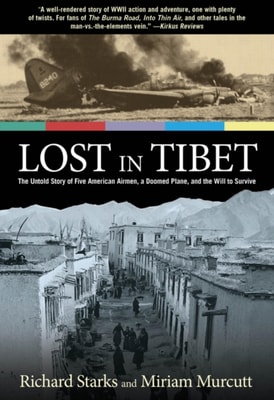
Caught in a violent storm and blown far off their intended course, five American airmen--flying the dangerous Himalayan supply route known as "e;The Hump"e;--were forced to bail out just seconds before their plane ran out of fuel.
This volume examines the role and function of religious-based organizations in strengthening associational life in a representative sample of West European countries: newly democratized and long-established democracies, societies with and without a dominant religious tradition, and welfare states with different levels and types of state-provided social services.
This book explores the transformative impact that the immigration of large numbers of Jews from the former Soviet Union to Germany had on Jewish communities from 1990 to 2005.
This book discusses the threats and challenges facing the Persian Gulf and the future security in the region, providing an overview of the major regional and extra-regional actors in Gulf security.
This book is a study of British official attitudes towards the Danubian countries (Hungary, Czechoslovakia, Romania and Yugoslavia) from Hitler's rise to power in 1933 to the year 1941, a period that marked serious but fruitless British political and economic efforts to unite this unruly part of Europe against Nazi ascendancy.
The classic account of how British intelligence penetrated and practically operated Nazi Germany's spy network within the British IslesWith great imagination, care, and precise coordination, the British were able to identify Nazi agents, induce many to defect, and supply completely false information to Germany about bombings, battles, and even the D-Day invasion.