The classic you-are-there account of the Nixon-McGovern election by the Pulitzer Prize-winning, New York Times-bestselling author: "e;A brilliant analysis.
Political conventions in years past were more than pep rallies for preselected candidates -- they were suspenseful, no-holds-barred battles for the nomination.
This easy-to-understand guide to politics and government introduces more than 80 of the most important theories and big ideas of leaders and politicians throughout history.
Inspired by their popular USA Today column, conservative Cal Thomas and liberal Bob Beckel unmask the hypocrisy of the issues, organizations, and individuals that have created and deepened the partisan divide at the center of American politics, and make a strategic case for why this bickering must stop.
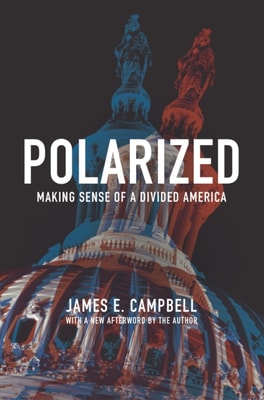
An eye-opening look at how and why America has become so politically polarizedMany continue to believe that the United States is a nation of political moderates.
One of the most important and controversial books in modern American politics, The Emerging Republican Majority (1969) explained how Richard Nixon won the White House in 1968-and why the Republicans would go on to dominate presidential politics for the next quarter century.
Modern presidents are usually depicted as party "e;predators"e; who neglect their parties, exploit them for personal advantage, or undercut their organizational capacities.
Pradeep Chhibber and Ken Kollman rely on historical data spanning back to the eighteenth century from Canada, Great Britain, India, and the United States to revise our understanding of why a country's party system consists of national or regional parties.
South Africa came late to television; when it finally arrived in the late 1970s the rest of the world had already begun to boycott the country because of apartheid.
The roots of the recent financial crisis can be found in the substantial changes which have affected British economy and society over the last three decades.
In 2010, the Labour Party of Great Britain suffered its worst General Election defeat since the 1930s (with one exception), bringing to an end thirteen years of New Labour government.
Since the beginning of 2011, the political situation in Syria has consistently found itself at the top of news broadcasts, newspaper headlines and the agendas of politicians.
In 2010, the Labour Party of Great Britain suffered its worst General Election defeat since the 1930s (with one exception), bringing to an end thirteen years of New Labour government.
Since 2000, more than twenty countries around the world have held elections in which parties that espouse a political agenda based on an Islamic worldview have competed for legislative seats.
Why populations brutalized in war elect their tormentorsOne of the great puzzles of electoral politics is how parties that commit mass atrocities in war often win the support of victimized populations to establish the postwar political order.
A groundbreaking look at how group expectations unify Black Americans in their support of the Democratic partyBlack Americans are by far the most unified racial group in American electoral politics, with 80 to 90 percent identifying as Democrats-a surprising figure given that nearly a third now also identify as ideologically conservative, up from less than 10 percent in the 1970s.
How challenger parties, acting as political entrepreneurs, are changing European democraciesChallenger parties are on the rise in Europe, exemplified by the likes of Podemos in Spain, the National Rally in France, the Alternative for Germany, or the Brexit Party in Great Britain.
A 'MAKING A MURDERER' set in South Africa - a gripping true-crime story of murder and the justice system in the shadow of apartheid'Gripping, explosive .
The closely contested presidential election of 2000, which many analysts felt was decided by voters for the Green Party, cast a spotlight on a structural contradiction of American politics.
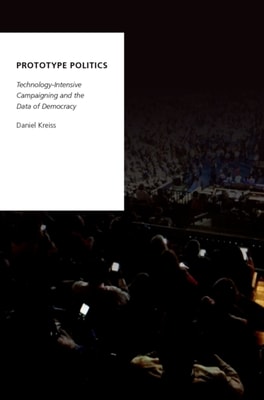
Given the advanced state of digital technology and social media, one would think that the Democratic and Republican Parties would be reasonably well-matched in terms of their technology uptake and sophistication.
Given the advanced state of digital technology and social media, one would think that the Democratic and Republican Parties would be reasonably well-matched in terms of their technology uptake and sophistication.