There have been many Spinozas over the centuries: atheist, romantic pantheist, great thinker of the multitude, advocate of the liberated individual, and rigorous rationalist.
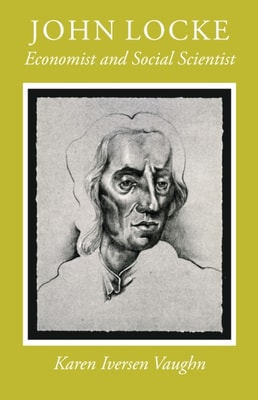
In John Locke: Economist and Social Scientist Karen Iversen Vaughn presents a comprehensive treatment of Locke's important position in the development of eighteenth century economic thought.
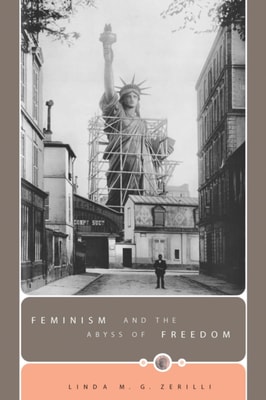
In contemporary feminist theory, the problem of feminine subjectivity persistently appears and reappears as the site that grounds all discussion of feminism.
To many, Newark seems a profound symbol of postwar liberalism's failings: an impoverished, deeply divided city where commitments to integration and widespread economic security went up in flames during the 1967 riots.
How did neighborhood groceries, parish halls, factories, and even saloons contribute more to urban vitality than did the fiscal might of postwar urban renewal?
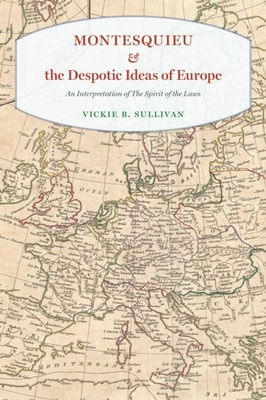
Montesquieu is rightly famous as a tireless critic of despotism, which he associates in his writings overtly with Asia and the Middle East and not with the apparently more moderate Western models of governance found throughout Europe.
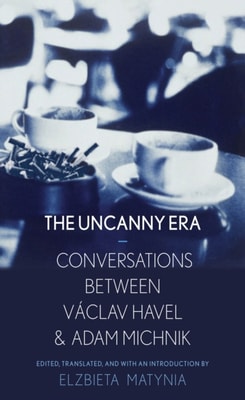
The first publication in book form of the historic postrevolution conversations between activist playwright and Czech president Vaclav Havel and Polish journalist Adam Michnik Czech playwright and dissident Vaclav Havel first encountered Polish historian and dissident Adam Michnik in 1978 at a clandestine meeting on a mountaintop along the Polish-Czechoslovak border.
This provocative and illuminating book provides a new perspective on the development of political thought from Homer to Machiavelli, Tocqueville, and Gertrude Stein (who is introduced here, for the first time, as a writer of political significance).
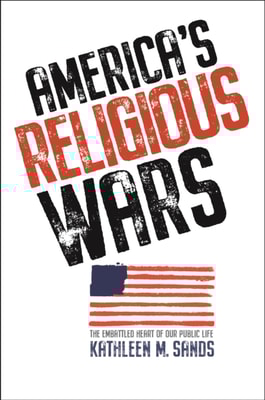
How American conflicts about religion have always symbolized our foundational political values When Americans fight about “religion,” we are also fighting about our conflicting identities, interests, and commitments.
The writings of Sergei Bulgakov (1871–1944), like those of other major social thinkers of Russia’s Silver Age, were obliterated from public consciousness under Soviet rule.
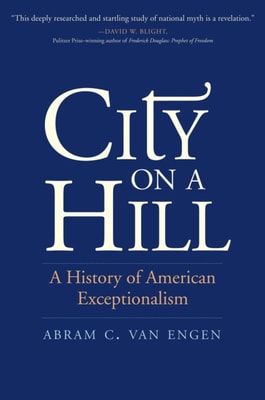
A fresh, original history of America's national narratives, told through the loss, recovery, and rise of one influential Puritan sermon from 1630 to the present dayIn this illuminating book, Abram Van Engen shows how the phrase "e;City on a Hill,"e; from a 1630 sermon by Massachusetts Bay governor John Winthrop, shaped the story of American exceptionalism in the twentieth century.
How Social Security has shaped American politics-and why it faces insolvencySince its establishment, Social Security has become the financial linchpin of American retirement.
Ted Van Dyk, a shrewd veteran of countless national political and policy fights, casts fresh light on many of the leading personalities and watershed events of American politics since JFK.
The study of electoral realignments is one of the most influential and intellectually stimulating enterprises undertaken by American political scientists.
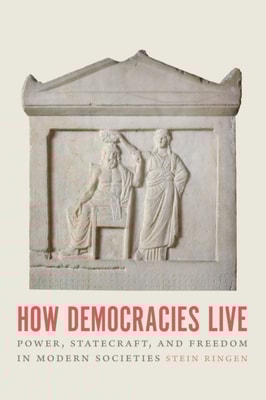
How popular democracy has paradoxically eroded trust in political systems worldwide, and how to restore confidence in democratic politics Democracies across the world are adopting reforms to bring politics closer to the people.
A central figure in Western history and American political thought, Thomas Paine continues to provoke debate among politicians, activists, and scholars.
The Secret World of American Communism (1995), filled with revelations about Communist party covert operations in the United States, created an international sensation.
In the face of the most perilous challenges of our time-climate change, terrorism, poverty, and trafficking of drugs, guns, and people-the nations of the world seem paralyzed.
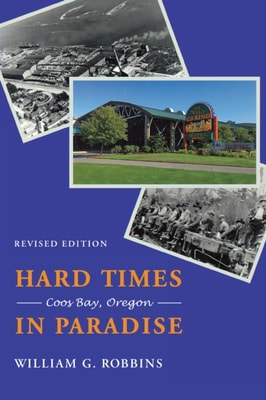
Blessed with vast expanses of virgin timber, a good harbor, and a San Francisco market for its lumber, the Coos Bay area once dubbed itself "e;a poor man's paradise.
New observations on the persistence of God in modern times and why “authentic” atheism is so very hard to come by How to live in a supposedly faithless world threatened by religious fundamentalism?
István Bibó (1911–1979) was a Hungarian lawyer, political thinker, prolific essayist, and minister of state for the Hungarian national government during the Hungarian Revolution of 1956.
The idea that the United States is destined to spread its unique gifts of democracy and capitalism to other countries is dangerous for Americans and for the rest of the world, warns Godfrey Hodgson in this provocative book.
This book is the first English-language edition of a collection of writings by one of Italy’s most important radical liberals, Piero Gobetti (1901–1926).
A fresh and fascinating look at the philosophies, politics, and intellectual legacy of one of the twentieth century’s most influential and controversial minds Occupying a pivotal position in postwar thought, Noam Chomsky is both the founder of modern linguistics and the world’s most prominent political dissident.
The untold story of the crises and compromises that united a continent As financial turmoil in Europe preoccupies political leaders and global markets, it becomes more important than ever to understand the forces that underpin the European Union, hold it together and drive it forward.
Saint Thomas More’s Utopia is one of the most important works of European humanism and serves as a key text in survey courses on Western intellectual history, the Renaissance, political theory, and many other subjects.