Rich in detail and broad in scope, this majestic book is the first to reveal the interaction of politics and religion in France during the crucial years of the long seventeenth century.
In this updated and expanded edition of his classic text, Arend Lijphart offers a broader and deeper analysis of worldwide democratic institutions than ever before.
Essential primary sources reveal the central tensions between American politics and religion throughout the nation’s history Despite the centrality of separation of church and state in American government, religion has played an important role in the nation’s politics from colonial times through the present day.
A compelling set of lectures on political obligation that contributes to ongoing debates in political theory and intellectual history This stimulating collection of lectures by the late Judith Shklar on political obligation is paired with a scholarly introduction that offers an overview of her life, illuminates the connections among her teaching, research, and publications, and explains why her lectures still resonate with us and contribute to current debates in political theory and intellectual history.
Among the most influential writings in the history of Western political thought, John Locke’s Two Treatises of Government and A Letter Concerning Toleration remain vital to political debates today, more than three centuries after they were written.
Thoroughly revised and updated, with an extensive analysis of the 2008 election, this book remains the best analysis of the Electoral College for both students and general readers.
This book describes how the first African American mass political organization was able to gain support from throughout the African diaspora to finance the Black Star Line, a black merchant marine that would form the basis of an enclave economy after World War I.
Silver mining was a capitalist business long before the supposed origin of modern capitalism Hundreds of years before a sixteenth-century crisis in European agriculture led to the origins of capital, investment, and finance, the silver mining industry exhibited many of the features of modern capitalism.
A Noble Fight examines the metaphors and meanings behind the African American appropriation of the culture, ritual, and institution of freemasonry in navigating the contested terrain of American democracy.
This groundbreaking study brings into dialogue for the first time the writings of Julian, the last non-Christian Roman Emperor, and his most outspoken critic, Bishop Gregory of Nazianzus, a central figure of Christianity.
Focusing on the Western philosophical tradition and the work of contemporary feminists, Jean Elshtain explores the general tendency to assert the primacy of the public world-the political sphere dominated by men-and to denigrate the private world-the familial sphere dominated by women.
How Robespierre's career and legacy embody the dangerous contradictions of democracyMaximilien Robespierre (1758-1794) is arguably the most controversial and contradictory figure of the French Revolution, inspiring passionate debate like no other protagonist of those dramatic and violent events.
In The Collapse of Liberalism, noted political scientist Charles Noble shows how the American political system frustrates progressive reform while taking liberalism to task for not being radical enough-for what he sees as a long history of accommodating the very same political institutions and corporate interests that it has wanted to challenge.
The Harvard-educated, Jewish American philosopher Horace Meyer Kallen (18821974) is commonly credited with the concept of cultural pluralism, which envisioned immigrant and minority groups cultivating their distinctive social worlds and interacting to create an inclusive, ever-changing true American culture.
Political scientists often ask themselves what might have been if history had unfolded differently: if Stalin had been ousted as General Party Secretary or if the United States had not dropped the bomb on Japan.
In what Stanley Hoffmann, writing in The New York Review of Books, has called a "e;fine analysis and critique of American targeting policies,"e; Sagan looks more at the operational side of nuclear strategy than previous analysts have done, seeking to bridge the gap between theory and practice.
The terms patriarchy, institutional racism, sustainable development and alienation may be familiar but this familiarity is often removed from the analytical contexts in which these ideas emerged.
How international relations theory can be applied to a zombie invasionWhat would happen to international politics if the dead rose from the grave and started to eat the living?
This remarkable history foregrounds the most marginal sector of the Roman population, the provincial peasantry, to paint a fascinating new picture of peasant society.
A timely defense of liberalism that draws vital lessons from its greatest midcentury proponentsToday, liberalism faces threats from across the political spectrum.
How women preserved the power of the Catholic Church in Mexican political lifeWhat accounts for the enduring power of the Catholic Church, which withstood widespread and sustained anticlerical opposition in Mexico?
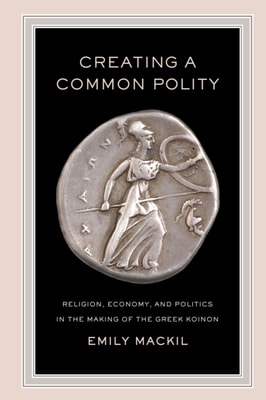
In the ancient Greece of Pericles and Plato, the polis, or city-state, reigned supreme, but by the time of Alexander, nearly half of the mainland Greek city-states had surrendered part of their autonomy to join the larger political entities called koina.
Concise yet comprehensive, Building Your IR Theory Toolbox provides undergraduate students with the theoretical framework for understanding events in world politics.
Prescient essays about the state of our politics from the philosopher who predicted that a populist demagogue would become president of the United StatesRichard Rorty, one of the most influential intellectuals of recent decades, is perhaps best known today as the philosopher who, almost two decades before the 2016 U.
A new edition of the classic work on the economic tools of foreign policyToday's complex and dangerous world demands a complete understanding of all the techniques of statecraft, not just military ones.
Scholars have long recognized the relevance to Christianity of the many stories surrounding the life of Alexander the Great, who claimed to be the son of Zeus.
Gerry Fitt was a key political figure in Northern Ireland for over twenty years, yet there is no major historical evaluation of his contribution, nor of his legacy or place in the memory of the minority community there.