As one of South Asia's oldest democracies Sri Lanka is a critical case to examine the limits of a liberal peace, peacebuilding and external engagement in the settlement of civil wars.
An analysis of the 2009 European elections in each of the 27 member states of the newly enlarged European Union, and assessment of the European Parliament in 2004-2009.
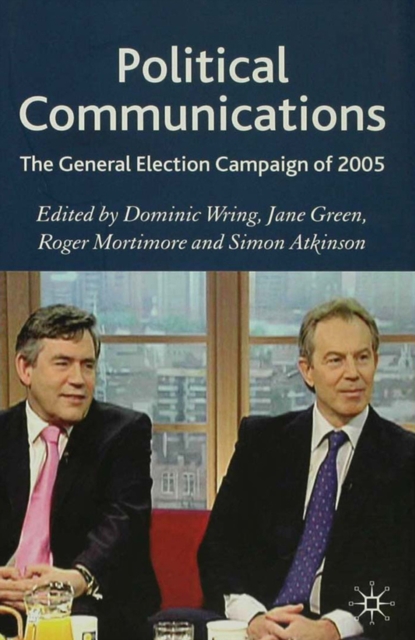
This offers a unique insight into the 2005 British General Election from the perspectives of those responsible for organizing, reporting, and understanding the campaign.
This book presents the results of a new comparative research project on the trajectories, motivations, perceptions and attitudes of young members (aged 18-25) of 15 different European political parties in the UK, France, Germany, Spain, Norway and Hungary.
This book is a history of the emergence and development of the concept of proportional representation and its relation to political theory within the context of nineteenth-century British party politics focusing on Thomas Hare (1806-1891).
Images of political leaders as everyday figures, involved in commonplace activities, now form an increasingly important aspect of electoral presentation.
This book presents the main results of an electoral panel study which is both unique and innovative not only in French political research but also among Western European electoral studies.
This book examines the influence of terrorist threat in the recent elections in the US, Great Britain, and Russia to analyze the influence of post-9/11 fears on voting behaviour in comparative perspective.
Elections, Parties and Representation in Post-Communist Europe 1990-2002 stresses the ways in which the development of political parties affected the quality of democracy, the nature of political representation, and political accountability in the early stages of post-communist politics.
Campaigns to win the Democratic and Republican presidential nominations are longer, more complex, and more confusing to the observer than the general election itself.
A Thousand Steps to Parliament traces how the complicated, contradictory paths to political representation that women in Mongolia must walk mirror those the world over.
Many argue that "e;civic duty"e; explains why Americans engage in politics, but what does civic duty mean, and does it mean the same thing across communities?
The Reasoning Voter is an insider's look at campaigns, candidates, media, and voters that convincingly argues that voters make informed logical choices.
In recent decades, and particularly since the US Supreme Court's controversial Citizens United decision, lawmakers and other elites have told Americans that stricter campaign finance laws are needed to improve faith in the elections process, increase trust in the government, and counter cynicism toward politics.
In 2016, when millions of Americans voted for Donald Trump, many believed his claims that personal wealth would free him from wealthy donors and allow him to "e;drain the swamp.
In November 2000, when the now-infamous "e;butterfly ballot"e; confused crucial Florida voters during a hotly contested presidential race, the importance of well-designed ballots to a functioning democracy caught the nation's attention.
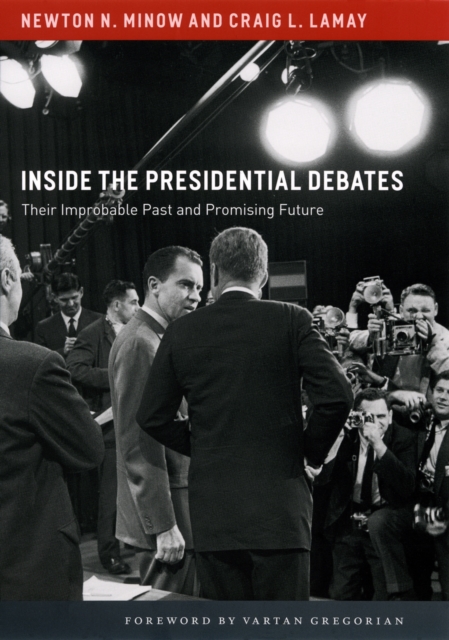
Newton Minow's long engagement with the world of television began nearly fifty years ago when President Kennedy appointed him chairman of the Federal Communications Commission.
For years Mark Monmonier, "e;a prose stylist of no mean ability or charm"e; according to the Washington Post, has delighted readers with his insightful understanding of cartography as an art and technology that is both deceptive and revealing.
In the days after Donald Trump's unexpected victory on election night 2016, The New York Times, CNN, and other leading media outlets reached out to one of the few pundits who had correctly predicted the outcome, Allan J.
In The Simple Art of Voting, Delia Baldassarri provides a new understanding of how voting works by focusing on how choices are made rather than on what their outcomes are.
From the men and women associated with the American Revolution and Civil War to the seminal figures in the struggles for civil and women's rights, Americans have been fascinated with icons of great achievement, or at least reputation.
Named the American Political Science Association's Best Book on Race, Ethnicity, and Politics for 2014When we think of minorities--linguistic, ethnic, religious, regional, or racial--in world politics, conflict is often the first thing that comes to mind.
There are two winners in every presidential election campaign: The inevitable winner when it begins--such as Rudy Giuliani or Hillary Clinton in 2008--and the inevitable victor after it ends.
Late deciders go for the challenger; turnout helps the Democrats; the gender gap results from a surge in Democratic preference among women--these and many other myths are standard fare among average citizens, political pundits, and even some academics.