National-level elections receive more attention from scholars and the media than elections at other levels, even though in many European countries the importance of both regional and European levels of government has grown in recent years.
Despite a recent decline in voter turnout, British general elections are still the centrepiece of Britain's liberal democracy and their results make a real difference to every British citizen.
Institutions 'matter' to electoral reform advocates and political scientists - both argue that variation in electoral institutions affect how elected officials and citizens behave.
This bold venture into democratic theory offers a new and reinvigorating thesis for how democracy delivers on its promise of public control over public policy.
The use of referendums around the world has grown remarkably in the past thirty years and, in particular, referendums are today deployed more than ever in the settlement of constitutional questions, even in countries with little or no tradition of direct democracy.
The use of referendums around the world has grown remarkably in the past thirty years and, in particular, referendums are today deployed more than ever in the settlement of constitutional questions, even in countries with little or no tradition of direct democracy.
Campaign organizers and the media appear to agree that voters' perceptions of party leaders have an important impact in elections: considerable effort is made to ensure that leaders look good, speak well, and that they are up in the polls.
A large body of electoral studies and political party research argues that the institutional context defines incentives that shape citizen participation and voting choice.
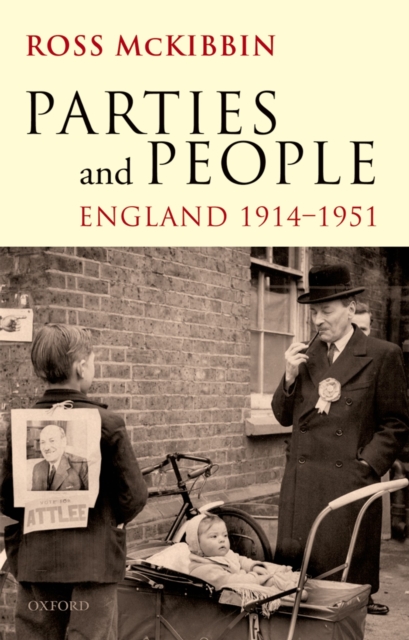
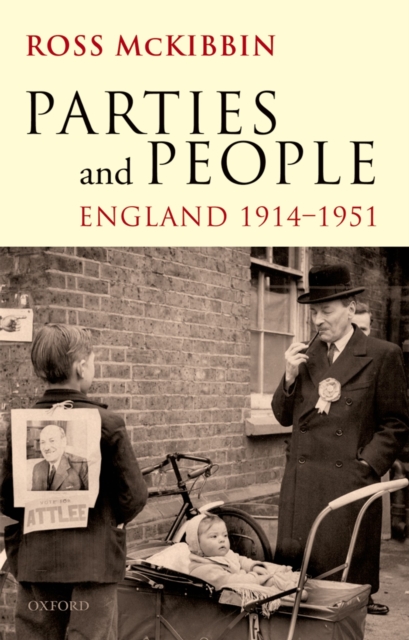
The 'sequel' to his best-selling Classes and Cultures, Ross McKibbin's latest book is a powerful reinterpretation of British politics in the first decades of universal suffrage.
The Strain of Representation assesses and explains the extent to which political parties across Europe as a whole have succeeded in representing diverse voters.
New Parties in Old Party Systems addresses a pertinent yet neglected issue in comparative party research: why are some new parties that enter national parliament able to defend a niche on the national level, while other fail to do so?
The Oxford Handbooks of American Politics are a set of reference books offering authoritative and engaging critical overviews of the state of scholarship on American politics.
Linking Citizens and Parties addresses familiar questions about political representation: Are parties responsive to their core supporters or to the public in general?
The 'sequel' to his best-selling Classes and Cultures, Ross McKibbin's latest book is a powerful reinterpretation of British politics in the first decades of universal suffrage.
Citizens living in presidential or parliamentary systems face different political choices as do voters casting votes in elections governed by rules of proportional representation or plurality.
This book charts the economic, social and political rise of the Justice and Development Party (JDP) as well as its political resilience over the last sixteen years.
Political party organizations play large roles in democracies, yet their organizations differ widely, and their statutes change much more frequently than constitutions or electoral laws.
Globalisation and Domestic Politics addresses how a widely acknowledged and pervasive economic and social process and globalization affect democratic politics among both masses and elites.
When direct elections for the European Parliament were first organized in 1979, the idea was that such direct elections would increase the democratic legitimacy and accountability of the Parliament.
When direct elections for the European Parliament were first organized in 1979, the idea was that such direct elections would increase the democratic legitimacy and accountability of the Parliament.
The 2011 general election in the Republic of Ireland, which took place against a backdrop of economic collapse, was one of the most dramatic ever witnessed.
The Democratic Unionist Party (DUP) has moved from a religion-dominated protest party to a pragmatic party of government in Northern Ireland, the most popular in the region, with more votes, Assembly seats, and MPs than any of its rivals.
Winner of the Political Studies Association WJM MacKenzie Prize for best book of 2014 The Politics of English Nationhood supplies the first comprehensive overview of the evidence, research and major arguments relating to the revival of Englishness, exploring its varied, and often overlooked, political ramifications and dimensions.
Over half a century ago, a leading commentator suggested that Scotland was very unusual in being a country which was, in some sense at least, a nation but in no sense a state.
Over half a century ago, a leading commentator suggested that Scotland was very unusual in being a country which was, in some sense at least, a nation but in no sense a state.