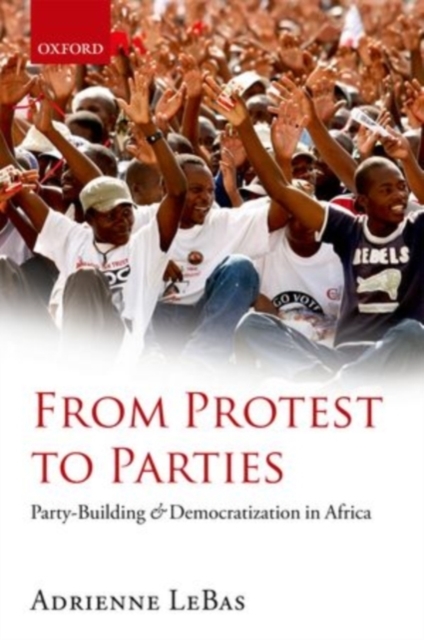
Why do strong opposition party organizations emerge in some democratizing countries, while those in others remain weak or quickly fragment on ethnic lines?
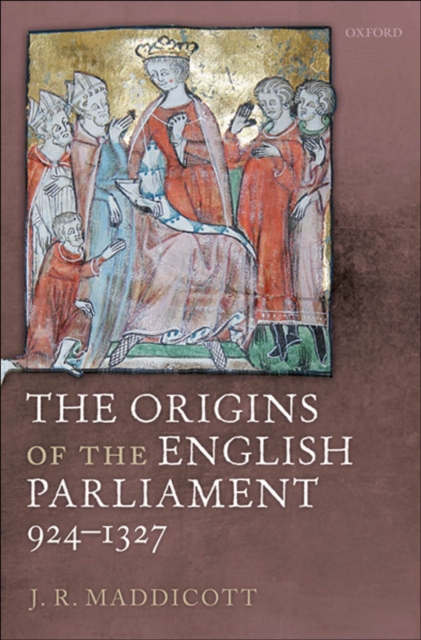
The Origins of the English Parliament is a magisterial account of the evolution of parliament, from its earliest beginnings in the late Anglo-Saxon period.
Vital Democracy outlines a theory of democracy in action, based on four elementary forms of democracy - pendulum, consensus, voter and participatory democracy - that are thoroughly analysed, compared and related to both the literature and the real world of democracy.
When Barack Obama praised the writings of philosopher theologian Reinhold Niebuhr in the run up to the 2008 US Presidential Elections, he joined a long line of top politicians who closely engaged with Niebuhr's ideas, including Tony Benn, Jimmy Carter, Martin Luther King Jr.
All over the world democratic reforms have brought power to the people-but under conditions where the people have little opportunity to think about the power that they exercise.
Europe Undivided analyzes how an enlarging EU has facilitated a convergence toward liberal democracy among credible future members of the EU in Central and Eastern Europe.
The Origins of the English Parliament is a magisterial account of the evolution of parliament, from its earliest beginnings in the late Anglo-Saxon period.
Vital Democracy outlines a theory of democracy in action, based on four elementary forms of democracy - pendulum, consensus, voter and participatory democracy - that are thoroughly analysed, compared and related to both the literature and the real world of democracy.
When Barack Obama praised the writings of philosopher theologian Reinhold Niebuhr in the run up to the 2008 US Presidential Elections, he joined a long line of top politicians who closely engaged with Niebuhr's ideas, including Tony Benn, Jimmy Carter, Martin Luther King Jr.
All over the world democratic reforms have brought power to the people-but under conditions where the people have little opportunity to think about the power that they exercise.
Rethinking Arab Democratization unpacks and historicizes the rise of Arab electoralism, narrating the story of stalled democratic transition in the Arab Middle East.
This book is the result of a research project carried out for the Committee of the Regions and analyses the 'state of play' of democratic practice at the subnational level in all of the European Member states.
This book seeks to comprehend the evolving nature of the European Union following the fall of the Berlin Wall and the failure of the European Constitution.
Deliberative democracy has become the central reference point for democracy theorists over the last decade or so, influencing normative frameworks and the ways we conceptualize the workings of democratic societies.
The past 15 years have seen declining public support for European integration, and widespread suggestions that a legitimacy crisis faces the European Union (EU).
The governance of post-conflict territories embodies a central contradiction: how does one help a population prepare for democratic governance and the rule of law by imposing a form of benevolent autocracy?
If one lesson emerges clearly from fifty years of European integration it is that political aims should be pursued by overtly political means, and not by roundabout economic or legal strategies.
Taking as its starting-point Anthony Downs' seminal work, An Economic Theory of Democracy, this book draws upon insights generated within economics, political psychology, and the study of rhetoric to examine the way in which New Labour achieved and maintained its electoral hegemony from 1994.
Why have the national governments of EU member states successively endowed the European Parliament with supervisory, budgetary, and legislative powers over the past fifty years?
The project of European integration now spans Europe, but in becoming bigger and broader the European Union has brought on itself significant criticism.
This volume on democratic accountability addresses one of the burning issues on the agenda of policy makers and citizens in contemporary Latin America.
Social movements take shape in relation to the kind of state they face, while over time states are transformed by the movements that they both incorporate and resist.