This book explores how the interrelated concepts of responsible citizenship, corporate social responsibility (CSR) and sustainability can be interpreted, researched and taught.
This book presents a theory of information justice that subsumes the question of control and relates it to other issues that influence just social outcomes.
This book reconsiders the fundamental principles of zoning and city planning over the course of the past one-hundred years, and the lessons that can be learned for the future of cities.
This contributed volume is the first in-depth analysis of the health policies of populist radical right (PRR) parties worldwide and their actual involvement in health care.
The purpose of the book is to elaborate a planning theory which departs from the plethora of theories which reflect the conditions of developed countries of the North-West.
This book critically explores the interconnections between tourism and the contemporary city from a policy-oriented standpoint, combining tourism perspectives with discussion of urban models, issues, and challenges.
This book is authored by some of the renowned scholars in Africa who take on the task to understand how Kenya is governed in this century from a public policy perspective.
This book offers a practical guide for policy advisors and their managers, grounded in the author's extensive experience as a senior policy practitioner in New Zealand's Westminster-style system of government.
This book explores the international diffusion of Participatory Budgeting (PB), a local policy created in 1989 in Porto Alegre, Brazil, which has now spread worldwide.
This book explores the development of sustainable public procurement (SPP) as a strategic policy instrument to support decoupling of economic growth from environmental degradation and enhancing social well-being.
This book analyzes the common set of obstacles to the development and integration of government Information and Communication Technology (ICT) projects and effective e-government initiatives in developing countries.
In 2016, Germany's government presented its third cybersecurity strategy, which aims to strengthen the national cyber defence architecture, cooperation between the state and industry, and individual users' agency.
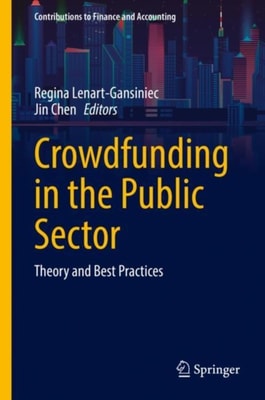
In recent years, crowdfunding has become important and it has been enthusiastically used not only by commercial organizations but also by the public sector.
To remain financially viable, all organizations, including government and nonprofit organizations, need to maximize efficiency, improve performance, and deal with complex problems.
Die Stiftungsinitiative der deutschen Wirtschaft steht für zwei aufeinander bezogene Ziele: Sie suchte den internationalen Rechtsfrieden für deutsche Unternehmen durch humanitäre Leistungen an ehemalige Zwangsarbeiter und andere Opfer des NS-Regimes herzustellen und ihn auf Dauer für die deutsche Wirtschaft insgesamt zu sichern.
The Impact of UNESCO on States' Cultural Policies focuses on the impact of the 2005 Convention on Diversity of Cultural Expressions on the cultural policies of eight states and substates, examining how they have integrated it into their own cultural policy.