Diseases do not recognize national borders, and as we are gradually learning, failure to govern health effectively at a global level profoundly affects us all.
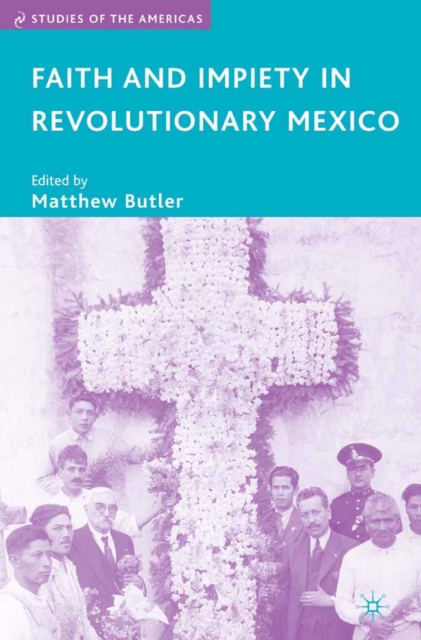
While Mexico's spiritual history after the 1910 Revolution is often essentialized as a church-state power struggle, this book reveals the complexity of interactions between revolution and religion.
This is an introduction to the women's health movements and what is being accomplished by women organizing to achieve better health care around the world.
Essential reading for social and medical scientists and all those interested in infectious diseases and public health, AIDS and the Twenty-First Century examines the social and economic origins and impacts of the HIV/AIDS epidemic.
Drawing on Foucauldian theory and 'social harm' paradigms, Naughton offers a radical redefinition of miscarriages of justice from a critical perspective.
Social Policy has been a key dimension of dynamic economic growth in East Asia's 'little tigers' and is also a prominent strand of their responses to the financial crisis of the late 1990s.
Providing the first EU-wide study of the way football hooliganism has been defined by academics, law makers and enforcers, and the media since the 1960s, this book examines the regulation and policing of the phenomenon, which has been influenced by security-related developments within post-bipolar Europe
Drawing on a wide range of interviews and primary and secondary sources, this book investigates the dynamic interactions between national regulatory formation and the global biopolitics of regenerative medicine and human embryonic stem cell science.
This book re-evaluates the importance of social policies in shaping well-being and combating exclusion, and enhances understanding of how these policies are formed in a globalizing world.
Terry Thomas considers the use of criminal records within the criminal justice system and beyond - especially the growth of their use for pre-employment screening via the Criminal Records Bureau.
Buchs analyses the goals and instruments of the Open Method of Coordination, discusses approaches which theorize its functioning, examines its policy content and develops a framework for its evaluation.
This book overturns the idea that psychiatric drugs work by correcting chemical imbalance and analyzes the professional, commercial and political vested interests that have shaped this view.
Drawing upon qualitative material from parents and professionals, including ethnography, narrative inquiry, interviews and focus groups, this book brings together feminist and critical disability studies theories.
Despite the growing multi-faith and multi-ethnic nature of Britain, there is insufficient knowledge about diversity in family practices across ethno-religious groups.
Considering the question of how levels of security allow state power to be increased to the point at which it infringes essential civil liberties, this book explores the creeping power of the executive and the unfeasibility of widespread use of the Human Rights Act as a bulwark against the oppressive use of state power.
Drawing upon both conceptual and empirical evidence, this volume argues the case for the centrality of social policy in development, focusing particularly on the message that social policy needs to be closely intertwined with economic policy.
Based on original research and analysis by a group of health policy experts and economists from across the world, this book analyzes the causes and consequences of the expanding global and local commercialization of health care.
Examining the ways in which majority Western cultures govern, represent and exclude those that are considered to be ethically 'other', this book asks what is the impact of globalization, governance and Western immigration controls on the construction of the majority 'self' and the minority 'other'?
Located between three powerful phenomena, public health, the law and social stigma, methadone maintenance treatment attracts loyal advocates, vociferous critics and innumerable engaged onlookers.
Demand for owner-occupied housing has expanded dramatically across modern-industrialized societies in recent years leading to volatile increases in residential property values.
Community safety is a narrowly defined concept that allows states to ignore arguably more serious threats caused by pro-market policies and the actions of major corporations.
Explores why articulating social justice in both development discourse and practice provides the potential for a fresh understanding of global poverty, and one that rises above the current 'impasse'.
In a time when racism is on the rise as a source of conflict and social justice has been increasingly demanded by the civic society, this collection stands as a timely reminder that to ignore the racial factor in the globalization forces is as mistaken as eliminating class analysis.
Citizenship in an Enlarging Europe considers the impact of economic, political and social transformation in Central and Eastern Europe in the context of EU enlargement.
The first detailed and comprehensive analysis of the implications of new health technologies for society, the delivery of health care, and the very meaning of health itself.
Drawing on new empirical research with disabled people in the UK, and considering the work of theorists such as Berlin, Habermas and Mouffe, Ellison's ideas of proactive and defensive engagement and Turner's 'sociology of the body', Beckett proposes a new model of 'active' citizenship that rests upon an understanding of 'vulnerable personhood'.
This book outlines the methodology and results of the Fiction and the Cultural Mediation of Ageing Project, led by a research team from Brunel University, UK.
This book contributes to recent debates in transnationalism, mobilities and migration studies by offering the first in-depth sociological examination of the global phenomenon of action sports and the transnational networks and connections being established within and across local contexts around the world.
This book explores the development of state welfare in Taiwan, focusing on the interconnection between capitalist development and state welfare from 1895 to 1990, using an integrated Marxist perspective to which the capitalist world system, state structure, ideology, and social structure are considered simultaneously.