In the late seventeenth century the role of printed propaganda in manipulating public consciousness became increasingly explicit, and governments developed systematic controls over the printed word.
Strategy in the Missile Age first reviews the development of modern military strategy to World War II, giving the reader a reference point for the radical rethinking that follows, as Dr.
In occupied Egypt, British governmental programs were closely related to England's needs as an imperial power since Egypt was occupied because of its strategic position along the route to India.
The evolution, organization, leadership, membership, program, doctrine, and relationship of Venezuela's most important political party to other groups and rival parties are related.
A group of specialists trace the origins and development of political parties, explore their impact on the system in which they exist, and raise new questions about the potential role of parties.
Professor Knorr examines bends in the values which nations derive in their international relationships from the possession and use of both nuclear and non-nuclear military forces, and suggests that territorial conquest and the furtherance of economic benefits by military means have generally diminished in appeal.
The risks of arms control and disarmament, how they can be reduced or eliminated, and the political implications of drastic disarmament are analyzed by eleven experts.
These essays by 11 outstanding scholars are "e;a valuable and stimulating contribution to an aspect of contemporary political development-the use, neglect, or abuse of communication-which does not receive sufficient attention.
In a period marked by growing fluidity between the West and the Communist nations, the role of revolution as an instrument of political and social change takes on an intense, possibly dangerous importance.
The evolution of China's legal tradition was one of the most striking aspects of the transformation of Chinese civilization under Mongolian domination.
This volume launches the translation of a work that describes the development of Chinese political thought from the time of Confucius in the late Chou era into the twentieth century.
In this 1970 expanded edition, which includes a new Preface and Introduction and a long new chapter, Professor Bienen discusses the events and significance of the Arusha Declaration in the light of his continued research since 1967 while a Visiting Lecturer at University College, Nairobi.
As the last volume in the series sponsored by the SSRC Committee on Comparative Politics, this book reflects-as does the preceding volume-the Committee's decision to devote renewed attention to the original state building experiences of the West, after having studied political development in the newer countries of the Third World.
In interviews with 170 politically active Iranians, the author reveals that politics in Iran are based on interpersonal relationships marked by insecurity, cynicism, and mistrust.
Serious debates and discussions on world politics in Russian journals and books have greatly increased since 1956, resulting in a steadily changing appraisal of the world political situation by the Russians.
A pioneering venture, this book is the first major effort toward a valid comparison of the political systems of Asia, Africa, the Near East, and Latin America.
During the period 1924-1949, amid civil war with the KMT, war with the Japanese, internal leadership disputes, and other chaotic conditions, rapid shifts occurred in the political culture of China.
In this unusual synthesis of political and socio-economic history, Philip Manville demonstrates that citizenship for the Athenians was not merely a legal construct but rather a complex concept that was both an institution and a mode of social behavior.
This book combines the tools of political science, sociology, and labor history to offer a wide-ranging analysis of how unions have participated in politics in Britain, Germany, and the United States.
Why did Syrian political life continue to be dominated by a particular urban elite even after the dramatic changes following the end of four hundred years of Ottoman rule and the imposition of French control?
Bruce Kuniholm takes a regional perspective to focus on postwar diplomacy in Iran, Turkey, and Greece and efforts in these countries to maintain their independence from the Great Powers.
Throughout history parties have faltered and new groups have emerged, but rarely has this process been so accelerated, so widespread, and so conducive to dramatic political change as in our present era.
"e;Easily the most comprehensive and useful work on American socialism, including its history, theories, and impact on life, culture, and economic and political parties in the United States, is as important a contribution as the essays.
Allan Christelow examines the Muslim courts of Algeria from 1854, when the French first intervened in Islamic legal matters, through the gradual subordination of the courts and judges that went on until World War I.
Kent Jennings and Richard Nieini arc recognized widely for their 1965 study of the development of political attitudes and behavior among a large, nationally representative sample of high school seniors and their parents (The Political Character of Adolescence, Princeton).
To understand what conditions make democracies stable or unstable, effective or ineffective, Professor Eckstein examines the stability and effectiveness of Norwegian democracy.
In this completely revised edition of one of the foundational texts of network sociology, Harrison White refines and enlarges his groundbreaking theory of how social structure and culture emerge from the chaos and uncertainty of social life.
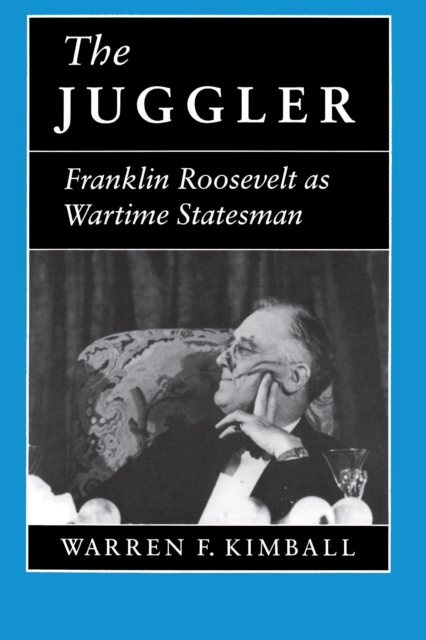
Here Warren Kimball explores Roosevelt's vision of the postwar world by laying out the nature and development of FDR's "e;war aims"e;--his long-range political goals.