Das Buch «Grundformen der (Bewegungs-)Entwicklung» von Philipp Jordi Kramis ist ein umfassendes Werk, das sich an Körper- und Atemtherapeutinnen und -therapeuten richtet und sich mit den grundlegenden Themen der Beziehungs- und Atemtherapie ibat® auseinandersetzt.
In today's industrialized societies, the majority of parents work full time while caring for and raising their children and managing household upkeep, trying to keep a precarious balance of fulfilling multiple roles as parent, worker, friend, & child.
From Jay Griffiths, the author of the award-winning Wild comes a passionate polemic defence of childhood 'Her work isn't just good -- it's necessary' Philip PullmanIn Kith, Jay Griffiths seeks to discover why we deny our children the freedoms of space, time and the natural world.
The Clinician's Guide to Treatment and Management of Youth with Tourette Syndrome and Tic Disorders provides clinicians with cognitive behavioral therapy concepts and skills to manage young patients dealing with Tourette Syndrome (TS) and tic disorders.
Practical Ethics for Effective Treatment of Autism Spectrum Disorder, Second Edition is for behavior analysts working directly with, or supervising those who work with, individuals with autism.
Synapse Development and Maturation, the latest release in the Comprehensive Developmental Neuroscience series, presents the latest information on the genetic, molecular and cellular mechanisms of neural development.
Judgment, Decision-Making, and Embodied Choices introduces a new concept of embodied choices which take sensorimotor experiences into account when limited time and resources forces a person to make a quick decision.
Starting at the Beginning: Laying the Foundation for Lifelong Mental Health coincides with the 24th International Association for Child and Adolescent Psychiatry and Allied Professions (IACAPAPA) Congress in Singapore, June 2020.
Evaluation and Treatment of Neuropsychologically Compromised Children: Understanding Clinical Applications Post Luria and Reitan defines what executive functions are, discusses differences in executive functioning between normative children and those with special education needs, identifies how best to perform neuropsychological assessments of executive function using both qualitative and quantitative measures, and presents the best treatment interventions for improvement.
A Guide to Clinical Supervision: The Supervision Pyramid provides a combined view of theory and research-based, step-by-step guidelines for conducting supervision.
Providing an evidence-based understanding of the causes and consequences of violence against children, experts in the field examine the best practices used to help protect children from violence.
"e;The handbook is an impressive collection of research studies and theories provided by knowledgeable contributors on life-span development from conception to old age.
Child and Adolescent Online Risk Exposure: An Ecological Perspective focuses on online risks and outcomes for children and adolescents using an ecological perspective (i.
This gripping memoir about what it means to face uncertainty details the plans Janine had for her family and her life that were gutted by her then 10-year-old son Mason's diagnosis of a cancerous brain tumor, only to be followed by her own cancer diagnosis.
Bayley 4 Clinical Use and Interpretation provides clinicians with a guide for use, administration, scoring and interpretation of the Bayley Scales of Infant and Toddler Development, Fourth Edition.
Guided Cognition for Learning: Unsupervised Learning and the Design of Effective Homework details a new instructional design approach called Guided Cognition where homework tasks are designed to guide learners to engage in specific, observable cognitive events that are hypothesized to elicit underlying theoretical cognitive processes that result in learning.
The Neuroscience of Autism provides a comprehensive accounting of autism spectrum disorders by integrating scientific findings from behavioral, cognitive and neurobiological research.
Child and Adolescent Online Risk Exposure: An Ecological Perspective focuses on online risks and outcomes for children and adolescents using an ecological perspective (i.
Adolescent Dating Violence: Theory, Research, and Prevention summarizes the course, risk/protective factors, consequences and treatment/prevention of adolescent dating violence.
International Review of Research in Developmental Disabilities, Volume 54 shares the latest research on the interactions between families of individuals with intellectual and developmental disabilities and service delivery systems.
International Review of Research in Developmental Disabilities, Volume 55, provides a scholarly look at research on the causes, effects, classification systems and syndromes of developmental disabilities.
One of the most widely used assessments of infants and toddlers, the BAYLEY-III measures the major areas of development including cognitive, language, motor, social-emotional, and adaptive functioning.
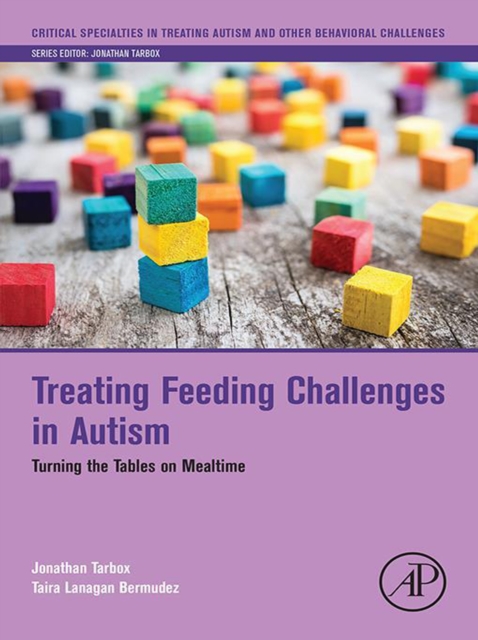
Treating Feeding Challenges in Autism: Turning the Tables on Mealtime distills existing research on feeding disorders treatment into the very best, most effective and most practical strategies for practitioners to implement with their clients who have autism and other developmental and behavioral disorders.
The Development of Early Childhood Mathematics Education, Volume 53 in the Advances in Child Development and Behavior series, includes chapters that highlight some of the most recent research in the field of developmental psychology.
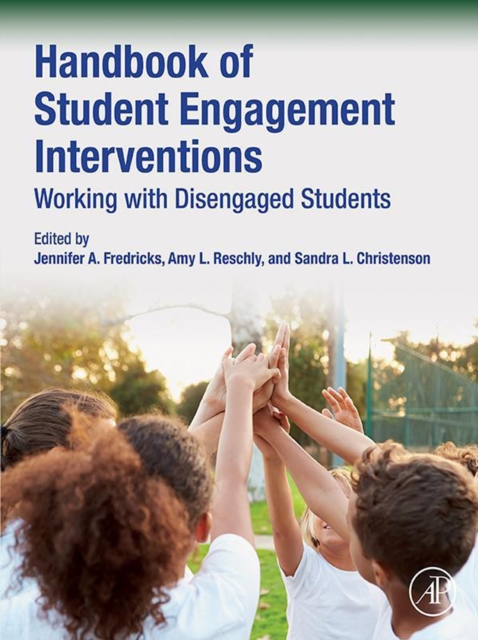
Handbook of Student Engagement Interventions: Working with Disengaged Students provides an understanding of the factors that contribute to student disengagement, methods for identifying students at risk, and intervention strategies to increase student engagement.
Advances in Child Development and Behavior, Volume 52, includes chapters that highlight some of the most recent research in the field of developmental psychology.
Quality Activities in Center-Based Programs for Adults with Autism: Moving from Nonmeaningful to Meaningful describes what constitutes meaningful versus nonpurposeful activities for adults with autism and other severe disabilities in a classroom or center-based program.
This comprehensive guide enables parents of children with an autism spectrum disorder (ASD) to play an active and effective role in their child's medical care from diagnosis to early adulthood.
A burgeoning evidence base supports that arts, play and other creative therapies have potential to help children in foster care, kinship care or adoptive families to recover from complex trauma.
Based on extensive clinical research, this book sheds new light onto how Mindfulness Based Stress Reduction (MBSR) can be used with older adults as an effective complementary intervention, identifying specific ways in which MBSR programmes can be adapted and fine-tuned to meet the needs of this group.
The Clinician's Guide to Treatment and Management of Youth with Tourette Syndrome and Tic Disorders provides clinicians with cognitive behavioral therapy concepts and skills to manage young patients dealing with Tourette Syndrome (TS) and tic disorders.
Adolescent Dating Violence: Theory, Research, and Prevention summarizes the course, risk/protective factors, consequences and treatment/prevention of adolescent dating violence.
Play Therapy: Treatment Planning and Interventions: The Ecosystemic Model and Workbook, 2e, provides key information on one of the most rapidly developing and growing areas of therapy.
This comprehensive yet brief overview of the adolescent human brain discusses how the brain develops during this critical period of life and how that development impacts decision-making and risk-taking behavior in the adolescent.
Adolescent and child sexuality is studied by developmental psychologists from a research perspective and is of interest to forensic psychologists dealing with abuse and custody issues as well as rape cases.
Modeled on the author's bestselling Therapist's Guide to Clinical Intervention, this new book on child clinical intervention presents much of the material in outline or bullet point format, allowing easy understanding of complex material for the busy therapist.
Social and emotional aspects of schooling and the learning environment can dramatically affect one's attention, understanding, and memory for learning.