This volume provides an up-to-date picture of the current status of theoretical and empirical developments in the application of fuzzy sets in psychology.
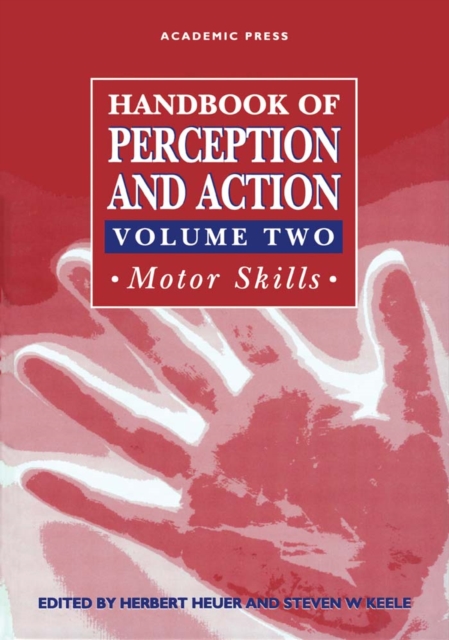
The major focus of this book is on the differences between ecological approaches to action (`action theories'), and theories on motor control and learning couched in terms of information processing (`motor theories').
General Description of the SeriesThe Psychology of Learning and Motivation publishes empirical and theoretical contributions in cognitive and experimental psychology, ranging from classical and instrumental conditioning to complex learning and problem solving.
The Psychology of Learning and Motivation publishes empirical and theoretical contributions in cognitive and experimental psychology, ranging from classical and instrumental conditioning to complex learning and problem solving.
The Psychology of Learning and Motivation publishes empirical and theoretical contributions in cognitive and experimental psychology, ranging from classical and instrumental conditioning to complex learning and problem solving.
The Psychology of Learning and Motivation publishes empirical and theoretical contributions in cognitive and experimental psychology, ranging from classical and instrumental conditioning to complex learning and problem solving.
With a long-standing tradition for excellence, this series is a collection of quality papers that are widely read by researchers in cognitive and experimental psychology.
Recent government publications like "e;Benchmarks for Scientific Literacy"e; and "e;Science for all Americans"e; have given teachers a mandate for improving science education in America.
The Handbook of Self-Regulation represents state-of-the-art coverage of the latest theory, research, and developments in applications of self-regulation research.
The ABCs of Learning Disabilities, Second Edition, discusses major research findings on learning disabilities in children, adolescents and adults in language, memory, social skills, self-regulation, reading, mathematics, and writing, with an additional chapter on assessment.
In recent years there has been a wealth of new research in cognition, particularly in relation to supporting theoretical constructs about how cognitions are formed, processed, reinforced, and how they then affect behavior.
As a reference that contains original and innovative research on the sociology of emotion, this book will not only appeal to sociologists but also to scholars of psychology, psychiatry, anthropology, history, social work, and business/management.
International Review of Research in Mental Retardation is an ongoing scholarly look at research into the causes, effects, classification systems, syndromes, etc.
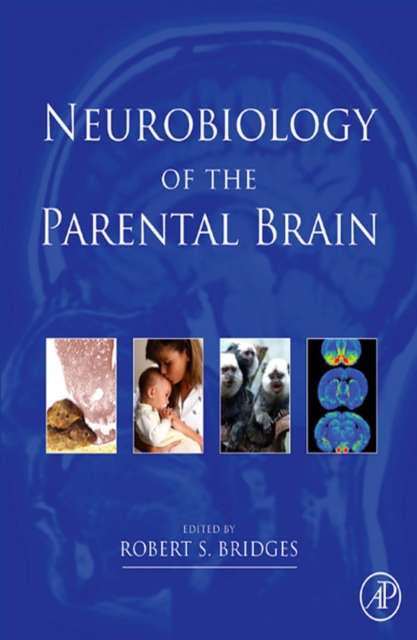
This book presents cutting edge research on the basic neurobiology of parental behavior as it relates to behavioral disorders, including postpartum depression, anxiety, and inadequate parental bonding to infants.
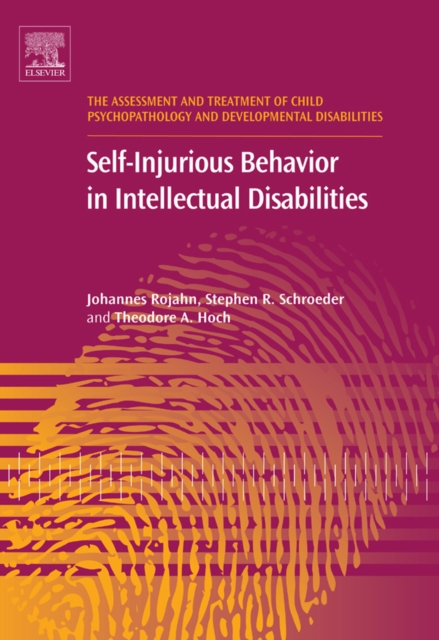
Self-Injurious Behavior in Intellectual Disabilities gives a broad overview of the literature in the area of self-injurious behavior in people with intellectual disabilities, but most of the text is dedicated to the review of the behavioral and biological research in this field.
Ever since the first successful International Cognitive Technology (CT) Conference in Hong Kong in August 1995, a growing concern about the dehumanising potential of machines, and the machining potential of the human mind, has pervaded the organisers' thinking.
International Review of Research in Mental Retardation is an ongoing scholarly look at research into the causes, effects, classification systems, syndromes, etc.
This book takes as a starting point, John Dewey's article, The Reflex Arc Concept in Psychology, in which Dewey was calling for, in short, the utilisation of systems theories within psychology, theories of behaviour that capture its nature as a vastly-complex dynamic coordination of nested coordinations.
Perception and Cognition at Century's End contains cognitive psychology surveys that are up-to-date and historically based, as well as references to the development of cognitive psychology over the past century.
This internationally authored volume presents major findings, concepts, and methods of behavioral neuroscience coordinated with their simulation via neural networks.
The Handbook of Self-Regulation represents state-of-the-art coverage of the latest theory, research, and developments in applications of self-regulation research.
The Handbook of Perception and Action overviews state-of-the-art research in these two areas, while also stressing the functional relationships between them.
This up-to-date handbook focuses on the study of action, or"e;motor control,"e;which examines movement and skill and the internal processes that lead to them.
Handbook of Behaviorism provides a comprehensive single source that summarizes what behaviorism is, how the various "e;flavors"e; of behaviorism have differed between major theorists both in psychology and philosophy, and what aspects of those theories have been borne out in research findings and continue to be of use in understanding human behavior.
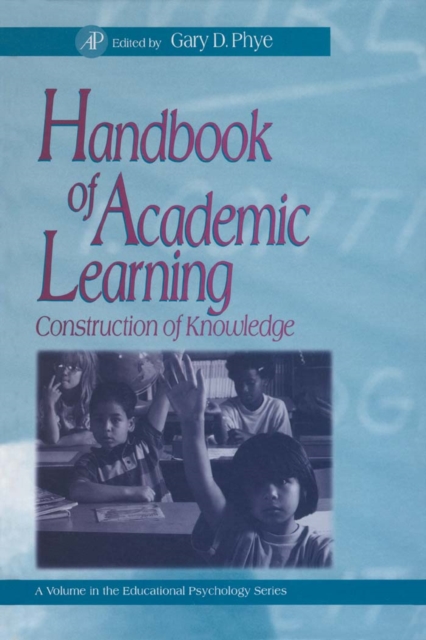
The Handbook of Academic Learning provides a comprehensive resource for educational and cognitive psychologists, as well as educators themselves, on the mechanisms and processes of academic learning.
Cognitive electrophysiology is a very well established field utilizing new technologies such as bioelectric events-related potentials (ERP) and magnetic (ERF) recordings to pursue the investigation of mind and brain.
Cognitive Ecology identifies the richness of input to our sensory evaluations, from our cultural heritage and philosophies of aesthetics to perceptual cognition and judgment.
An illuminating look at the adaptive nature of our memoriesand how their flexibility and fallibility help us survive and thriveWe tend to think of our memories as impressions of the past that remain fully intact, preserved somewhere inside our brains.
Agenda Relevance is the first volume in the authors' omnibus investigation ofthe logic of practical reasoning, under the collective title, A Practical Logicof Cognitive Systems.
A Theory of Individual Behavior dispels the notion that individuals act as rational agents and strives to capture idiosyncratic humanness through rigorous mathematics.