Use this practical, step-by-step guide on lean agile strategy to harness technological disruption at your large business to successfully advance your business rather than suffer a loss of business.
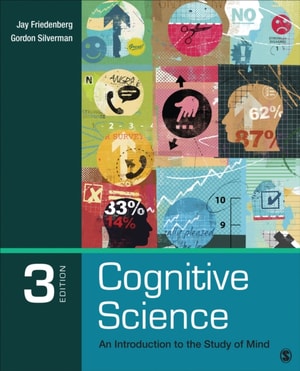
Cognitive Science provides a comprehensive introduction to the field from multiple perspectives to help readers better understand and answer questions about the mysteries of the mind.
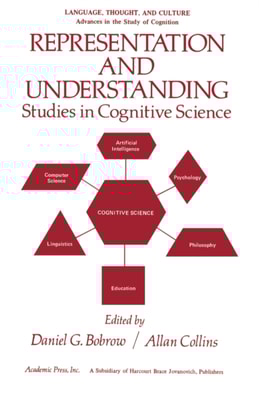
Economics, dealing with mental processes of decision makers is part of cognitive science; conversely, cognitive science, faced with constraints on information processing, is part of economics.
The development of the theory of fuzzy sets was motivated largely by the need for a computational framework for dealing with systems in which human judgement, behavior and emotions play a dominant role.
Written specifically for students of experimental psychology, this book focuses on attention and memory, and attempts to inegrate these two closely related phenomena.
Recent years have seen a great deal of attention directed towards the so-called "e;warm-look,"e; investigating how "e;cold"e; cognition and "e;hot"e; affect intermingle in perception and decision processes.
Human Judgment and Decision Processes is a collection of papers that covers the various theoretical frameworks that relate judgment to decision making.
This unique book provides an integrated view of human facial expressions based on contemporary knowledge about the evolution of signaling across the animal kingdom.
This is a unique work which is the culmination of the author's many years of experience in the use of the Wechsler tests in clinical assessments and as a teacher of their use.
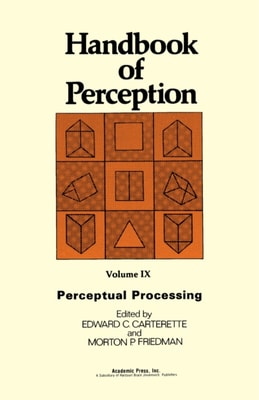
Handbook of Perception, Volume I: Historical and Philosophical Roots of Perception aims to bring together essential aspects of the very large, diverse, and widely scattered literature on human perception and to give a precis of the state of knowledge in every area of perception.
Handbook of Perception, Volume VIII: Perceptual Coding covers perceptual coding of space, time, and objects, including sensory memory systems and the relations between verbal and perceptual codes.
Perceptual Modification: Adapting to Altered Sensory Environments is about the study of human perception using a particular research strategy: the systematic alteration of vision or audition.
Paired-Associates Learning: The Role of Meaningfulness, Similarity, and Familiarization focuses on the role of meaningfulness, similarity, and familiarization of stimuli in paired-associates (PA) learning.
Communication and Affect: Language and Thought is a collection of papers presented at the second symposium on Communication and Affect held at Erindale College, University of Toronto, in March 1972.
Neuropsychological and Cognitive Processes in Reading explores reading and reading disabilities within the context of cognitive psychology and neuropsychology.
Cognitive Views of Human Motivation contains papers that were first presented during a symposium at the annual convention of the American Association for the Advancement of Science (AAAS), held in San Francisco in February 1974.
The Psychology of Private Events: Perspectives on Covert Response Systems provides evidence that the assessment and manipulation of private events such as thoughts, feelings, and images facilitates the prediction and control of human behavior.
Test Design: Developments in Psychology and Psychometrics is a collection of papers that deals with the diverse developments contributing to the psychometrics of test design.
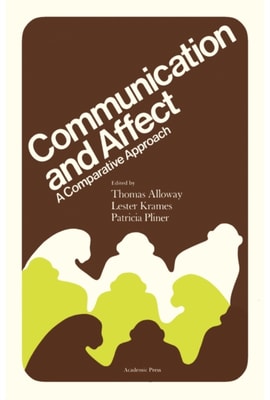
Communication and Affect: A Comparative Approach examines the communication of affective or emotional feelings from a broad phylogenetic and ontogenetic perspective.
Handbook of Research Methods in Human Memory and Cognition is a compilation of critical examinations of major contemporary research methods in the area of human memory and cognition.
Human Motivation: Commentary on Goal-Directed Action deals with human motivation, illustrating a simplistic model of a goal-directed action sequence derived from the usual layman's conception of a goal-directed action.
Advances in Cognitive-Behavioral Research and Therapy, Volume 3 provides information pertinent to the fundamental aspects of cognitive-behavioral approaches to psychotherapy.