We speak of being 'free' to speak our minds, free to go to college, free to move about; we can be cancer-free, debt-free, worry-free, or free from doubt.
Eyewitness research has focused mainly on stranger identification, but identification is also critical for the "e;familiar stranger"e;, and understanding how variability in an eyewitness's familiarity with the perpetrator may influence recall and recognition accuracy will facilitate swifter and more just resolutions to crime.
Eyewitness research has focused mainly on stranger identification, but identification is also critical for the "e;familiar stranger"e;, and understanding how variability in an eyewitness's familiarity with the perpetrator may influence recall and recognition accuracy will facilitate swifter and more just resolutions to crime.
In recent years there has been heightened interest in the clinical and legal management of families in which children resist contact with one parent and become aligned with the other following divorce.
Problem-solving courts provide judicially supervised treatment for behavioral health needs commonly found among criminal offenders, including substance abuse and mental health disorders, and they treat a variety of offender populations.
Problem-solving courts provide judicially supervised treatment for behavioral health needs commonly found among criminal offenders, including substance abuse and mental health disorders, and they treat a variety of offender populations.
Though widely regarded as a founder of the modern field of psychology and law, German-American psychologist Hugo Munsterberg's now century-old ideas and research approaches continue to thrive.
Though widely regarded as a founder of the modern field of psychology and law, German-American psychologist Hugo Munsterberg's now century-old ideas and research approaches continue to thrive.
Evidence-Informed Interventions for Court-Involved Families provides a critical, research-informed analysis of the core factors to consider when developing child-centered approaches to therapy and other family interventions, both in formal treatment settings and in promoting healthy engagement with the other systems and activities critical to children's daily lives.
Evidence-Informed Interventions for Court-Involved Families provides a critical, research-informed analysis of the core factors to consider when developing child-centered approaches to therapy and other family interventions, both in formal treatment settings and in promoting healthy engagement with the other systems and activities critical to children's daily lives.
Psychology's formal interaction with law began early in the twentieth century, though little in the way of substantive scholarly and professional development occurred until several decades later.
Psychology's formal interaction with law began early in the twentieth century, though little in the way of substantive scholarly and professional development occurred until several decades later.
Economic sanctions are court-imposed financial obligations aimed at punishing offenders (fines), funding the government (costs/fees, forfeitures), and compensating victims (restitution).
Economic sanctions are court-imposed financial obligations aimed at punishing offenders (fines), funding the government (costs/fees, forfeitures), and compensating victims (restitution).
The Behavioral Science of Firearms focuses on applying behavioral science principles and knowledge to inform and improve firearm-related policy, practice, and research.
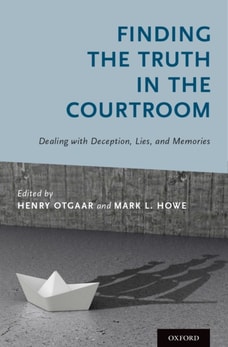
In many criminal trials, forensic technical evidence is lacking and triers of fact must rely on the reliability of eyewitness statements, identifications, and testimony; however, such reports can be riddled with deceptive statements or erroneous recollections.
Following on the success of Feedback That Sticks (Oxford, 2013), Karen Postal demonstrates, through the words of forensic experts, how to translate complex, highly technical neuropsychological and psychological information for jurors in a way that is engaging, understandable, and (to quote Faulkner) sets the truth on fire.
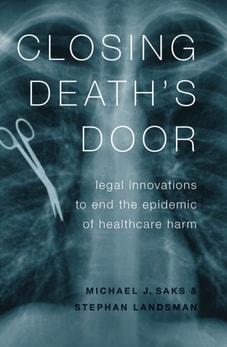
After heart disease and cancer, the third leading cause of death in the United States is iatrogenic injury (avoidable injury or infection caused by a healer).
After heart disease and cancer, the third leading cause of death in the United States is iatrogenic injury (avoidable injury or infection caused by a healer).
This volume makes a contribution to the field of neurolaw by investigating issues raised by the development, use, and regulation of neurointerventions.
Evaluations of a defendant's competence to stand trial (CST) are probably the most frequently performed forensic evaluations, with estimates in the United States ranging from 60,000 to 70,000 annually.
Evaluations of a defendant's competence to stand trial (CST) are probably the most frequently performed forensic evaluations, with estimates in the United States ranging from 60,000 to 70,000 annually.
This volume makes a contribution to the field of neurolaw by investigating issues raised by the development, use, and regulation of neurointerventions.
The Behavioral Science of Firearms focuses on applying behavioral science principles and knowledge to inform and improve firearm-related policy, practice, and research.
Terrorism, the use of military force in Afghanistan, Iraq and Syria, and the fatal police shootings of unarmed persons have all contributed to renewed interest in the ethics of police and military use of lethal force and its moral justification.
In many criminal trials, forensic technical evidence is lacking and triers of fact must rely on the reliability of eyewitness statements, identifications, and testimony; however, such reports can be riddled with deceptive statements or erroneous recollections.
It's often assumed that criminologists know a great deal about violent offenders, but in fact, there is little consensus about what distinguishes them from those who commit less serious crimes.