The ability to communicate through spoken and written language is one of the defining characteristics of the human race, yet it remains a deeply mysterious process.
While the field of vision science has grown significantly in the past three decades, there have been few comprehensive books that showed readers how to adopt a computional approach to understanding visual perception, along with the underlying mechanisms in the brain.
While the field of vision science has grown significantly in the past three decades, there have been few comprehensive books that showed readers how to adopt a computional approach to understanding visual perception, along with the underlying mechanisms in the brain.
Musical Excellence offers performers, teachers, and researchers, new perspectives and practical guidance for enhancing performance and managing the stress that typically accompanies performance situations.
Scientists currently study memory from many different perspectives: neurobiological, ethological, animal conditioning, cognitive, behavioral neuroscience, social, and cultural.
The study of attention in the laboratory has been crucial to understanding the mechanisms that support several different facets of attentional processing: Our ability to both divide attention among multiple tasks and stimuli, and selectively focus it on task-relevant information, while ignoring distracting task-irrelevant information, as well as how top-down and bottom-up factors influence the way that attention is directed within and across modalities.
The field of cognitive modeling has progressed beyond modeling cognition in the context of simple laboratory tasks and begun to attack the problem of modeling it in more complex, realistic environments, such as those studied by researchers in the field of human factors.
Working memory--the ability to keep important information in mind while comprehending, thinking, and acting--varies considerably from person to person and changes dramatically during each person's life.
Although researchers have long been aware that the species-typical architecture of the human mind is the product of our evolutionary history, it has only been in the last three decades that advances in such fields as evolutionary biology, cognitive psychology, and paleoanthropology have made the fact of our evolution illuminating.
In everyday life, and particularly in the modern workplace, information technology and automation increasingly mediate, augment, and sometimes even interfere with how humans interact with their environment.
Foundations of Art Therapy: Theory and Applications is an essential and comprehensive introduction to the field of art therapy that blends relevant psychological and neuroscience research, theories, and concepts and infuses cultural diversity throughout each chapter.
Advances in Motivation Science, Volume Eight, the latest release in Elsevier's serial on the topic of motivation science, contains interesting articles that cover topics such as The functional architecture of human motivation: Personality systems interactions theory, Teacher motivational messages used prior to examinations: What are they, how are they evaluated, and what are their educational outcomes?
The Neuroscience of Meditation: Understanding Individual Differences explores the individual differences in learning and practicing meditation, while also providing insights on how to learn and practice effectively.
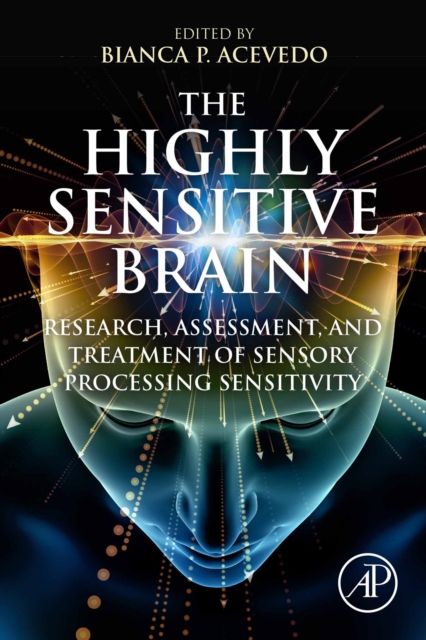
The Highly Sensitive Brain is the first handbook to cover the science, measurement, and clinical discussion of sensory processing sensitivity (SPS), a trait associated with enhanced responsivity, awareness, depth-of-processing and attunement to the environment and other individuals.
Advances in Experimental Social Psychology, Volume 60, the latest release in this highly cited series, contains contributions of major empirical and theoretical interest in social psychology.
Advances in Experimental Social Psychology, Volume 59, the latest release in this highly cited series in the field, contains contributions of major empirical and theoretical interest that represent the best and brightest in new research, theory and practice in social psychology.
Cognitive Sophistication and the Development of Judgment and Decision-Making reviews the existing literature on the development of reasoning, judgment and decision-making, with a primary focus on measures from the heuristics and biases tradition.
Mouse Behavioral Testing: How to Use Mice in Behavioral Neuroscience provides detailed explanations of how to conduct an experiment on mouse behavior from the initial planning of the research design through every step of the process until the data analysis phase.
Advances in Experimental Social Psychology, Volume 58, the latest release in this highly cited series in the field, contains contributions of major empirical and theoretical interest that represent the best and brightest in new research, theory and practice in social psychology.
Understanding the relationship between human cultural psychology and the evolutionary ecology of living systems is currently limited by abstract perceptions of space and boundaries as sources of definitive discontinuity.
Advances in Experimental Social Psychology, Volume 57, the latest release in this highly cited series in the field, contains contributions of major empirical and theoretical interest that represent the best and brightest in new research, theory and practice in social psychology.
Rapid technological change, global competition, and economic uncertainty have all contributed to organizations seeking to improve creativity and innovation.
Advances in Experimental Social Psychology, Volume 56, the latest release in this highly cited series, contains contributions of major empirical and theoretical interest that represent the best and brightest in new research, theory and practice in social psychology.
Psychology of Learning and Motivation, Volume 66, the latest release in this longstanding series publishes empirical and theoretical contributions in cognitive and experimental psychology, ranging from classical and instrumental conditioning, to complex learning and problem-solving.
Advances in Experimental Social Psychology, Volume 55, the latest release in this highly cited series in the field contains contributions of major empirical and theoretical interest that represent the best and brightest in new research, theory, and practice in social psychology.
Developmental Pathways to Disruptive, Impulse-Control, and Conduct Disorders provides essential understanding on how disruptive behavior disorder (DBD) is characterized, its early markers and etiology, and the empirically-based treatment for the disorder.
Psychology of Learning and Motivation publishes empirical and theoretical contributions in cognitive and experimental psychology, ranging from classical and instrumental conditioning, to complex learning and problem-solving.
Psychology of Learning and Motivation publishes empirical and theoretical contributions in cognitive and experimental psychology, ranging from classical and instrumental conditioning to complex learning and problem solving.