The neuroscience of why bad habits are so hard to break-and how evidence-based strategies can help us change our behavior more effectivelyWe all have habits we'd like to break, but for many of us it can be nearly impossible to do so.
This updated second edition provides the state of the art perspective of the theory, practice and application of modern non-invasive imaging methods employed in exploring the structural and functional architecture of the normal and diseased human brain.
Volume 47 of The Psychology of Learning and Motivation offers a discussion of the different factors that influence one's development as a mature and capable person.
This book is devoted to the surgical treatment of epilepsy and its consequences, and provides an extraordinary perspective on the fascinating question of the relationship between brain and mind.
The aim of Advances in the Study of Behavior is to serve scientists engaged in the study of animal behavior, including psychologists, neuroscientists, biologists, ethologists, pharmacologists, endocrinologists, ecologists, and geneticists.
The Neurobiology of Brain and Behavioral Development provides an overview of the process of brain development, including recent discoveries on how the brain develops.
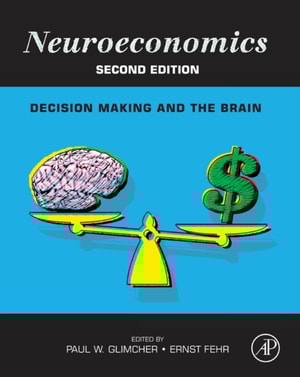
In the years since it first published, Neuroeconomics: Decision Making and the Brain has become the standard reference and textbook in the burgeoning field of neuroeconomics.
This innovative and thought-provoking book integrates both new, authored material and reprints of existing literature that, together, provide a compelling narrative that reveals the fatally flawed science associated with genetic reductionist accounts of human behavior and development.
This book presents a collection of articles reflecting state-of-the-art research in visual perception, specifically concentrating on neural correlates of perception.
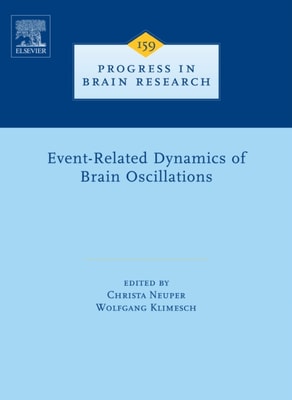
Research on brain oscillations and event-related electroencephalography (EEG) and event-related (de-) synchronization (ERD/ERS) in particular became a rapidly growing field in the last decades.
The Psychology of Learning and Motivation publishes empirical and theoretical contributions in cognitive and experimental psychology, ranging from classical and instrumental conditioning to complex learning and problem solving.
The book presents a basis for the interaction of the brain and nervous system with painting, music and literature, and a discussion of art from multiple facets - such as anatomy, migraine, illusion and evolutionary biology.
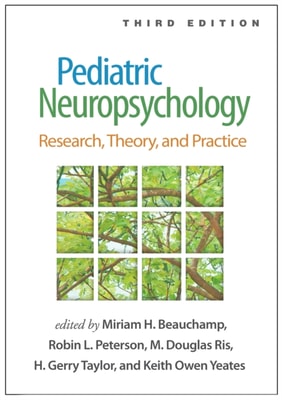
Recognized as the definitive reference and text on the relationship between brain health and behavior in children and adolescents, this volume is now in a third edition with 75% new material, including major updates throughout and numerous new chapters.
This book provides an important examination into the role of evolution of human traits of dominance as central to understanding social and political events, proposing a new view on human social evolution.
Navigating Speech Sound Disorders in Children is an easy-to-read resource which gives an overview of the whole area of speech sound disorders (SSDs) in children, covering assessment, diagnosis, treatment, and management, underpinned by the latest research in the field.
First published in 1984, Human Nature and Biocultural Evolution aims to delineate a theory of human nature, viewed as an interrelated set of genetically programmed behavioral predispositions, and a theory of biocultural evolution.
Analyzing a Long Dream Series provides an extraordinary insight into the richness and variability of dreams, considering over 12,000 dreams that have been recorded for more than 30 years.
Minority and Cross-Cultural Neuropsychological Assessment pulls together neuropsychological assessment issues across a wide range of minority groups and populations currently underserved.
This groundbreaking book provides a comprehensive international perspective on how dyslexia manifests across the lifespan, with a rare and valuable focus on adults.
This groundbreaking book provides a comprehensive international perspective on how dyslexia manifests across the lifespan, with a rare and valuable focus on adults.
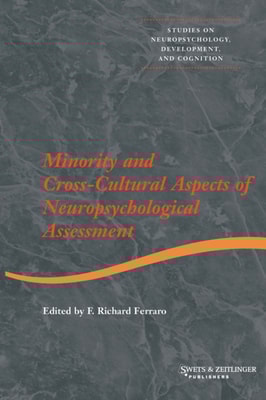
Minority and Cross-Cultural Neuropsychological Assessment pulls together neuropsychological assessment issues across a wide range of minority groups and populations currently underserved.
Originally published in 1983, the papers in this volume were first presented at an international symposium "e;The Development of Language and Communication in the Blind Child"e; held in 1981 in Germany.
Originally published in 1983, the papers in this volume were first presented at an international symposium "e;The Development of Language and Communication in the Blind Child"e; held in 1981 in Germany.
The brain regions and neuronal processes that underlie addiction extensively overlap with those needed for cognitive functions, including learning, memory, and reasoning.
The brain regions and neuronal processes that underlie addiction extensively overlap with those needed for cognitive functions, including learning, memory, and reasoning.