Recognized as the definitive reference and text on the relationship between brain health and behavior in children and adolescents, this volume is now in a third edition with 75% new material, including major updates throughout and numerous new chapters.
This book provides an important examination into the role of evolution of human traits of dominance as central to understanding social and political events, proposing a new view on human social evolution.
Navigating Speech Sound Disorders in Children is an easy-to-read resource which gives an overview of the whole area of speech sound disorders (SSDs) in children, covering assessment, diagnosis, treatment, and management, underpinned by the latest research in the field.
First published in 1984, Human Nature and Biocultural Evolution aims to delineate a theory of human nature, viewed as an interrelated set of genetically programmed behavioral predispositions, and a theory of biocultural evolution.
Analyzing a Long Dream Series provides an extraordinary insight into the richness and variability of dreams, considering over 12,000 dreams that have been recorded for more than 30 years.
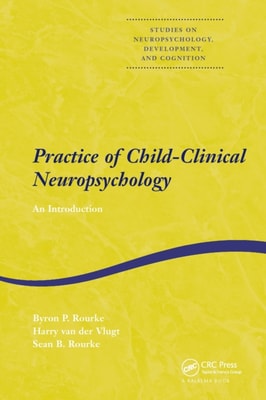
The aim of this work is to provide a comprehensive treatment-oriented introduction to the practice of child-clinical neuropsychology, focusing exclusively on the assessment of children and adolescents.
The aim of this work is to provide a comprehensive treatment-oriented introduction to the practice of child-clinical neuropsychology, focusing exclusively on the assessment of children and adolescents.
Originally published in 1999, this book begins with a synopsis of experimental work underlying degeneration and recovery in the nervous system, which is then discussed in the context of strategies to repair the central nervous system (CNS) and peripheral nervous system (PNS).
Originally published in 1999, this book begins with a synopsis of experimental work underlying degeneration and recovery in the nervous system, which is then discussed in the context of strategies to repair the central nervous system (CNS) and peripheral nervous system (PNS).
The brain regions and neuronal processes that underlie addiction extensively overlap with those needed for cognitive functions, including learning, memory, and reasoning.
The brain regions and neuronal processes that underlie addiction extensively overlap with those needed for cognitive functions, including learning, memory, and reasoning.