In this tribute to Benjamin Wright, former students and colleagues recall the foundational contributions he made to the theory and practice of measurement in a career spanning over five decades.
This book provides a detailed description of research and application outcomes from the Assessment and Teaching of 21st Century Skills project, which explored a framework for understanding the nature of these skills.
In this tribute to Benjamin Wright, former students and colleagues recall the foundational contributions he made to the theory and practice of measurement in a career spanning over five decades.
This edited book presents the recent developments in partial least squares-path modeling (PLS-PM) and provides a comprehensive overview of the current state of the most advanced research related to PLS-PM.
This proceedings volume compiles and expands on selected and peer reviewed presentations given at the 81st Annual Meeting of the Psychometric Society (IMPS), organized by the University of North Carolina at Greensboro, and held in Asheville, North Carolina, July 11th to 17th, 2016.
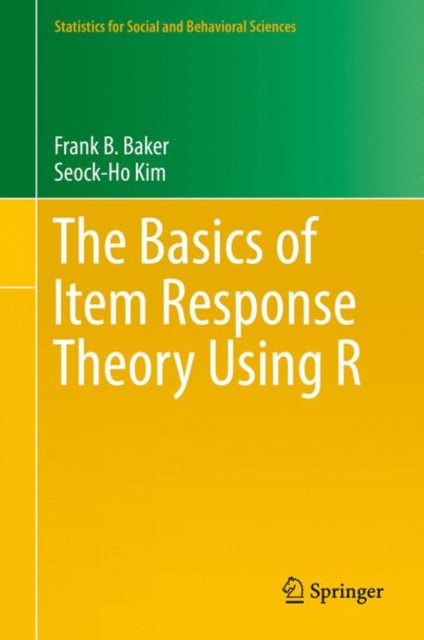
This graduate-level textbook is a tutorial for item response theory that covers both the basics of item response theory and the use of R for preparing graphical presentation in writings about the theory.
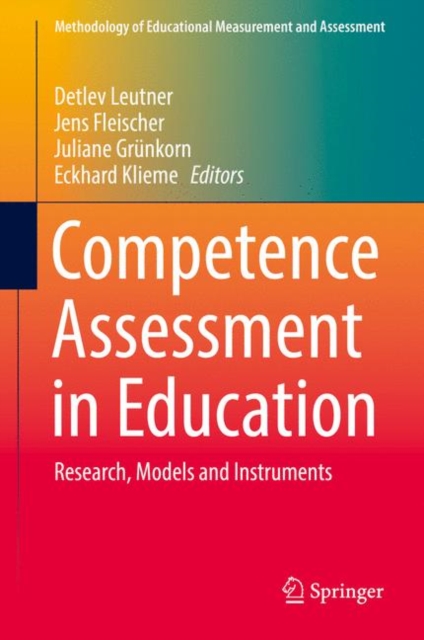
This book addresses problems and challenges that face educational measurement at a time when multipurpose usage of observational data from educational assessments, tests and international surveys has become a growing global trend.
The research articles in this volume cover timely quantitative psychology topics, including new methods in item response theory, computerized adaptive testing, cognitive diagnostic modeling, and psychological scaling.
This edited volume provides a platform for experts from various fields to introduce and discuss their different perspectives on the topic of teamwork and collaborative problem solving.
This book traces the theory and methodology of multivariate statistical analysis and shows how it can be conducted in practice using the LISREL computer program.
These research articles from the 79th Annual Meeting of the Psychometric Society (IMPS) cover timely quantitative psychology topics, including new methods in item response theory, computerized adaptive testing, cognitive diagnostic modeling, and psychological scaling.
This edited book presents the recent developments in partial least squares-path modeling (PLS-PM) and provides a comprehensive overview of the current state of the most advanced research related to PLS-PM.
This book applies the analytical framework used by economists to investigate how one can make the most out of one's life, thus achieving happiness and fulfilment.
This book combines an overview of validity theory, trends in validation practices and a review of standards and guidelines in several international jurisdictions with research synthesis of the validity evidence in different research areas.
The 78th Annual Meeting of the Psychometric Society (IMPS) builds on the Psychometric Society's mission to share quantitative methods relevant to psychology.
This book presents (1) an exhaustive and empirically validated taxonomy of quality aspects of multimodal interaction as well as respective measurement methods, (2) a validated questionnaire specifically tailored to the evaluation of multimodal systems and covering most of the taxonomy's quality aspects, (3) insights on how the quality perceptions of multimodal systems relate to the quality perceptions of its individual components, (4) a set of empirically tested factors which influence modality choice, and (5) models regarding the relationship of the perceived quality of a modality and the actual usage of a modality.
This book presents comparisons of recent accounts in the formalization of natural language (dynamic logics and formal semantics) with informal conceptions of interaction (dialogue, natural logic and attribution of rationality) that have been developed in both psychology and epistemology.
The goal of this guide and manual is to provide a practical and brief overview of the theory on computerized adaptive testing (CAT) and multistage testing (MST) and to illustrate the methodologies and applications using R open source language and several data examples.
This book proposes a conceptual framework for understanding measurement across a broad range of scientific fields and areas of application, such as physics, engineering, education, and psychology.
This book defines and describes a new discipline, named "e;computational psychometrics,"e; from the perspective of new methodologies for handling complex data from digital learning and assessment.
This book addresses problems and challenges that face educational measurement at a time when multipurpose usage of observational data from educational assessments, tests and international surveys has become a growing global trend.
This authoritative volume presents a detailed analysis of the replication crisis and the use of questionable research practices (QRPs) in psychology, as well as recommended practices for combatting these problems.
This handbook on human multitasking provides an integrative overview on simultaneous and sequential multitasking and thus combines theorizing on dual task limitations as well as costs related to task switching.
The SCIP manual will introduce a new assessment tool designed to be compatible with 21st century advances in measurement-base care (MBC) and personalized medicine in psychiatry (PMP).
This book fills a gap in international literature by providing critical reviews on variables of organizational behavior and the main psychological instruments developed to measure them.
This book defines and describes a new discipline, named "e;computational psychometrics,"e; from the perspective of new methodologies for handling complex data from digital learning and assessment.
This book aims to address the challenges of defining measurement in social sciences, presenting a conceptualization of the practice of measurement from the perspective of the pragmatic tradition in philosophy.
This book proposes a conceptual framework for understanding measurement across a broad range of scientific fields and areas of application, such as physics, engineering, education, and psychology.
This book combines the latest in sociology, psychology, and biology to present evidence-based research on what works in community and institutional corrections.
This volume addresses an important problem in social scientific research on global religions and spirituality: How to evaluate the role of diverse religious and spiritual (R/S) beliefs and practices within the rapid evolution of spiritual globalization and diversification trends.
This book discusses the psychological traits associated with drug consumption through the statistical analysis of a new database with information on 1885 respondents and use of 18 drugs.
This book is a strenuous critique of the misinterpretation of statistical knowledge of populations in mainstream psychology, exploring the implications of assuming that those statistics constitute scientific knowledge of individuals.