My Biggest Research Mistake helps students and professionals in the field of psychological science learn from the diverse mistakes of successful psychological scientists.
My Biggest Research Mistake helps students and professionals in the field of psychological science learn from the diverse mistakes of successful psychological scientists.
Qualitative and Mixed Methods Data Analysis Using Dedoose(R): A Practical Approach for Research Across the Social Sciences provides both new and experienced researchers with a guided introduction to dealing with the methodological complexity of mixed methods and qualitative inquiry using Dedoose(R) software.
Qualitative and Mixed Methods Data Analysis Using Dedoose(R): A Practical Approach for Research Across the Social Sciences provides both new and experienced researchers with a guided introduction to dealing with the methodological complexity of mixed methods and qualitative inquiry using Dedoose(R) software.
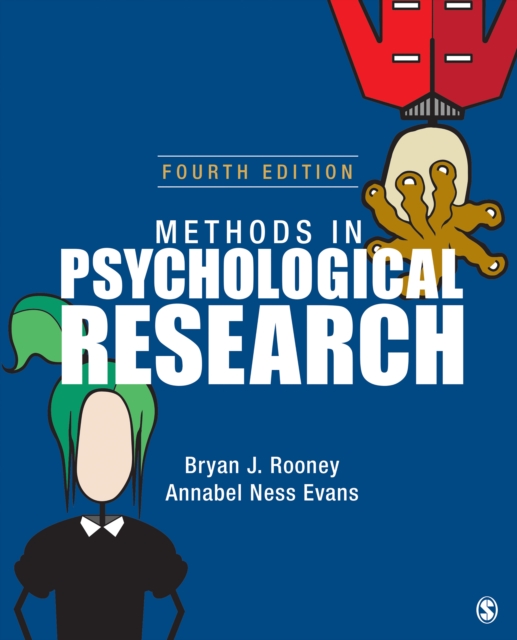
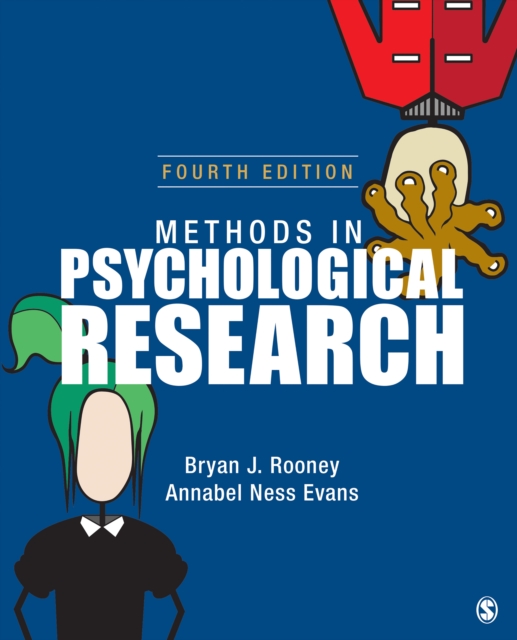
Methods in Psychological Research introduces students to the rich world of research in psychology through student-friendly writing, compelling real-world examples, and frequent opportunities for practice.
Methods in Psychological Research introduces students to the rich world of research in psychology through student-friendly writing, compelling real-world examples, and frequent opportunities for practice.
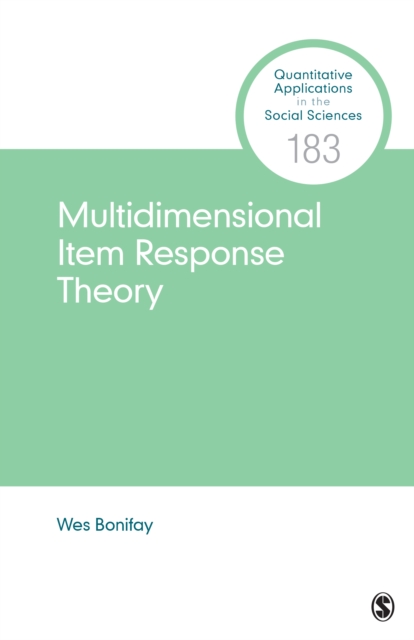
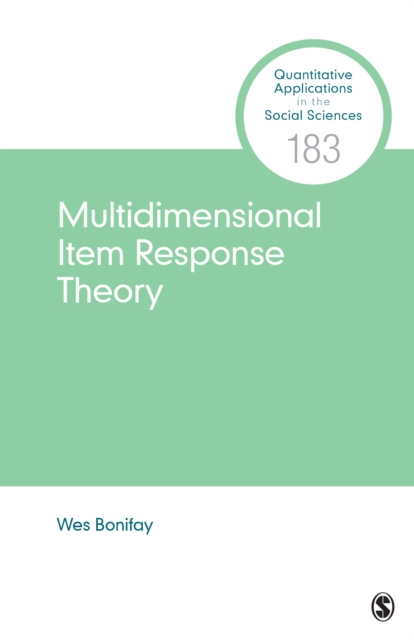
Several decades of psychometric research have led to the development of sophisticated models for multidimensional test data, and in recent years, multidimensional item response theory (MIRT) has become a burgeoning topic in psychological and educational measurement.
Several decades of psychometric research have led to the development of sophisticated models for multidimensional test data, and in recent years, multidimensional item response theory (MIRT) has become a burgeoning topic in psychological and educational measurement.
The Student Study Guide With IBM(R) SPSS(R) Workbook for Statistics for the Behavioral Sciences, Third Edition includes a review of chapter learning objectives, chapter outlines and key terms, essential statistical formulas, special tips and insights for students, and chapter summaries.
Essentials of Statistics for the Behavioral Sciences is a concise version of Statistics for the Behavioral Sciences by award-winning teacher, author, and advisor Gregory J.
Conducting Online Research on Amazon Mechanical Turk(R) and Beyond, written by Leib Litman and Jonathan Robinson, provides both students and experienced researchers with essential information about the online platforms most often used for social science research.
Conducting Online Research on Amazon Mechanical Turk(R) and Beyond, written by Leib Litman and Jonathan Robinson, provides both students and experienced researchers with essential information about the online platforms most often used for social science research.
Fundamental Statistics for the Social and Behavioral Sciences, Second Edition, places statistics within the research process, illustrating how they are used to answer questions and test ideas.
Fundamental Statistics for the Social and Behavioral Sciences, Second Edition, places statistics within the research process, illustrating how they are used to answer questions and test ideas.
Writing the NIH Grant Proposal, Third Edition offers hands-on advice that simplifies, demystifies, and takes the fear out of writing a federal grant application.
This unique intermediate/advanced statistics text uses real research on antisocial behaviors, such as cyberbullying, stereotyping, prejudice, and discrimination, to help readers across the social and behavioral sciences understand the underlying theory behind statistical methods.
One of the greatest strengths of this text is the consistent integration of research methods and statistics so that students can better understand how the research process requires the combination of these elements.
The highly-anticipated second edition of the Foundations of Mixed Methods Research:Integrating Quantitative and Qualitative Approaches in the Social and Behavioral Sciences gives students a comprehensive overview of mixed methods from philosophical roots and traditions through designing, conducting, and disseminating a study.
The highly-anticipated second edition of the Foundations of Mixed Methods Research:Integrating Quantitative and Qualitative Approaches in the Social and Behavioral Sciences gives students a comprehensive overview of mixed methods from philosophical roots and traditions through designing, conducting, and disseminating a study.
Using a meaning-based approach that emphasizes the "e;why"e; over the "e;how to,"e; Psychometrics: An Introduction provides thorough coverage of fundamental issues in psychological measurement.
Using a conceptual, non-mathematical approach, the updated Third Edition provides full coverage of the wide range of multivariate topics that graduate students across the social and behavioral sciences encounter.
The Fifth Edition of Harris Cooper's bestselling text offers practical advice on how to conduct a synthesis of research in the social, behavioral, and health sciences.
Packed with exercises, checklists, and how-to sections, this robust lab manual gives students hands-on guidance and practice for analyzing their own psychological research.
Straightforward Statistics is written in plain language and connects material in a clear, logical manner to help students across the social and behavioral sciences develop a "e;big picture"e; understanding of foundational statistics.
The Student Study Guide for Foundations of Psychological Testing has 15 chapters corresponding to those in the main text and follows a consistent structure for quick and easy access to key information.
This book is designed primarily for upper level undergraduate and graduate level students taking a course in multilevel modelling and/or statistical modelling with a large multilevel modelling component.
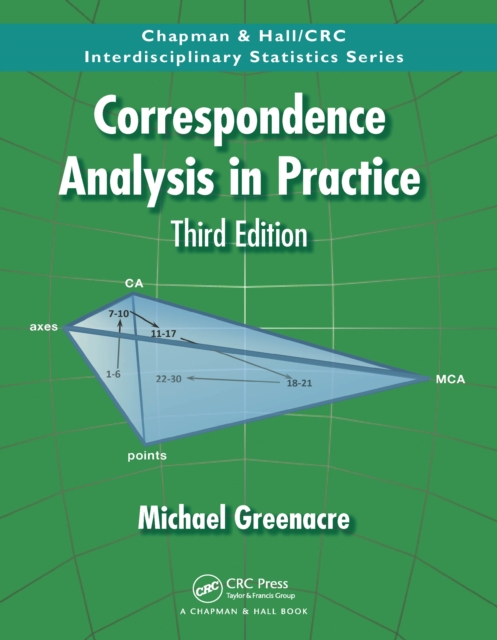
Drawing on the author's 45 years of experience in multivariate analysis, Correspondence Analysis in Practice, Third Edition, shows how the versatile method of correspondence analysis (CA) can be used for data visualization in a wide variety of situations.
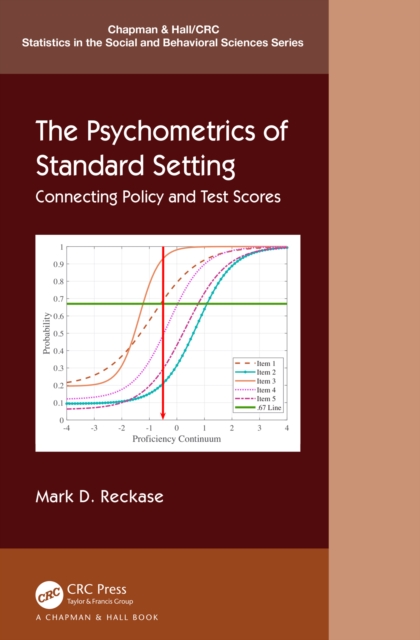
This book provides a unifying structure for the activities that fall under the process typically called "e;standard setting"e; on tests of proficiency.
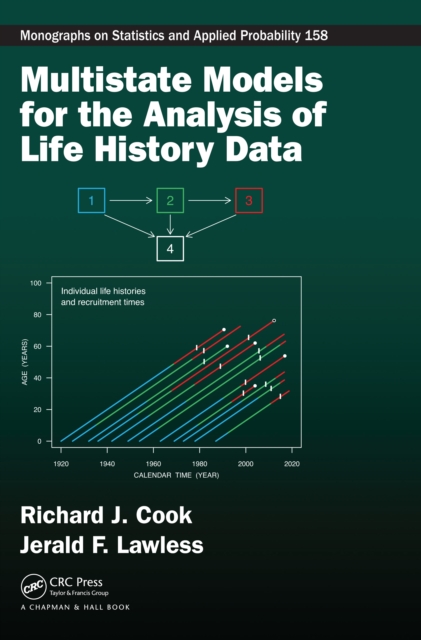
Multistate Models for the Analysis of Life History Data provides the first comprehensive treatment of multistate modeling and analysis, including parametric, nonparametric and semiparametric methods applicable to many types of life history data.
This breakthrough volume details the psychological and interpersonal skills needed to meet the practical challenges of building, developing, adapting, training, and managing multicultural global teams.