This text explores the vexing problem of housing exclusion and the related financial fallout, which has come into sharp relief since the onset of the housing-led global credit crisis.
We speak of being 'free' to speak our minds, free to go to college, free to move about; we can be cancer-free, debt-free, worry-free, or free from doubt.
Our world and bodies are becoming increasingly polluted with chemicals capable of interfering with our hormones and thus, possibly, our present and future neural and mental health.
Conventional economic theory assumes that consumers are fully rational, that they have well-defined preferences and easily understand the market environment.
A half century of research shows that most citizens are shockingly uninformed about public affairs, liberal-conservative ideologies, and the issues of the day.
Conventional economic theory assumes that consumers are fully rational, that they have well-defined preferences and easily understand the market environment.
In this landmark work, Richard Lazarus -- one of the world's foremost authorities -- offers a comprehensive treatment of the psychology of emotion, its role in adaptation, and the issues that must be addressed to understand it.
Buried in Treasures outlines a scientifically-based and effective program for helping compulsive hoarders dig their way out of the clutter and chaos of their homes.
The modern reader may have difficulty conceiving of Iphigeneia in Tauris as tragedy, for the term in our sense is associated with downfall, death, and disaster.
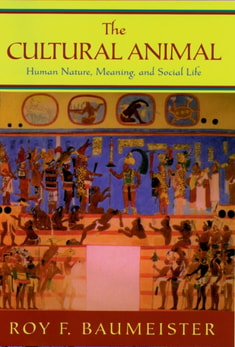
This book provides a coherent explanation of human nature, which is to say how people think, act, and feel, what they want, and how they interact with each other.
Buried in Treasures outlines a scientifically-based and effective program for helping compulsive hoarders dig their way out of the clutter and chaos of their homes.
Behaving presents an overview of the recent history and methodology of behavioral genetics and psychiatric genetics, informed by a philosophical perspective.
Capturing a scientific change in thinking about personality and individual differences that has been building over the past 15 years, this volume stands at an important moment in the development of psychology as a discipline.
Behavioral economics has potential to offer novel solutions to some of today's most pressing public health problems: How do we persuade people to eat healthy and lose weight?
Behavioral economics has potential to offer novel solutions to some of today's most pressing public health problems: How do we persuade people to eat healthy and lose weight?
The Diagnostic and Statistical Manual (DSM) is the most widely used and accepted scheme for diagnosing mental disorders in the United States and beyond.
The Diagnostic and Statistical Manual (DSM) is the most widely used and accepted scheme for diagnosing mental disorders in the United States and beyond.
Within the basic and clinical biomedical research community, there is increasing recognition that differences between males and females across the lifespan affect an individual's health, his/her development of disease, signs and symptoms of pathophysiology, and response to therapy.
This thoroughly revised new edition of a classic book provides a clinically inspired but scientifically guided approach to the biological foundations of human mental function in health and disease.
Feelings argues for the counter-intuitive idea that feelings do not cause behavior, but rather follow from behavior, and are, in fact, the way that we know about our own bodily states and behaviors.
This volume provides the fundamentals needed to understand the various explanatory systems and methodologies used in the behavior sciences and to evaluate their findings, in particular the literature and findings on buyer behavior.
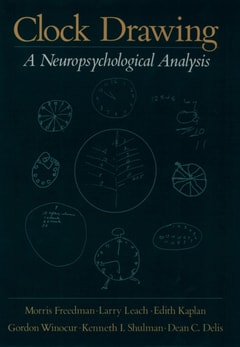
Written by a multidisciplinary team of experts in neurobehavior, this concise, well-illustrated book provides normative data on clock drawing from ages 20 to 90 years.
Today, American mental health law and policy promote the restoring of "e;law and order"e; in the community rather than protecting civil liberties for the individual.
The diverse historical, cultural, and physiological influences that determine sexual orientation are the focus of this fascinating work by one of the foremost investigators of human sexuality.