The Coping Power Program is designed for use with preadolescent and early adolescent aggressive children and their parents and is often delivered near the time of children's transition to middle school.
The Coping Power Program is designed for use with preadolescent and early adolescent aggressive children and their parents and is often delivered near the time of children's transition to middle school.
The Coping Power Program is designed for use with preadolescent and early adolescent aggressive children and their parents and is often delivered near the time of children's transition to middle school.
If you suffer from a chronic medical condition like cancer, HIV, diabetes, asthma, or hypertension, you know how hard it can be to perform all the self-care behaviors required of you, especially if you are also dealing with depression.
Around the world and throughout history, in cultures as diverse as ancient Mesopotamia and modern America, human beings have been compelled by belief in gods and developed complex religions around them.
The field of cognitive modeling has progressed beyond modeling cognition in the context of simple laboratory tasks and begun to attack the problem of modeling it in more complex, realistic environments, such as those studied by researchers in the field of human factors.
This book is a collection of essays exploring adaptive systems from many perspectives, ranging from computational applications to models of adaptation in living and social systems.
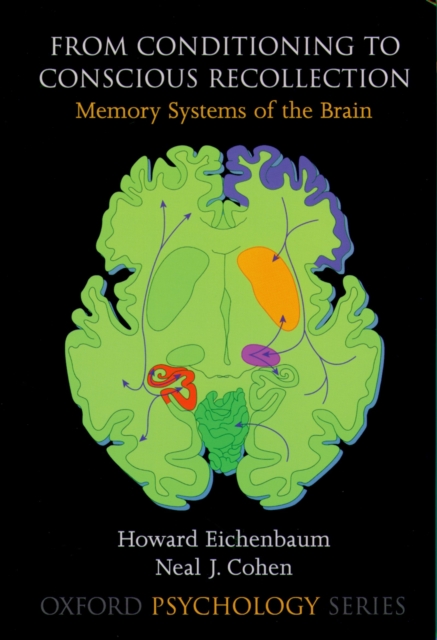
This thoroughly revised new edition of a classic book provides a clinically inspired but scientifically guided approach to the biological foundations of human mental function in health and disease.
Current primate research has yielded stunning results that not only threaten our underlying assumptions about the cognitive and communicative abilities of nonhuman primates, but also bring into question what it means to be human.
This is the first volume in the Counterpoints Series, which explores the issues being debated in psychology, child development, linguistics, and neuroscience.
Cognitive deficits are part of the normal aging process and are exacerbated by various diseases that affect adults in old age, such as dementia, depression, and stroke.
When Oxford published Emotion and Adaptation, the landmark 1991 book on the psychology of emotion by internationally acclaimed stress and coping expert Richard Lazarus, Contemporary Psychology welcomed it as "e;a brightly shining star in the galaxy of such volumes.
This provocative new work on children's development in context presents recent theoretical developments and research findings that have been generated by sociocultural theory.
This book addresses the central problem of music cognition: how listeners' responses move beyond mere registration of auditory events to include the organization, interpretation, and remembrance of these events in terms of their function in a musical context of pitch and rhythm.
This volume presents an integrated view of how we perceive the spatial relations in our visual world, covering anatomical, physiological, psychophysical, and perceptual aspects.
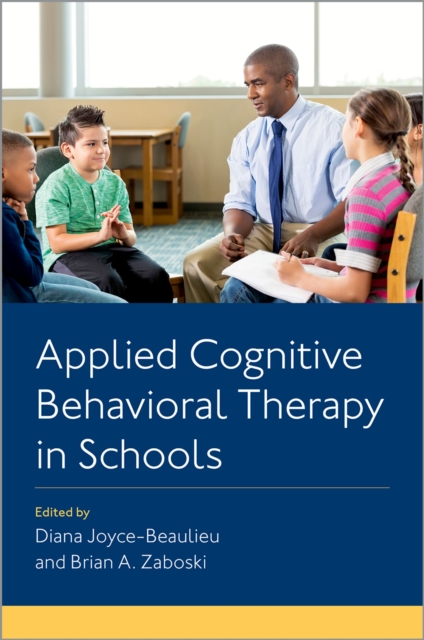
Cognitive behavioral therapy (CBT) is an evidence-based psychosocial intervention appropriate for a plethora of problems including anxiety, depression, and emotion dysregulation.
Cognitive behavioral therapy (CBT) is an evidence-based psychosocial intervention appropriate for a plethora of problems including anxiety, depression, and emotion dysregulation.
Why your worst nightmares about watching horror movies are unfoundedFilms about chainsaw killers, demonic possession, and ghostly intruders make some of us scream with joy.
Why your worst nightmares about watching horror movies are unfoundedFilms about chainsaw killers, demonic possession, and ghostly intruders make some of us scream with joy.
This groundbreaking study on the psycholinguistics of spelling presents the author's original empirical research on spelling and supplies the theoretical framework necessary to understand how children's ability to write is related to their ability to speak a language.
In this volume Professor Paivio updates his influential theory of cognition and provides a systematic treatise on the structure of cognitive representations and their dynamic functions in thought and behavior.
To demystify creative work without reducing it to simplistic formulas, Doris Wallace and Howard Gruber, one of the world's foremost authorities on creativity, have produced a unique book exploring the creative process in the arts and sciences.
Although much human action serves as proof that irrational behavior is remarkably common, certain forms of irrationality--most notably, incontinent action and self-deception--pose such difficult theoretical problems that philosophers have rejected them as logically or psychologically impossible.
Long studied by anthropologists, historians, and linguists, oral traditions have provided a wealth of fascinating insights into unique cultural customs that span the history of humankind.
Vancouver Studies in Cognitive Science is an interdisciplinary series bringing together topics of interest to psychologists, philosophers, cognitive scientists, and linguists.
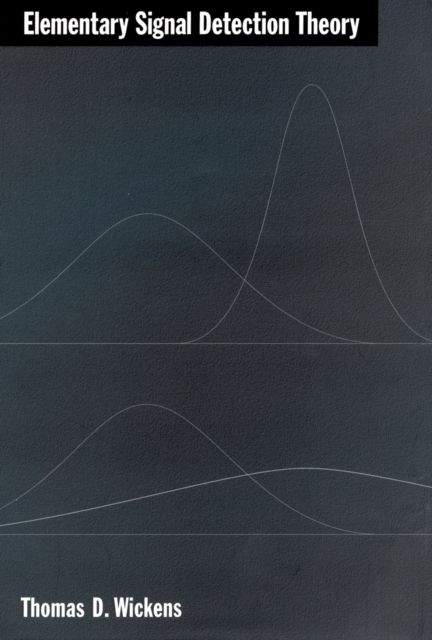
Signal detection theory, as developed in electrical engineering and based on statistical decision theory, was first applied to human sensory discrimination about 40 years ago.
This second volume in the Counterpoints Series, which explores issues in psychology, child development, linguistics, and neuroscience, focuses on alternative models of visual-spatial processing in human cognition.
This new volume in the Counterpoints series compares and contrasts different conceptions of working memory, generally recognized as the human cognitive system responsible for temporary storage of information.
Paying attention is something we are all familiar with and often take for granted, yet the nature of the operations involved in paying attention is one of the most profound mysteries of the brain.