This book aims to deconstruct the different theoretical perspectives of psychoanalysis, and reconstruct these concepts in a language that is readily understood.
The result of three decades of psychoanalytic work with children and adolescents, this book takes a fresh and empathic look on the pervasive developmental disorders in childhood and adolescence, describing their many manifestations through the presentation of particularly representative clinical cases, in pages of high scientific rigour but also of simple and poetic language.
Using Shakespeare's work to expand our understanding of what it is to be human, this book of applied psychoanalysis furthers the study of Shakespeare, literary theory, dramatic arts, and psychoanalytic theory.
In recent years commentators have speculated on the "e;collapse"e; of the couple and the family, highlighting the increasing fragility of couple relationships making them vulnerable to crises and break ups.
This book unravels the different notions of time and history that are implicit in the history of child psychoanalysis and in the clinical approach to childhood.
Faced by the increasing divisiveness and volatility of electoral politics, and the rise of illiberal fundamentalisms, the social sciences may seem to lack the imagination necessary to make sense of the world.
This book focuses on theoretical and clinical progress in psychoanalysis through various thematic proposals developed by authors from diverse geographical areas, in order to open possibilities of generating a productive debate within the psychoanalytic world and related professional circles.
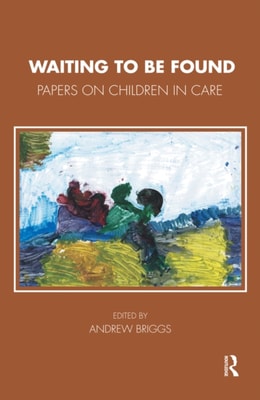
This book explores the importance of relationship between child and care system, child and clinician or other practitioner, practitioners with practitioners, or individuals with the organisation in which they work.
This anthology illustrates the range and diversity of responses from the psychological world to the multiple ecological crises with which our society is faced.
This volume looks at the reasons behind adolescent violence, and illuminates the earlier disturbances in the life history of the adolescent, which contribute to violent behaviour.
Our understanding of terrorism since the events of September 11th 2001 has usually been channelled through the two dimensional lens of religion and politics.
This book increases the reader's understanding of violent children and the value and vicissitudes of their psychoanalysis and psychoanalytic psychotherapy.
Untying The Knot sets out to present a clinical approach to cases where the referred patient is a child or adolescent, but in which the parents are intimately involved in the therapeutic situation.
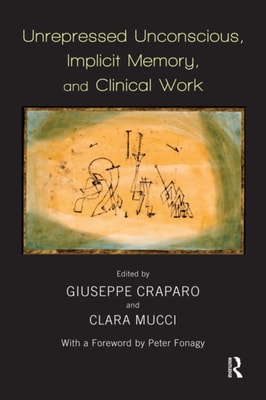
Unrepressed Unconscious, Implicit Memory, and Clinical Work analyses the psychological and neurobiological characteristics of what nowadays goes under the name of "e;unrepressed unconscious"e;, as opposed to Freud's earlier version of a kind of "e;repressed unconscious"e; encountered and described initially in his work with hysterical patients.
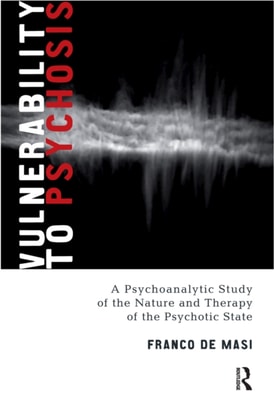
A distillation of many years' work on a therapeutic milieu ward of the Maudsley Hospital, in which psychotic patients were treated with an integral combination of psychiatric and psychological care anchored in the use of advanced psychoanalytic concepts of psychosis.
Psychoanalytic psychotherapy is a new development in the treatment of people with learning disabilities and mental health problems, which traditionally has utilised behavioural management and limited counselling.
Understanding the Self-Ego Relationship in Clinical Practice: TowardsIndividuation is a volume in the clinical practice monograph series from The Society of Analytical Psychology.
Understanding Religion and Spirituality in Clinical Practice is a volume in the clinical practice monograph series from the Society of Analytical Psychology.
Understanding Perversion in Clinical Practice is a volume in the eagerly anticipated clinical practice monograph series from the Society of Analytical Psychology.
Understanding Narcissism in Clinical Practice is a new volume in the eagerly anticipated clinical practice monograph series from the Society of Analytical Psychology.
'There is no doubt that "e;phantasy"e; or "e;unconscious phantasy"e;, as it started to be used in the English translation of Freud's work in the late 1920s and 1930s to differentiate it from "e;fantasy"e;, is one of the most important theoretical and clinical concepts of psychoanalysis.
It shows the present collection of seminal essays to offer a balanced yet rigorous examination of the durability and contemporary relevance of psychoanalysis, understood as a comprehensive system of theory and technique.
In this cohesive, dramatic, and highly readable book, the author establishes a roadmap for the diagnosis and psychotherapeutic treatment of psychotic disorders based on finding, understanding and reordering of unbearable affect.
The Grid, an instrument devised to help the analyst record and elaborate observations arising from the analytic encounter, demonstrates how mathematics can be applied to locate the development, evolution and transformation of psychic elements and events.