This book articulates a possible future for Lacan and psychoanalysis, through an exploration of the historical trajectory of psychoanalysis and a survey of the ways Lacanian psychoanalysis offers a unique response to the pressing clinical demands.
This book describes the ways in which space can be created to strengthen the capacity to withstand suffering, as well as the application of systemic and narrative psychology to develop interventions at an individual, team, group, and organisational level.
Treating the 'Untreatable' offers the hope of recovery, healing and cure for the most severe psychotic disturbances, schizophrenia and delusional disorder.
This book presents two thoughtful and long clinical case presentations of adolescents with serious psychiatric problems and some social-psychiatric meditations on homosexuality, divorce, and day care.
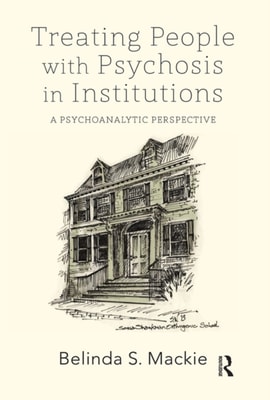
This book focuses on the priority that psychoanalysis places on the individual, how the treatment is conceived theoretically and the ways it can be incorporated in the overall organisation of an institution.
Traumatic Reliving in History, Literature, and Film explores an intriguing facet of human behavior never yet examined in its own right - an individual or a group may contrive, unawares, to repeat a half-forgotten traumatic experience in disguise.
This book is about the experience of individuals who have been abused or who have abused others, but it also traces the way an abusive experience can organize a family or professional system so that changes are difficult to achieve.
Theoretical material is presented in close conjunction with clinical data in the form of vignettes and case studies to illustrate the key points outlined in this book, which focuses on the multidimensional approach to the understanding of childhood trauma.
This collection of papers focuses on the interaction of maturation phases and special traumas in the first few years of life and the probable effect of these early patterns on the structure of the later personality.
This book assumes that it is no longer tenable to work in healthcare without considering the person as a whole being constituted by a rich weaving of mind, body, culture, family, spirit and ecology.
Transformations continues the investigation of various aspects of psychoanalytic theory and practice which the author commenced with Learning from Experience (1962) and pursued in Elements of Psychoanalysis (1963).
The surge of interest in psychological therapies in GP settings makes this book timely and important for the development of this field in the 21st century.
This is a collection of published and unpublished papers on clinical, theoretical and applied aspects of psychoanalysis that take up various aspects of unconscious mental processes and conflicts and their expression in the clinical transference and countertransference.
This book traces a line of continuity in psychoanalysis back to Freud and his immediate followers, and describes the major transformations that followed, particularly in the works of Heinz Hartmann and the ego psychologists, and Hanna Segal and the contemporary Kleinians of London.
This book introduces body psychotherapy to psychologists, psychotherapists, and interested others through an attachment based, object relations, and primarily psychoanalytic and relational framework.
For the first time, the controversial issue of physical contact in the consulting room is explored by distinguished psychoanalysts and psychotherapists representing a diverse range of psychoanalytic viewpoints.
This book compiles the papers presented at John Bowlby Memorial Conference 2003, exploring the complex and interwoven themes of touch, attachment and the body and their emergence in clinical work.
This remarkable collection of papers is divided into three sections: clinical issues; psychoanalysis and the life cycle; and underlying theories of practice.
The concern with time permeates Freud's work, from Studies on Hysteria to Analysis Terminable and Interminable, which point out to a network of concepts that indicate Freud's complex theories on temporality.
The value of Winnicott's work has become more and more widely recognized not only among psycho-analysts but also psychologists, educators, social workers, and men and women in every branch of medicine; indeed, all whose work or practice involves the care of children in health or sickness.
This book promotes curiosity, exploration and learning about difference by paying as much attention as to how we learn (process) as to what we learn (content).
If you are thinking of becoming a counsellor, you may be wondering if you could put to good use your own life experience by offering support and understanding to those trying to cope with difficulties that you may have encountered and worked through yourself.
This book deals with the link between the purpose of therapy and the boundaries of the therapeutic situation, which - the author argues - derive from the omnipresence of the anxiety surrounding separations and death.
When a child without a fully developed language experiences physical and psychological stress that exceeds the child's capacity to cope, the experience can leave lasting marks, unless the child receives treatment.
This book draws together radical critiques of therapy and shows how therapists have become too willing administrators of the mind, and how they then delight in the bureaucratic management of therapeutic practice.