As our knowledge of the change and turmoil of adolescence grows, so the number of issues on which psychotherapeutic techniques can shed light increases: this monograph focuses on one of the most urgent.
Many texts about anxiety are based either in the philosophical tradition or within the medical model under the guise of discussions about post-traumatic stress disorder.
Whereas Freud himself viewed conscience as one of the functions of the superego, in The Still Small Voice: Psychoanalytic Reflections on Guilt and Conscience, the author argues that superego and conscience are distinct mental functions and that, therefore, a fourth mental structure, the conscience, needs to be added to the psychoanalytic structural theory of the mind.
A rare and unusual consideration of the spiritual dimensions of sanity from a psychoanalytic perspective, this transcription of a series of seven lectures delivered at the Tavistock Clinic capture the spontaneity and immediacy of the interplay between one of the world's most eminent psychoanalysts and an audience of his peers.
The papers in this book focus on many different aspects of the therapeutic relationship, including the self of the therapist, working cross-culturally and with language difference, impasse, risk taking, the place of research, and the influence of theory.
This book is based on various cases whose common factor is how the psychoanalytic setting is created: the internalization and realization inside the patient`s mind: with the feeling of fixed hours and the transferential relation with the psychoanalyst.
2015 was the seventieth anniversary of the end of World War Two, and, for Jews, the seventieth anniversary of the end of the worst Jewish catastrophe in diaspora history.
In this book, Moses and Egle Laufer contend that severely disturbed adolescents can be assessed and treated psychoanalytically, and that their illness differs from comparable in older patients, and that the psychopathology has its source in conflicts over the sexually mature body.
This outstanding book is an important collection of papers from the 2013 John Bowlby Memorial Conference by accomplished clinicians from different modalities who share their experience of working with people with different kinds of addiction.
This book, the second in a series on Tavistock Group Relations Conferences, contains the collection of papers presented at the second Belgirate conference plus four additional papers reflecting on and making sense of several participants conference experiences.
This book offers a wealth of original contributions, all promising steps towards a fuller understanding of the phenomenon of "e;concreteness"e; and towards more effective approaches to the clinical challenges concreteness poses.
Above the Ground and Beneath the Clouds examines the history, conceptualisation, and treatment of the psychotic sub-type of schizophrenia, as this is advocated by psychoanalysis of Lacanian orientation, which is contrasted to modern psychiatry.
Bringing together the experiences of mistrust, jealousy, lack of love, shamelessness, regret, and despair, this far-reaching book elucidates human sorrow in striking sociocultural and clinical details.
After fifty years of development and refinement in Transactional Analysis (TA), the theory of methods and the actual methods have changed considerably from those originally published by Eric Berne.
This book presents the dynamics of organisations from a social constructionist viewpoint, taking the organisation as something that is constructed continuously through individual interactions with others, both within and without the organisation.
In this book, the authors develop the theory of the tripartite matrix, consider music as a form of non-verbal communication as a sub-dimension of the matrix, and present empirical studies of the matrices of peoples in three societies in the Middle East.
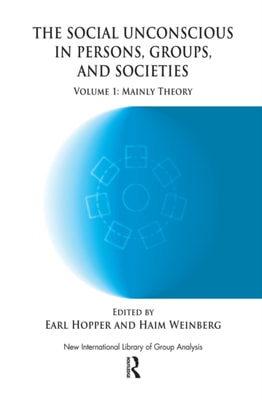
The social unconscious is vital for understanding persons and their groupings, ranging from families to societies, committees to organisations, and from small to median to large therapeutic groups, and essential for comprehensive clinical work.
Within the context of a careful review of the psychology of religion and prior non-Lacanian literature on the subject, Raul Moncayo builds a bridge between Lacanian psychoanalysis and Zen Buddhism that steers clear of reducing one to the other or creating a simplistic synthesis between the two.
This book brings together into one volume a number of articles that the author has written over the past 20 years, and includes a new extended essay written especially for this volume.
More and more individuals with ego defects, severe object relations conflicts, affective turbulence, and unassimilated contradictions are seeking help from psychoanalysts and psychotherapists.
The re-issuing of the four volumes of the author's writings is a major publishing event for psychoanalysts who are interested in both the theoretical and the therapeutic aspects of psychoanalysis.
'The re-issuing of the four volumes of the author's writings is a major publishing event for psychoanalysts who are interested in both the theoretical and the therapeutic aspects of psychoanalysis.
'The re-issuing of the four volumes of the author's writings is a major publishing event for psychoanalysts who are interested in both the theoretical and the therapeutic aspects of psychoanalysis.
'The re-issuing of the four volumes of the author's writings is a major publishing event for psychoanalysts who are interested in both the theoretical and the therapeutic aspects of psychoanalysis.
In his Foundations of Psychoanalysis: A Philosophical Critique, Adolf Grunbaum claimed that the arguments supporting psychoanalytic hypotheses are both logically invalid and unsound.
This book examines the terminology used in the analysis of sadomasochism, surveys extensively, and in detail, the theories of other psychoanalysts, and explores the relationship between sadomasochism and depression; its relationship to psychosis, borderline states, and many other conditions.
The Role of Brief Therapy in Attachment Disorders provides a comprehensive summary of the range of approaches that exist within the brief therapy world, including Cognitive Analytic Therapy, Cognitive Behavioural Therapy, Eye Movement Desensitisation and Reprocessing, Ericksonian Therapy, Neurolinguistic Psychotherapy, Provocative Therapy, Rational Emotive Behaviour Therapy, and Self Relations Therapy.