This book looks at the phenomenon of self-directed disgust and examines the role of self-disgust in relation to psychological experiences and potential ensuing psychopathology and to physical functioning such as disability, chronic physical health, and sexual dysfunction.
This is the first in a "e;Reflective Citizen"e; series, the intention being to develop volumes from the various OPUS (An Organisation for Promoting Understanding of Society) activities which include Scientific Meetings, Workshops, Lectures, Debates and Conferences.
This book offers a new perspective on conscience as an as yet unrealized human potential, but a potential toward which human beings are naturally driven.
The Psychotic: Aspects of the Personality presents the results of the author's many years of experience as an analyst working with deeply disturbed or psychotic patients, and demonstrates how the deeply resulting clinical and theoretical formulations may additionally be applied to less disturbed patients.
In this book, the author collects and discusses views and ideas of the ancient philosopher Aristotle which have psychological interest and compares them with today's theories.
Over the past decade, the very nature of the way we relate to each other has been utterly transformed by online social networking and the mobile technologies that enable unfettered access to it.
This book presents a selection of the works of Hansi Kennedy, preeminent child psychoanalyst, whose career began with Anna Freud in the Hampstead War Nurseries and continued at the Hampstead Child Therapy Clinic (renamed the Anna Freud Centre in 1982) until retirement in 1993.
The Psyche in the Modern World sets out to open consulting room doors and bring the concept of the Psyche, and its main advocate, the psychotherapy discipline, into public space and into the realm of interdisciplinary discourse.
This book is by a professional for other professionals, but thoughtful people who are interested in the fundamental aspects of human nature will also find much to interest them.
Our sense of identity begins (our psychological birth sometime in the first year of life) with the feeling that we are the centre of the universe, protected by godlike benevolent parents who will enable us to live happily ever after.
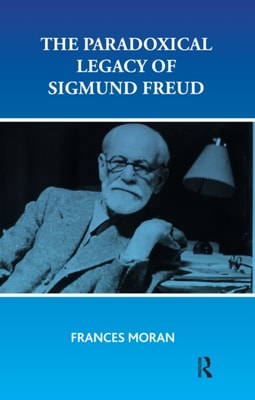
The traditional dating of the origin of psychoanalysis to 1900, when Freud published The Interpretation of Dreams, ignores the massive body of work he produced well before this date.
This book is an attempt to examine whether patients in analysis or therapy can sometimes be said to form a kind of transference that not only operates at a prenatal level but can also lend itself to interpretation just like any other postnatal level of transference.
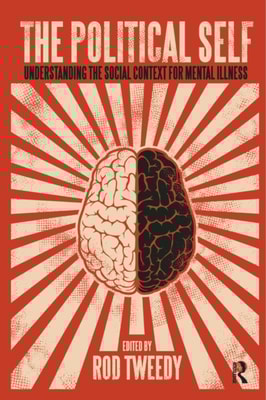
This book explores how our social and economic contexts profoundly affect our mental health and wellbeing, and how modern neuroscientific and psychodynamic research can both contribute to and enrich our understanding of these wider discussions.
This book challenges the very idea of "e;profound and multiple learning disabilities"e; (PMLD) itself, and what constitutes appropriate educational provision for children described as having PMLD.
This book is about how to maintain an aliveness to the possibilities in therapy and practice and how to challenge ideas of orthodoxy in theory and methodologies that can become stale or followed like religions.
"e;Published in association with the Journal for Lacanian Studies (JLS), the Ex-tensions series of short books aims to address "e;extant tensions"e; affecting the broad field of Lacanian psychoanalysis, whether they originate within its own boundaries or outside its direct sphere of influence.
By way of a new reading of The Complete Works of Sigmund Freud, this book introduces the notion of a theory of practice to the psychoanalytic endeavour.
The New International Library of Group Analysis Drawing on the seminal ideas of British, European, and American group analysts, psychoanalysts, social psychologists, and social scientists, the books in this series focus on the study of small and large groups, organisations, and other social systems, and on the study of the transpersonal and transgenerational sociality of human nature.
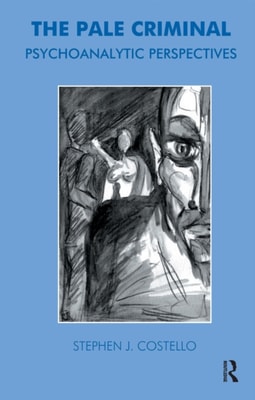
It was Freud, borrowing Nietszche's phrase from Thus Spake Zarathustra, who described as 'pale criminals' those who committed criminal acts out of deep-lying (unconscious) guilt.
It is the main argument of this book that emotional and psychological distress is often brought about through the operation of social-environmental powers which have their origin at a considerable distance from those ultimately subjected to them.
This book considers the place for analytic thinking in the world of psychiatry with its emphasis on an organic approach to major psychiatric disorders.
This book presents a selection of papers on the subjects of Relational Analysis and Group Analysis, written in the ten-year period that goes from 2002 to 2012.
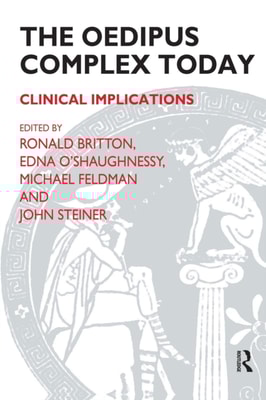
A collection of papers focusing on the Kleinian conception of the Oedipus complex, how this is now understood, and what effect it has had on clinical practice.
This book focuses upon theories of the Oedipus complex beginning with the theory that Freud gradually developed, starting with his recognition that it is "e;an integral constituent of the neuroses"e;.
This book is concerned with whether we can develop our understanding of the mind through the application of new approaches to the study of complex systems.
This book provides a timely exploration and comparison of key concepts in the theories of Melanie Klein and Jacques Lacan, two thinkers and clinicians whose influence over the development of psychoanalysis in the wake of Freud has been profound and far-reaching.
This book touches upon many of the key areas of contemporary psychoanalysis: setting, technique, theory, as well as post-Bionian models and the 'Bionian Field Theory'.