This book covers the mental health and psychology of pilots, including the psychological requirements for certification, environmental challenges, psychological problems among air crew, the effects of disruption to personal relationships, alcohol and drug misuse, and pilot reactions to accidents.
The concept of a "e;directing object"e; is based on extensive clinical observations linked to a combination of ego psychology and object relations theory in the tradition of Otto Kernberg and Anne Marie and Joseph Sandler.
While there are many excellent texts addressing cognitive impairment and behavioural difficulties and on rehabilitation associated with traumatic brain injury, few textbooks specifically address the most common emotional problems that can have such an adverse effect on rehabilitation and outcome.
In our current professional climate, with calls for 'evidenced-based treatment', and in light of the prestige accorded to this emblem, we can ask: for what purpose do we seek evidence?
The central theme of this book is concerned with the controversies on technique between Anna Freud and Melanie Klein in the 1920s and 1930s, and with a clear differentiation between child analysis proper and analytical child psychotherapy.
A psychoanalytic process from its beginning to its termination is described to illustrate crucial technical issues in the treatment of individuals with narcissistic personality organization and the countertransference manifestations such patients stimulate in the analyst.
This is a book of two parts: the first focuses on theoretical concepts with special reference to the structure of the psyche, while the second includes more clinical material.
Childhood sexual abuse within the family of origin and society's institutions, such as the church, education, sports, and the world of celebrity, has been neglected as a significant issue by psychoanalysis and society.
Perversions and borderline states were, by accident of fate, Masud Khan's chief preoccupation in his clinical work during the last three decades of his life.
2015 was the seventieth anniversary of the end of World War Two, and, for Jews, the seventieth anniversary of the end of the worst Jewish catastrophe in diaspora history.
In this book, Moses and Egle Laufer contend that severely disturbed adolescents can be assessed and treated psychoanalytically, and that their illness differs from comparable in older patients, and that the psychopathology has its source in conflicts over the sexually mature body.
This outstanding book is an important collection of papers from the 2013 John Bowlby Memorial Conference by accomplished clinicians from different modalities who share their experience of working with people with different kinds of addiction.
This book, the second in a series on Tavistock Group Relations Conferences, contains the collection of papers presented at the second Belgirate conference plus four additional papers reflecting on and making sense of several participants conference experiences.
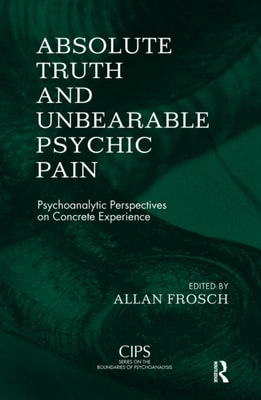
This book offers a wealth of original contributions, all promising steps towards a fuller understanding of the phenomenon of "e;concreteness"e; and towards more effective approaches to the clinical challenges concreteness poses.
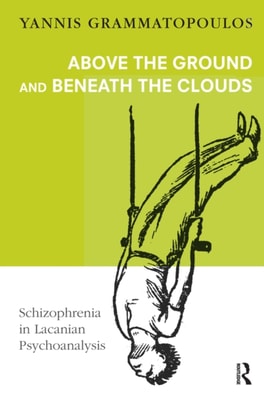
Above the Ground and Beneath the Clouds examines the history, conceptualisation, and treatment of the psychotic sub-type of schizophrenia, as this is advocated by psychoanalysis of Lacanian orientation, which is contrasted to modern psychiatry.
On 23rd July 1908 Sigmund Freud wrote to his colleague Karl Abraham: "e;Rest assured that if my name were Oberhuber an obviously non-Jewish name, in spite of everything my innovations would have met with far less resistance.
This book presents the clinical application of Bion's ideas and deals with the author's personal analytic experience, which echoes the experience of other practising analysts.
This book is a compilation of papers by different authors, among them Vamik Volkan, Robi Friedman, John Schlapobersky, Haim Weinberg, and Michael Bucholz, with a foreword by Earl Hopper and an introduction by Gila Ofer, both editor and contributor.
This book offers a close glimpse of the nuanced dialectic between major psychoanalytic concepts and the sociopolitical environments in which such ideas were germinated, spread, took roots, and further evolved.
Creative Ways to Learn Ethics is an accessible, easy-to-read guide that compiles a variety of ethics trainings to help professionals stimulate their minds, relieve stress, and increase engagement and memory retention.
Creative Ways to Learn Ethics is an accessible, easy-to-read guide that compiles a variety of ethics trainings to help professionals stimulate their minds, relieve stress, and increase engagement and memory retention.
The Clinical Paradigms of Melanie Klein and Donald Winnicott seeks to introduce the distinctive psychoanalytic basic principles of both Klein and Winnicott, to compare and contrast the way in which their concepts evolved, and to show how their different approaches contribute to distinctive psychoanalytic paradigms.
Sandor Ferenczi, Sigmund Freud's brilliant pupil as well as an innovative psychoanalyst, was silenced by various generations of his contemporaries until, in the past decades, his work began to be rediscovered.
Sandor Ferenczi, Sigmund Freud's brilliant pupil as well as an innovative psychoanalyst, was silenced by various generations of his contemporaries until, in the past decades, his work began to be rediscovered.