This book is a collection of articles written between 1992 and 2005 which attempts to bring two universes together - Bion's referential and autistic phenomena.
"e;Tustin deals very sensitively and sensibly with the knotty problem of parents' contribution to autistic development, providing a balanced interactive view which does not allocate blame.
Specifically written for all those families who are unable to receive funding for their child's programme, and is an invaluable tool for new tutors coming into the field.
This is Frances Tustin's first book and the original statement of her views on autistic states of mind and the genesis of varieties of childhood psychosis.
Bion's central thesis in this volume is that for the study of people, whether individually or in groups, a cardinal requisite is accurate observation, accompanied by accurate appreciation and formulation of the observations so made.
The implicit background of this book consists of an optimistic approach to creating mind forms that improve the condition of humanity, deriving from the legends of Christ and the Buddha and the experiences of mystics in both Eastern and Western cultures, as well as from psychoanalytic thought.
This book aims at providing further contributions inspired by Bion's paper Attacks on Linking (1959) by a distinguinshed group of scholars who have focused on different aspects of his propositions.
This book demonstrates that the relationship between attachment theory and psychoanalysis is more complex than adherents of either community generally recognize.
This book draws together work from across Europe by leading clinical researchers who have been looking into the effectiveness of psychoanalytic interventions.
Illustrated with Barbara Hepworth's abstract stone carving, with other works of art, and with fascinating vignettes from Adrian Stokes's writing, this biography highlights his revolutionary emphasis on the materials-led inspiration of architecture, sculpture, painting, and the avant-garde creations of the Ballets Russes.
This volume in the Winnicott Studies series is dedicated to the life and work of Marion Milner and reflects, in varying ways, her unique use of Winnicott's work to shape her own thinking about art and creativity.
A revolution is brewing in psychoanalysis: after a century of struggle to define psychoanalysis as a science, the concept of psychoanalysis as an art is finding expression in an unconventional 'return to Freud' that reformulates the relationship between art and psychoanalysis and in this process, discovers and explores uncharted routes through art to re-think problems in contemporary clinical work.
Each of the contributors addresses the theoretical questions by pursuing a definite artistic problem, including a close look at the relation between the image and the object in Hitchcock's Vertigo, the sexual aesthetics of Caravaggio, the artistic pen of Barthes, and how Cronenberg's film Crash functions as a sinthome.
This book discusses the psychodynamics of leadership-in and relies on concepts of developmental psychology, family systems theory, cognitive theory, dynamic psychiatry, psychotherapy, and psychoanalysis to understand Alexander's behaviour and actions.
This book covers the mental health and psychology of pilots, including the psychological requirements for certification, environmental challenges, psychological problems among air crew, the effects of disruption to personal relationships, alcohol and drug misuse, and pilot reactions to accidents.
The concept of a "e;directing object"e; is based on extensive clinical observations linked to a combination of ego psychology and object relations theory in the tradition of Otto Kernberg and Anne Marie and Joseph Sandler.
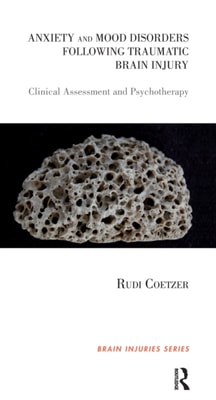
While there are many excellent texts addressing cognitive impairment and behavioural difficulties and on rehabilitation associated with traumatic brain injury, few textbooks specifically address the most common emotional problems that can have such an adverse effect on rehabilitation and outcome.
In our current professional climate, with calls for 'evidenced-based treatment', and in light of the prestige accorded to this emblem, we can ask: for what purpose do we seek evidence?
The central theme of this book is concerned with the controversies on technique between Anna Freud and Melanie Klein in the 1920s and 1930s, and with a clear differentiation between child analysis proper and analytical child psychotherapy.
A psychoanalytic process from its beginning to its termination is described to illustrate crucial technical issues in the treatment of individuals with narcissistic personality organization and the countertransference manifestations such patients stimulate in the analyst.
This is a book of two parts: the first focuses on theoretical concepts with special reference to the structure of the psyche, while the second includes more clinical material.
Childhood sexual abuse within the family of origin and society's institutions, such as the church, education, sports, and the world of celebrity, has been neglected as a significant issue by psychoanalysis and society.
Perversions and borderline states were, by accident of fate, Masud Khan's chief preoccupation in his clinical work during the last three decades of his life.
2015 was the seventieth anniversary of the end of World War Two, and, for Jews, the seventieth anniversary of the end of the worst Jewish catastrophe in diaspora history.