In this engaging and accessible book, Brookman draws upon several decades of her own research on homicide and violence, including ethnographic research on homicide investigation in the UK and USA and interviews with violent offenders, in order to unravel the characteristics and causes of homicide, how police and forensic scientists investigate it and how it can be prevented.
In this engaging and accessible book, Brookman draws upon several decades of her own research on homicide and violence, including ethnographic research on homicide investigation in the UK and USA and interviews with violent offenders, in order to unravel the characteristics and causes of homicide, how police and forensic scientists investigate it and how it can be prevented.
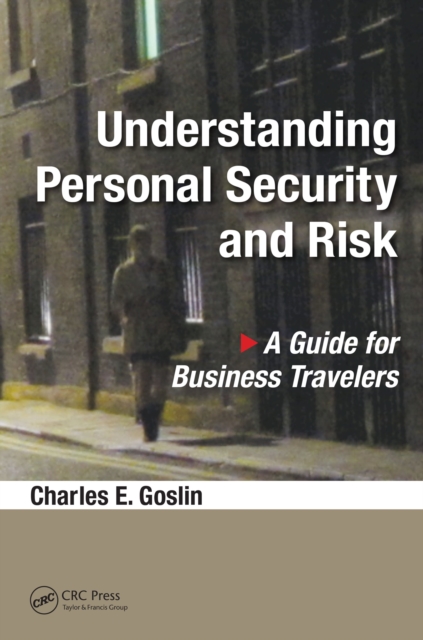
Uniting broad, time-tested security principles and the author's 35-plus years of experience with international security, intelligence, and foreign affairs, Understanding Personal Security: A Guide for Business Travelers offers a detailed yet practical framework on which to develop personal security awareness and training programs.
In cases where minimal or no physical evidence exists, behavioral evidence may be all that investigators have available to help them focus the investigation.
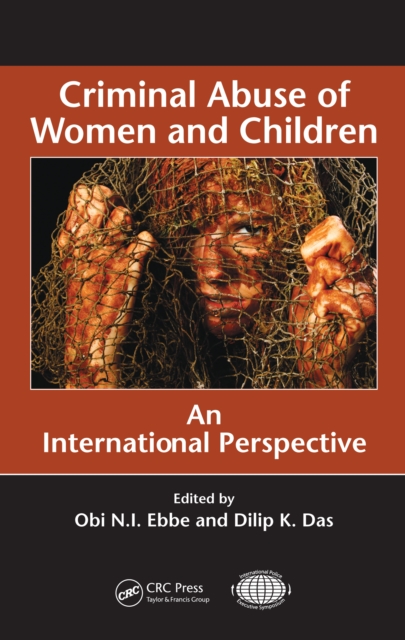
From infancy onward, children are in danger from many sources, including parental and sibling abuse, drug abuse and mental illness in the home, parental neglect, and poverty.
WINNER OF THE GOLD DAGGER AWARD FOR CRIME NON-FICTIONThe definitive, Sunday Times bestselling true story of serial-killer Dennis Nilsen and the murders he committed, written with Nilsen's full cooperation.
Violence is a complex subject that is rooted in a multitude of disciplines, including not only criminology but also psychology, sociology, biology, and other social science disciplines.
From infancy onward, children are in danger from many sources, including parental and sibling abuse, drug abuse and mental illness in the home, parental neglect, and poverty.
In cases where minimal or no physical evidence exists, behavioral evidence may be all that investigators have available to help them focus the investigation.
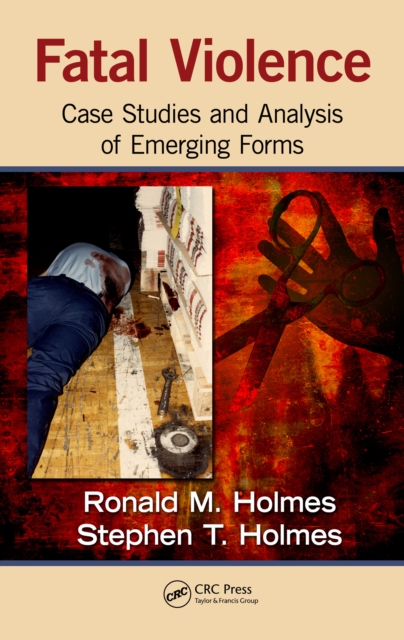
From serial murderers to parents who kill, Fatal Violence: Case Studies and Analysis of Emerging Forms provides an insider's look at a phenomenon that has existed since the dawn of man and cuts across social/economic barriers and cultures.
The enormous sums paid for the release of hostages coupled with law enforcement's inability to stem the tide has made kidnapping for ransom a worldwide plague.
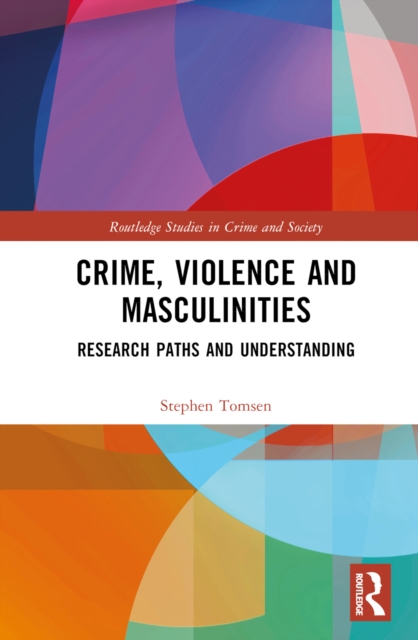
Providing a detailed survey of the author's work over three decades, this book chronicles Tomsen's studies of interpersonal violence and masculinities, which initiated new approaches and topic areas and informed related theorising.
This book reframes the study of multicide (that is, serial and mass murder) to use objective measures, and aims to expand our understanding of multicide offending through descriptive and inferential statistical analyses of different homicide patterns of the offenders.
This book reframes the study of multicide (that is, serial and mass murder) to use objective measures, and aims to expand our understanding of multicide offending through descriptive and inferential statistical analyses of different homicide patterns of the offenders.
The baby boomer generation grew up in the 1950s when there existed the general belief that the Cold War was the greatest threat to the world order, and a frightening possibility.
This volume fills a research gap of striking proportions by exploring the contingencies that mediate the crimes perpetrated on those who are themselves perpetrators.