Psychology and Criminal Justice covers the ways that psychology intersects with the criminal justice system, from explaining criminal behavior to helping improve the three criminal justice pillars of policing, courts, and corrections.
Security Operations Management takes concepts from business administration and criminal justice schools and incorporates them into the world of security management.
Investigative Data Mining for Security and Criminal Detection is the first book to outline how data mining technologies can be used to combat crime in the 21st century.
This textbook provides students and law enforcement officers with the fundamentals of the criminal investigation process, from arrival on the scene to trial procedures.
The Mindful Interview Method: Retrieving Cognitive Evidence provides investigators with a proven methodology to gather authentic, reliable information from eyewitnesses to help identify potential suspects.
Guard Force Management looks at the contract guard force as a business and demonstrates how current management techniques can be used to improve efficiency and increase profitability.
'Part memoir, part shoe leather investigative journalism, The New Mafia is a vital exploration of how organised crime takes hold of a society from the bottom up and spreads around the world.
An inside look at the culture of surveillance that pits healthcare providers against their patientsDoctors and pharmacists make critical decisions every day about whether to dispense opioids that alleviate pain but fuel addiction.
The Handbook of Loss Prevention and Crime Prevention, Fourth Edition, is the most comprehensive reference of its kind, covering the latest information on every topic from community-oriented policing to physical security, workplace violence, CCTV, information security, homeland security, and a host of specialty areas.
Crime Laboratory Management is the first book to address the unique operational, administrative, and political issues involved in managing a forensic laboratory.
Medical Illustration in the Courtroom: Proving Injury, Causation, and Damages educates the reader on how to communicate science visually-in personal injury, medical malpractice, criminal, and forensic cases-by creating art that utilizes medical records, radiographs, and computer software.
Building on the success of their previous book, White and Folkens' The Human Bone Manual is intended for use outside the laboratory and classroom, by professional forensic scientists, anthropologists and researchers.
Following on the success of his introductory text, Digital Evidence and Computer Crime, Eoghan Casey brings together a few top experts to create the first detailed guide for professionals who are already familiar with digital evidence.
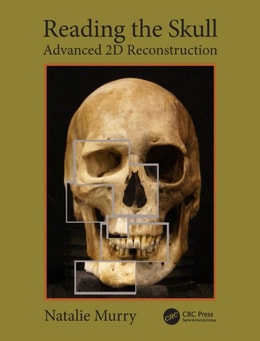
While there are a handful of introductory texts and resources on 2D drawing for facial identification and reconstruction, most often they don't go beyond this cursory presentation of the subject.
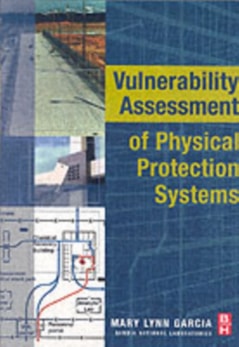
Vulnerability Assessment of Physical Protection Systems guides the reader through the topic of physical security with a unique, detailed and scientific approach.
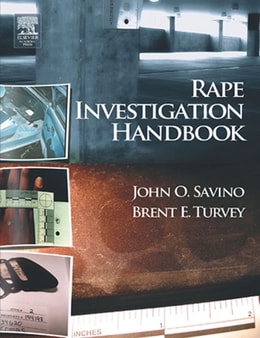
The Rape Investigation Handbook is the first practical and hands-on manual written by sex crime investigators and forensic scientists, providing students with first-hand insight into the work of these professionals.
A practical reference written to assist the security professional in clearly identifying what systems are required to meet security needs as defined by a threat analysis and vulnerability assessment.
Intruder Alarms provides a definitive and fully up-to-date guide to the specification, systems design, integration, installation and maintenance of intruder alarm systems.
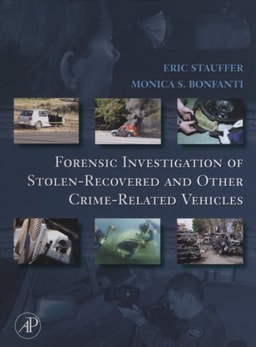
Forensic Investigation of Stolen-Recovered and Other Crime-Related Vehicles provides unique and detailed insights into the investigations of one of the most common crime scenes in the world.
Effective Interviewing and Interrogation Techniques, Second Edition, is completely revised and updated so as to cover all the information a student needs to know to obtain answers from a witness, a victim, or a suspect and how to interpret these answers with the utmost accuracy.
Crime Scene Photography is a book wrought from years of experience, with material carefully selected for ease of use and effectiveness in training, and field tested by the author in his role as a Forensic Services Supervisor for the Baltimore County Police Department.
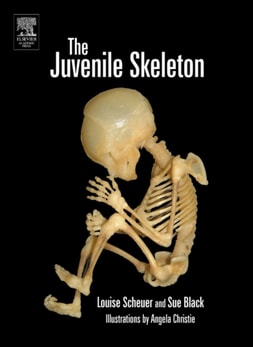
The identification of even the smallest human fetal bone can be vital to the success of a criminal investigation or to the identification of the deceased.
The geopolitics of American law enforcement and how it changed corporate criminal accountability in other countriesOver the past decade, many of the world's biggest companies have found themselves embroiled in legal disputes over corruption, fraud, environmental damage, tax evasion, or sanction violations.
Forensic Pathology is a comprehensive reference that uses a case-oriented format to address, explain and guide the reader through the varied topics encountered by forensic pathologists.
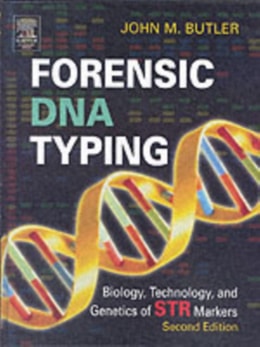
Forensic DNA Typing, Second Edition, is the only book available that specifically covers detailed information on mitochondrial DNA and the Y chromosome.
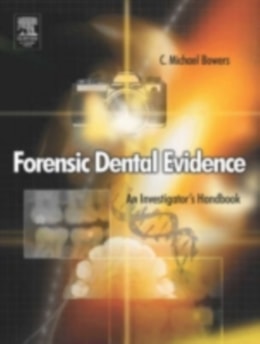
This handbook is written for police investigators and forensic personnel who are tasked with developing investigations that require expertise in dentistry.
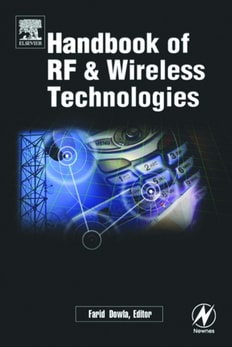
Expert contributors drawn from the ranks of academia and industry have authored chapters in such areas as third-generation wireless, wireless sensor networks, RF power amplifiers, spread spectrum modulation, signal propagation, antennas, and other key subjects that engineers working in RF and wireless need to be familiar with.
The high-technology crime investigator's profession is one of the fastest growing professions in the world today, as information security issues and crimes related to them are growing in number and magnitude at an ever-increasing pace.
Security Law and Methods examines suggested security methods designed to diminish or negate the consequence of crime and misconduct, and is an attempt to understand both the legal exposures related to crime and the security methods designed to prevent crime.
This new textbook provides students with the basic principles and practice standards of forensic victimology--the scientific study of victims for the purposes of addressing investigative and forensic issues.
Microbial Forensics describes the new and growing field of Microbial Forensics- the science that will help bring to justice criminals and terrorists who use biological material to cause harm.
This unique books looks at a cost-efficient, fast and accurate means of facial reconstruction--from segmented, decomposed, or skeletal remains--using computer-graphic and computational means.