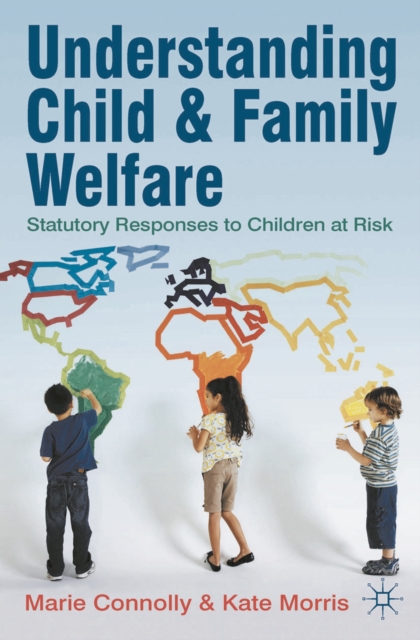
Neglect is the most common form of child abuse, but recognizing the signs, assessing the family's and the child's needs, and undertaking intervention can be difficult and complicated.
Focusing on theoretical, policy and practice issues which are predicted to become fundamental priorities in the near future, the contributors to this important book examine how dementia care works around the globe.
People with dementia need increasingly specialised support as they approach the end of life, and so too do their families and the professionals working with them.
This book introduces students to the diversity of theoretical perspectives on welfare, both illuminating the distinctiveness of each ideology and highlighting important continuities in thought.
Mental distress is not exclusive to any particular group but touches the lives of people in all societies and walks of life; one in four of us will be affected by it in our lifetime.
Written by two leading authors in the field, Social Work and Spirituality provides a critical engagement with the concept of spirituality and a much needed framework for the integration of spiritual care in mainstream practice.
This essential reference work enables a deeper understanding of contemporary challenges in the lives of American Indians and Alaskan Natives today, carefully reviewing their unique problems and proposing potential solutions.
A 2022 Choice Reviews Outstanding Academic TitleTakes the first in-depth look at the New York City adoption agency that separated twins and triplets in the 1960s, and the controversial and disturbing study that tracked the children's development while never telling their adoptive parents that they were raising a "e;singleton twin.
This textbook brings together three important aspects of property investment - strategies for investment, markets and appraisal - and explains many difficult concepts in a readable and understandable way.
In The Practice of Person Centred Couple and Family Therapy, Charles O'Leary offers a rich description of relationship therapy that draws on the resources of both person-centred psychotherapy and systemic and family therapy to present a skilful, respectful and empathic approach to working with couples and families.
Written directly to individuals who have experienced childhood trauma, this book provides essential information that allows victims to begin recovering from their immense pain and suffering, and empowers them to examine their specific issues in order to become a true survivor.
This engaging and accessible textbook introduces psychodynamic theory in a way that helps readers better understand complex theories and how these can enrich their practice.
A critical introduction to key debates about race and racism, this new addition to the Reshaping Social Work series examines race as a social construct.
Written specifically for students and practitioners in health and social care taking foundation degrees or further professional qualifications, this textbook offers a wealth of material on contexts, knowledge bases, skills and practices, as well as dealing with work carried out by those involved in treatment, therapy, advocacy and management.
This book offers a clear and coherent guide to working with families for practitioners and students in social work, health, counselling and related professions.
All counsellors are compelled to take account of the diverse society in which they practice and to inform themselves of best practice with all client groups.
The experiences and needs of residents and patients in nursing and care homes are very different at night, and this is particularly true for those with dementia.
Groups for parents, babies and toddlers, spanning the 1001 critical days from late pregnancy up to age two, are an effective way of supporting expectant and new parents by helping them to become more attuned, sensitive and empathic towards their child.
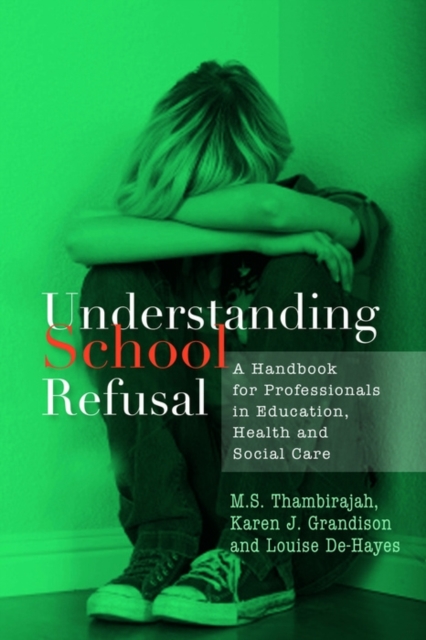
` Combining educational and clinical perspectives, and with extensive use of case studies, the authors present recent research into the mental health problems associated with school refusal, such as anxiety and panic attacks, as well as the role that parental support plays in their children's school life.
Dyslogical children are commonly labelled as having one or more of a mix of conditions that include Attention Deficit/Hyperactivity Disorder, Conduct Disorder, Bipolar Disorder and Oppositional Defiant Disorder.
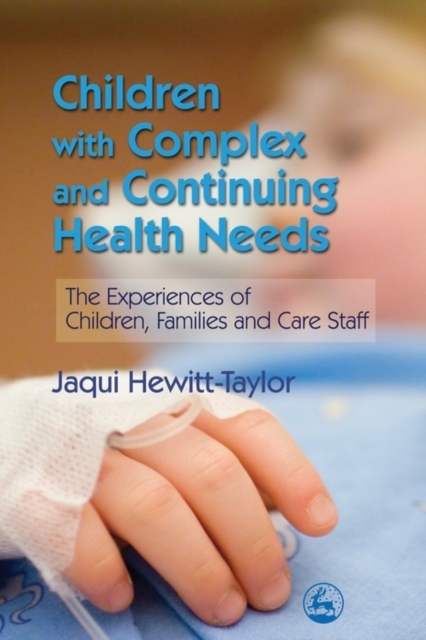
Aimed at students and practitioners involved in supporting such children, and designed to give them an insight into what it means to raise a child with such multiple needs.
Supporting Children and Families gathers together the lessons learned from perhaps the largest scale social experiment ever undertaken in England - Sure Start, the programme designed to improve the emotional development, health and education of children.
Intimate Partner Sexual Violence (IPSV) is the most common type of sexual violence and a common component of domestic violence, yet most cases go unreported and service responses are often inadequate.
For preschool children with emotional difficulties arising from difficulties in attachment, standard observations used in early years settings are not always helpful in identifying their problems and providing guidance on how they can be helped.
Today's child welfare services operate under a limited supply of resources which are being stretched by economic cuts and an increasing number of referrals to children's social care.
There are thousands of grandparents raising their grandchildren in the United Kingdom, the majority as a consequence of parental drug use or mental health issues.
Good Practice in Safeguarding Adults provides an up to date and topical overview of developments in policy, guidance, legislation and practice in the area of adult protection.
Good Practice in Safeguarding Children considers how front-line professionals can keep the best interests of the child at the heart of their work when statutory guidance, the way agencies are integrated and the delivery of services are changing.
This short book, a collection of essays and poems, looks at the loneliness, frustration and sadness experienced, not by the person with the syndrome, but by their partners, parents and other family members: it is they who have to cope with the absence of communication, affection and empathy expected from a reciprocal loving relationship.
Despite having marketable skills, individuals with Autism Spectrum Disorder (ASD) have one of the highest unemployment and under-employment rates of all disability groups.