A timely history of the interplay between politics and military operations, 'Command is the history of our time' (Guardian)Military command has been reconstructed and revolutionized since the Second World War by nuclear warfare, small-scale guerrilla land operations and cyber interference.
A TLS, FINANCIAL TIMES, NEW STATESMAN, GUARDIAN, OBSERVER AND WHITE REVIEW BOOK OF THE YEARFINALIST FOR THE 2021 ANDREW CARNEGIE MEDAL FOR EXCELLENCE IN NONFICTION From award-winning writer Claudia Rankine, the stunning follow-up to Citizen and Don't Let Me Be Lonely 'Riveting' Bernardine Evaristo, TLS (Books of the Year)'Brilliant' Gary Younge, New Statesman (Books of the Year)'Timely and powerful' Fatima Bhutto, Financial Times'One of our time's most incisive, brilliant and necessary intellectuals' Se n Hewitt, Irish Times'Ranking is a writer of genius' Jeremy Noel-Tod, Sunday TimesAt home and in government, contemporary America finds itself riven by a culture war in which aggression and defensiveness alike are on the rise.
The Sunday Times bestseller *Shortlisted for the Wainwright Prize*A New Statesman and Spectator Book of the Year'This book calls for nothing less than a revolution in the future of food' Kate RaworthFrom the bestselling author of Feral, a breathtaking first glimpse of a new future for food and for humanityFarming is the world's greatest cause of environmental destruction - and the one we are least prepared to talk about.
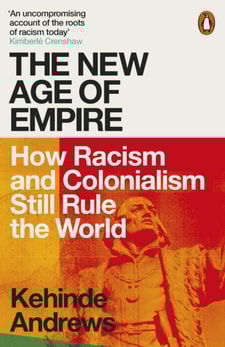
"e;Kehinde Andrews is a crucial voice walking in a proud tradition of Black radical criticism and action"e; Akala"e;An uncompromising account of the roots of racism today"e; Kimberl Crenshaw "e;This clear-eyed analysis insists upon the revolutionary acts of freedom we will need to break out of these systems of violence"e; Ibram X.
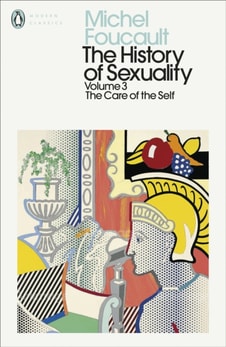
'Bristles with provocative insights into the tangled liaisons of sex and self' Times Higher EducationIn the third volume of his acclaimed examination of sexuality in modern Western society, Foucault investigates the Golden Age of Rome to reveal a decisive break from the classical Greek version of sexual pleasure.
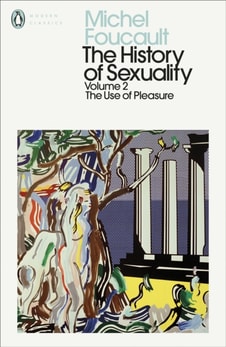
'No brief survey can do justice to the richness, complexity and detail of Foucault's discussion' New York Review of BooksThe second volume of Michel Foucault's pioneering analysis of the changing nature of desire explores how sexuality was perceived in classical Greek culture.
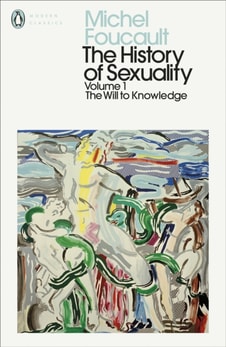
'A brilliant display of fireworks, attacking the widespread and banal notion that "e;in the beginning"e; sexual activity was guilt-free and delicious, being repressed and blighted only by the gloom of Victorianism' Spectator We talk about sex more and more, but are we more liberated?
'A gay man could read this book as if his life depended on it - and perhaps it does' Andrew Holleran, author of Dancer from the Dance'Poignant and achingly beautiful' The New York Times Even in our modern progressive world, it's not easy to be a gay man.
The multi-award-winning meditation on survival, care and the place of literature in an unequal world'Around that time my daughter and I had this exchange:Anne, imagine if the world had nothing in it.
A new approach to ideas about war, from one of the UK's leading strategic thinkersIn 1912 Sir Arthur Conan Doyle wrote a short story about a war fought from underwater submersibles that included the sinking of passenger ships.
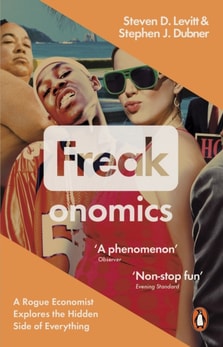
Steven Levitt, the original rogue economist, and Stephen Dubner have spent four years uncovering the hidden side of even more controversial subjects, from terrorism to shark attacks, cable TV to hurricanes.
This book takes a dramatically original approach to the history of humanity, using objects which previous civilisations have left behind them, often accidentally, as prisms through which we can explore past worlds and the lives of the men and women who lived in them.
A rapturous appreciation of pork crackling, a touching description of hungry London chimney sweeps, a discussion of the strange pleasure of eating pineapple and a meditation on the delights of Christmas feasting are just some of the subjects of these personal, playful writings from early nineteenth-century essayist Charles Lamb.
In Arthur Ransome's charming tale of childhood adventure, Secret Water, four children are pretending to be savages approaching an outpost of the civilized world.
Reality Hunger is a manifesto for a burgeoning group of interrelated but unconnected artists who, living in an unbearably artificial world, are breaking ever larger chunks of 'reality' into their work.
This hugely influential work marked a turning point in US history and culture, arguing that the nation s expansion into the Great West was directly linked to its unique spirit: a rugged individualism forged at the juncture between civilization and wilderness, which for better or worse lies at the heart of American identity today.
With its wry portrayal of a shallow, materialistic 'leisure class' obsessed by clothes, cars, consumer goods and climbing the social ladder, this withering satire on modern capitalism is as pertinent today as when it was written over a century ago.
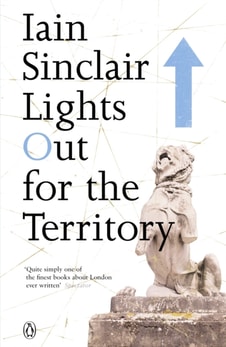
'A book about London; in other words, a book about everything' Peter Ackroyd, The TimesWalking the streets of London, Iain Sinclair traces nine routes across the territory of the capital.
Uncover the truth behind our food addiction - and learn how to break the cycle Many of us find ourselves powerless in front of a bag of crisps, a packet of biscuits, the last slice of pizza.
Now the subject of a film by Richard Linklater, Eric Schlosser's explosive bestseller Fast Food Nation: What the All-American Meal is Doing to the World tells the story of our love affair with fast food.
Both Flesh and Not is an collection of essays and writing from the virtuosic genius David Foster WallaceBeloved for his brilliantly discerning eye, his verbal elasticity and his uniquely generous imagination, David Foster Wallace was heralded by critics and fans as the voice of a generation.
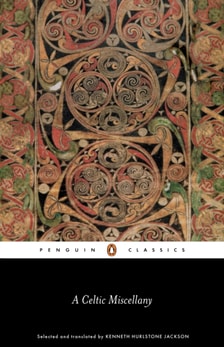
Including works from Welsh, Irish and Scottish Gaelic, Cornish, Breton and Manx, this Celtic Miscellany offers a rich blend of poetry and prose from the eighth to the nineteenth century, and provides a unique insight into the minds and literature of the Celtic people.
The Celtic period was one of tremendous expansion, the last phase of European material and intellectual development before the Mediterranean world spread northwards over the Continent and linked it to modern times.
Witchcraft, astrology, divination and every kind of popular magic flourished in England during the sixteenth and seventeenth centuries, from the belief that a blessed amulet could prevent the assaults of the Devil to the use of the same charms to recover stolen goods.