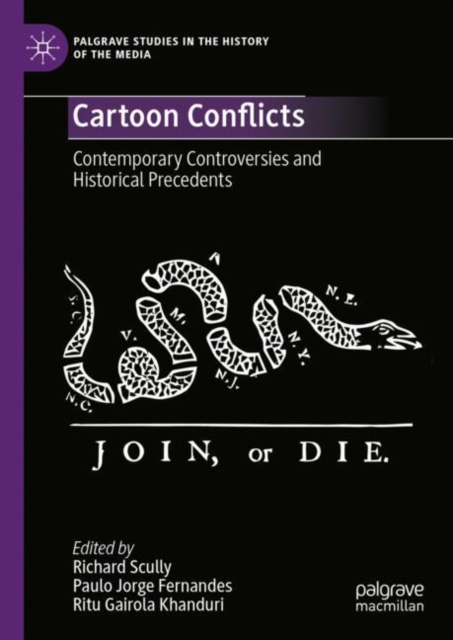
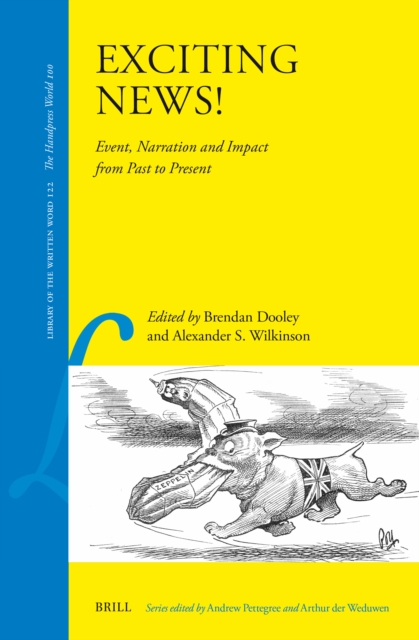
This edited collection of new research highlights the way in which the cartoon - long regarded as a staple of journalism and freedom of expression - faces new challenges in the twenty-first century that can be far better understood and appreciated if one takes an historical perspective.
This edited collection of new research highlights the way in which the cartoon - long regarded as a staple of journalism and freedom of expression - faces new challenges in the twenty-first century that can be far better understood and appreciated if one takes an historical perspective.
Focusing on the moment of transition from the pictorial to the post-pictorial condition, this book advocates the opinion that what fundamentally distinguishes pictorial representation in Western civilization is one's ability to distinguish what the picture shows from what the picture refers to, and to that extent the reality inside the picture cannot be confused with what is outside it.
Offering a critical overview of the state of contemporary investigative journalism, this book considers ways in which investigative journalism can bring about meaningful change and what conditions need to be in place for it to do so.
Traffic: Media as Infrastructures and Cultural Practices presents a collection of texts by distinguished international media and cultural scholars that addresses fundamental relationships between the logistic, symbolic, and infrastructural dimensions of media.
This edited volume brings together a collection of studies on the use of multimedia in language education, exploring its affordances and challenges in various settings.
This edited volume brings together a collection of studies on the use of multimedia in language education, exploring its affordances and challenges in various settings.
Readers who appear to be lost in a storyworld, members of theatre or cinema audiences who are moved to tears while watching a performance, beholders of paintings who are absorbed by the representations in front of them, players of computer games entranced by the fictional worlds in which they interactively participate - all of these mental states of imaginative immersion are variants of 'aesthetic illusion', as long as the recipients, although thus immersed, are still residually aware that they are experiencing not real life but life-like representations created by artefacts.