A demanding feminist, devout Christian, and savvy grassroots civil rights organizer, Anna Arnold Hedgeman played a key role in over half a century of social justice initiatives.
The Truth of Myth is a thorough and accessible introduction to the study of myth, surveying the intellectual history of the topic, methods for studying myth cross-culturally, and emerging trends.
First published in 2008, Donna Freitas's Sex and the Soul revealed what college students -- at institutions large and small, public and private, secular, Catholic, and evangelical -- really think about sex, dating, religion, and spirituality.
First published in 2008, Donna Freitas's Sex and the Soul revealed what college students -- at institutions large and small, public and private, secular, Catholic, and evangelical -- really think about sex, dating, religion, and spirituality.
A New Gospel for Women tells the story of Katharine Bushnell (1855-1946), author of God's Word to Women, one of the most innovative and comprehensive feminist theologies ever written.
A New Gospel for Women tells the story of Katharine Bushnell (1855-1946), author of God's Word to Women, one of the most innovative and comprehensive feminist theologies ever written.
Despite--or because of--its huge popular culture status, Peanuts enabled cartoonist Charles Schulz to offer political commentary on the most controversial topics of postwar American culture through the voices of Charlie Brown, Snoopy, and the Peanuts gang.
Despite--or because of--its huge popular culture status, Peanuts enabled cartoonist Charles Schulz to offer political commentary on the most controversial topics of postwar American culture through the voices of Charlie Brown, Snoopy, and the Peanuts gang.
The relationship between early Mormons and the United States was marked by anxiety and hostility, heightened over the course of the nineteenth century by the assassination of Mormon leaders, the Saints' exile from Missouri and Illinois, the military occupation of the Utah territory, and the national crusade against those who practiced plural marriage.
The relationship between early Mormons and the United States was marked by anxiety and hostility, heightened over the course of the nineteenth century by the assassination of Mormon leaders, the Saints' exile from Missouri and Illinois, the military occupation of the Utah territory, and the national crusade against those who practiced plural marriage.
An immersive and mesmerizing narrative that reimagines the Mesopotamian myth of the Great FloodA long time ago, the gods grew tired of humans and decided to send a flood to destroy them.
'It will be read and re-read not as a treatise but as a story: one of the most extraordinary that has ever been written of the origins of Western self-consciousness' Simon SchamaThe marriage of Cadmus and Harmony was the last time the gods of Olympus feasted alongside mortals.
Meticulously selected and artfully recreated, the selection of stories in Italian is vast and ranges geographically from Corsica and Sicily to Venice and the Alps.
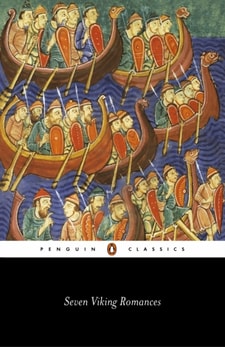
Combining traditional myth, oral history and re-worked European legend to depict an ancient realm of heroism and wonder, the seven tales collected here are among the most fantastical of all the Norse romances.
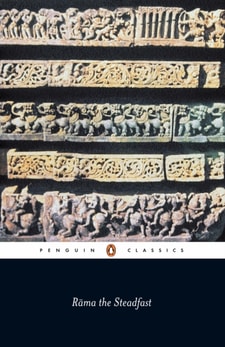
Warrior-prince Rama is about to be crowned Young King, when he hears the devastating news that his father, King of Ayodhya, has been tricked into banishing him to the forest.
Endymion, Pelops, Daedalus, Pygmalion what are the stories behind these and the hundreds of other familiar names from Greek mythology names that recur throughout the history of European culture?
Compiled by an unknown scribe in Iceland around 1270, and based on sources dating back centuries earlier, these mythological and heroic poems tell of gods and mortals from an ancient era: the giant-slaying Thor, the doomed V lsung family, the Hel-ride of Brynhild and the cruelty of Atli the Hun.
Kormak's Saga, The Saga of Hallfred Troublesome-Poet, The Saga of Gunnlaug Serpent-Tongue, The Saga of Bjorn, Champion of the Hitardal People, Viglund's Saga Set in the farmsteads of Viking age Iceland at a time when the old ethos of honour and heroic adventure merged with new ideas of romantic infatuation, each of these sagas features poet heroes, complex love triangles, and travels to foreign lands.
Gathering a wide range of traditional African myths, this compelling new collection offers tales of heroes battling mighty serpents and monstrous birds, brutal family conflict and vengeance, and desperate migrations across vast and alien lands.
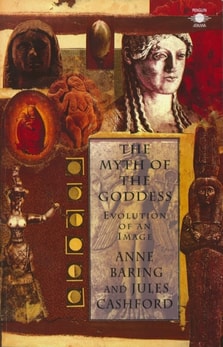
A comprehensive, scholarly accessible study, in which the authors draw upon poetry and mythology, art and literature, archaeology and psychology to show how the myth of the goddess has been lost from our formal Judeo-Christian images of the divine.
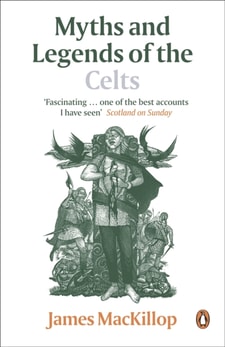
Myths and Legends of the Celts is a fascinating and wide-ranging introduction to the mythology of the peoples who inhabited the northwestern fringes of Europe - from Britain and the Isle of Man to Gaul and Brittany.
THE DEFINITIVE AND COMPREHENSIVE RETELLING OF NORSE MYTHOLOGY 'Burning ice, biting flame; that is how life began' The extraordinary Scandinavian myth cycle is one of the most enduring, exciting, dramatic and compelling of the world's great stories.
Witchcraft, astrology, divination and every kind of popular magic flourished in England during the sixteenth and seventeenth centuries, from the belief that a blessed amulet could prevent the assaults of the Devil to the use of the same charms to recover stolen goods.
Men with big feet have big penisesYou should drink at least eight glasses of water a daySugar makes kids hyperEating at night makes you fatChewing gum stays in your stomach for seven yearsYou lose 40% of your body heat through your headEvery day, you hear or think things about your body and health that are just not true.
Drawing on myth, folklore and history, the stories of the Mabinogion passed from generations of storytellers before they were written down in the thirteenth century in the form we know.
Steinbeck's first posthumously published work, The Acts of King Arthur and His Noble Knights is a reinterpretation of tales from Malory's Morte d'Arthur.
Mr Jack has been nimble and he s been quick, searching through the history of nursery rhymes and he s found out all kind of plum tales, just like little Jack Horner.