Pastor Bryan Loritts dives deep into what it's like to be a person of color in predominantly white evangelical spaces today and where we can go from here.
How most presidents avoid upsetting the racial status quoand why those who do pave the way for lawless, norm-violating successorsWhen Barack Obama won the White House in 2008, becoming the nation's first Black president, the stage was set for Donald Trump's eventual rise to power.
Why Black dignity is the paradigm of all dignity and Black philosophy is the starting point of all philosophy "e;A bold attempt to determine the conditions of-and the means for achieving-racial justice.
A restoration of the agency and influence of free African-descended women in colonial Mexico through their traces in archives "e;A breathtaking study that places free African-descended women at the nexus of questions about religion, commerce, and the law in colonial Mexico.
How hunger shaped both colonialism and Native resistance in Early America "e;In this bold and original study, Cevasco punctures the myth of colonial America as a land of plenty.
A revealing look at how antislavery scientists and Black and white abolitionists used scientific ideas to discredit slaveholdersIn the context of slavery, science is usually associated with slaveholders' scientific justifications of racism.
The first comprehensive history of the Lakota Indians and their profound role in shaping America's historyThis first complete account of the Lakota Indians traces their rich and often surprising history from the early sixteenth to the early twenty'A 'Aofirst century.
A definitive history of mescaline that explores its mind-altering effects across cultures, from ancient America to Western modernity Mescaline became a popular sensation in the mid-twentieth century through Aldous Huxley’s The Doors of Perception, after which the word “psychedelic” was coined to describe it.
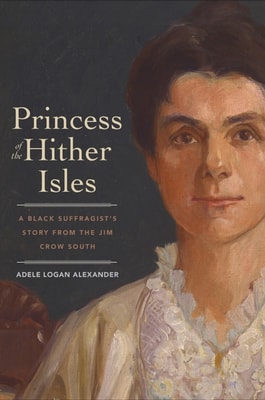
A compelling reconstruction of the life of a black suffragist, Adella Hunt Logan, blending family lore, historical research, and literary imagination"e;Both a definitive rendering of a life and a remarkable study of the interplay of race and gender in an America whose shadows still haunt us today.
A major reassessment of the development of race and subjecthood in the British AtlanticFocusing on Jamaica, Britain’s most valuable colony in the Americas by the mid-eighteenth century, this book explores the relationship between racial classifications and the inherited rights and privileges associated with British subject status.
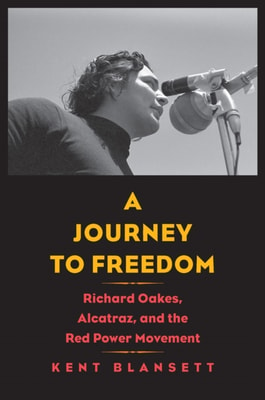
The first book-length biography of Richard Oakes, a Red Power activist of the 1960s who was a leader in the Alcatraz takeover and the Indigenous rights movement A revealing portrait of Richard Oakes, the brilliant, charismatic Native American leader who was instrumental in the takeovers of Alcatraz, Fort Lawton, and Pit River and whose assassination in 1972 galvanized the Trail of Broken Treaties march on Washington, D.
A compelling study that charts the influence of Indigenous thinkers on Franz Boas, the founder of modern anthropology In 1911, the publication of Franz Boas’s The Mind of Primitive Man challenged widely held claims about race and intelligence that justified violence and inequality.
A startling and gripping reexamination of the Jim Crow era, as seen through the eyes of some of the most important American writers"e;Walker has opened up a fresh way of thinking about the intellectual history of the South during the civil-rights movement.
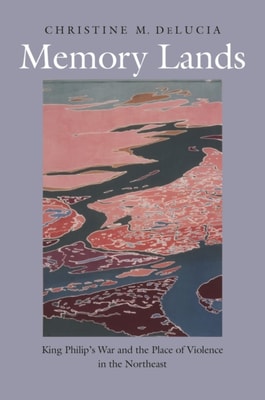
Noted historian Christine DeLucia offers a major reconsideration of the violent seventeenth-century conflict in northeastern America known as King Philip’s War, providing an alternative to Pilgrim-centric narratives that have conventionally dominated the histories of colonial New England.
An exploration of what it means to be fabulous-and why eccentric style, fashion, and creativity are more political than everPrince once told us not to hate him 'cause he's fabulous.
An imaginative retelling of London’s history, framed through the experiences of Indigenous travelers who came to the city over the course of more than five centuries London is famed both as the ancient center of a former empire and as a modern metropolis of bewildering complexity and diversity.
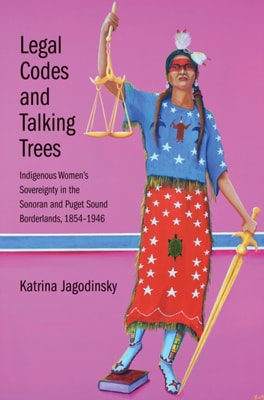
Katrina Jagodinsky’s enlightening history is the first to focus on indigenous women of the Southwest and Pacific Northwest and the ways they dealt with the challenges posed by the existing legal regimes of the nineteenth and twentieth centuries.
The Cherokee are one of the largest Native American tribes in the United States, with more than three hundred thousand people across the country claiming tribal membership and nearly one million people internationally professing to have at least one Cherokee Indian ancestor.
A groundbreaking volume on the rich 13,000-plus-year history and culture of Connecticut’s indigenous peoples More than 13,000 years ago, people settled on lands that now lie within the boundaries of the state of Connecticut.
Weaving Indian and Euro-American histories together in this groundbreaking book, Sami Lakomaki places the Shawnee people, and Native peoples in general, firmly at the center of American history.
The names Elizabeth Eckford and Hazel Bryan Massery may not be well known, but the image of them from September 1957 surely is: a black high school girl, dressed in white, walking stoically in front of Little Rock Central High School, and a white girl standing directly behind her, face twisted in hate, screaming racial epithets.
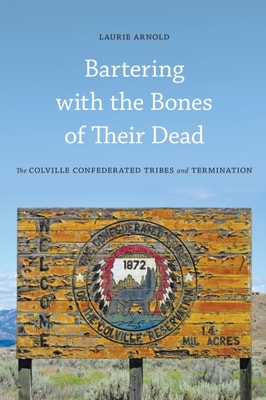
Bartering with the Bones of their Dead tells the unique story of a tribe whose members waged a painful and sometimes bitter twenty-year struggle among themselves about whether to give up their status as a sovereign nation.
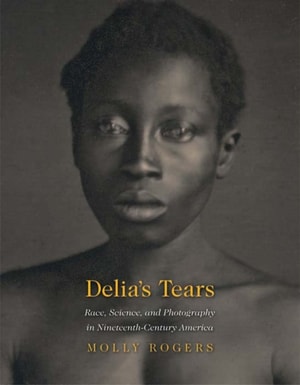
In 1850 seven South Carolina slaves were photographed at the request of the famous naturalist Louis Agassiz to provide evidence of the supposed biological inferiority of Africans.
The Unbounded Home grapples with a core modern reality -- that the value and meaning of a home extend beyond its property lines to schools, shops, parks, services, neighbors, neighborhood aesthetics, and market conditions.
In the early 1830s, after decades of relative peace, northern Mexicans and the Indians whom they called “the barbarians” descended into a terrifying cycle of violence.