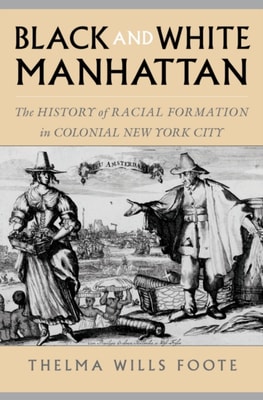
Race first emerged as an important ingredient of New York City's melting pot when it was known as New Amsterdam and was a fledgling colonial outpost on the North American frontier.
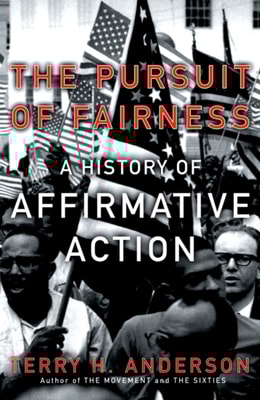
Affirmative action strikes at the heart of deeply held beliefs about employment and education, about the concepts of justice and fairness, and about the troubled history of race relations in America.
Thomas Shapiro reveals how the lack of family assets--inheritance, home equity, stocks, bonds, savings accounts, and other investments-- along with continuing racial discrimination in crucial areas like homeownership dramatically impact the everyday lives of many black families, reversing gains earned in schools and on jobs, and perpetuating the cycle of poverty in which far too many find themselves trapped.
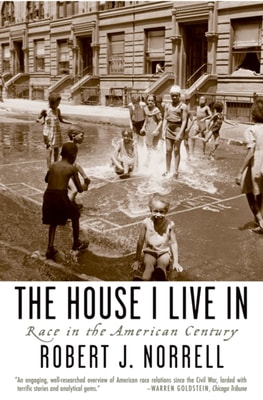
In the last four decades, desegregation has revolutionized almost every aspect of life in the United States: schools, businesses, government offices, even entertainment.
When Tom Gosset's Race: The History of an Idea in America appeared more than a generation ago, it explored the impact of race theory on literature in a way that anticipated the entire current scholarly discourse on the subject.
This study reinterprets a crucial period (1870s-1920s) in the history of women's rights, focusing attention on a core contradiction at the heart of early feminist theory.
Recent flashpoints in Black-Jewish relations--Louis Farrakhan's Million Man March, the violence in Crown Heights, Leonard Jeffries' polemical speeches, the O.
When East European Jews migrated westward in ever larger numbers between 1870 and 1914, both German government officials and the leaders of German Jewry were confronted by a series of new challenges.
The Crucible of Race, a major reinterpretation of black-white relations in the South, was widely acclaimed on publication and compared favorably to two of the seminal books on Southern history: Wilbur J.
This landmark work provides a fundamental reinterpretation of the American South in the years since the Civil War, especially the decades after Reconstruction, from 1877 to 1920.
While some social scientists may argue that we have always been networked, the increased visibility of networks today across economic, political, and social domains can hardly be disputed.
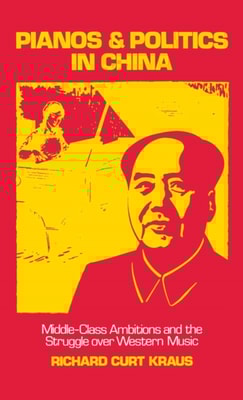
In China, a nation where the worlds of politics and art are closely linked, Western classical music was considered during the cultural revolution to be an imperialist intrusion, in direct conflict with the native aesthetic.
Nelson provides a study of the ways in which Anglo-American authors constructed "e;race"e; in their works from the time of the first British colonists through the period of the Civil War.
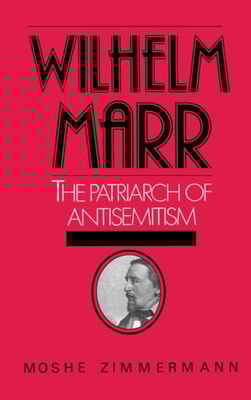
The creation of the term "e;anti-Semitism"e; a century ago signalled a turning point in the history of Jew-hatred, marking the division between the classical, Christian hatred of Jews and the modern, politically-rooted racist attitudes.
On the morning of August 9, 1757, British and colonial officers defending the besieged Fort William Henry surrendered to French forces, accepting the generous "e;parole of honor"e; offered by General Montcalm.
School desegregation and "e;forced"e; busing first brought people to the barricades during the 1960s and 1970s, and the idea continues to spark controversy today whenever it is proposed.
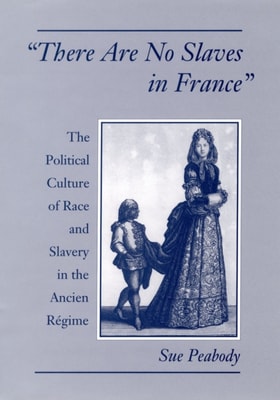
There Are No Slaves in France examines the paradoxical emergence of political antislavery and institutional racism in the century prior to the French Revolution.
Since unification, Germany has experienced profound changes, including the reawakening of xenophobic hate crime, anti-Semitic incidents, and racist violence.
Since the Civil Rights Era of the 1960s, minority groups have seen a tremendous amount of progress, but African Americans, Latinos, and American Indians still remain severely underrepresented in science, engineering, and mathematics.
In this groundbreaking, interdisciplinary study Anne Anlin Cheng argues that we have to understand racial grief not only as the result of racism but also as a foundation for racial identity.
The most dramatic change in American society in the last forty years has been the explosive growth of personal rights, a veritable "e;rights revolution"e; that is perceived by both conservatives and liberals as a threat to traditional values and our sense of community.