Originally published in 1986, White Bolts, Black Locks was a major contribution to the national debate about racism, racial justice and the relationships between the white and black British.
Drawing from original research and recent developments in theory, Researching Social Inequalities in Higher Education brings together insights from multiple national contexts and phases to consider a diverse range of equity issues in higher education.
This volume uses interviews and narratives data from self-identified Black women reflecting on their childhood in the Canadian public school system, to explore voice and agency, girlhood, and identity in Canada's elementary schools.
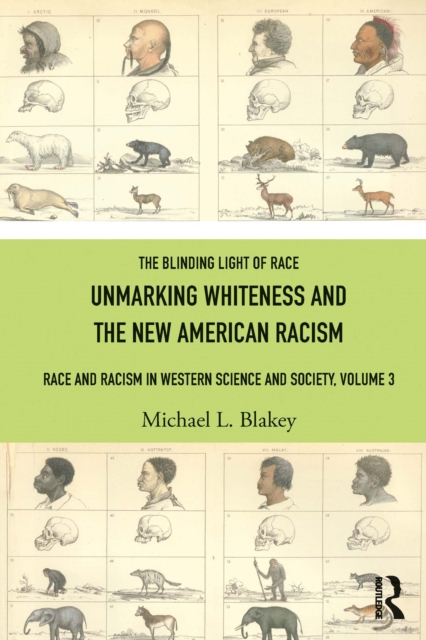
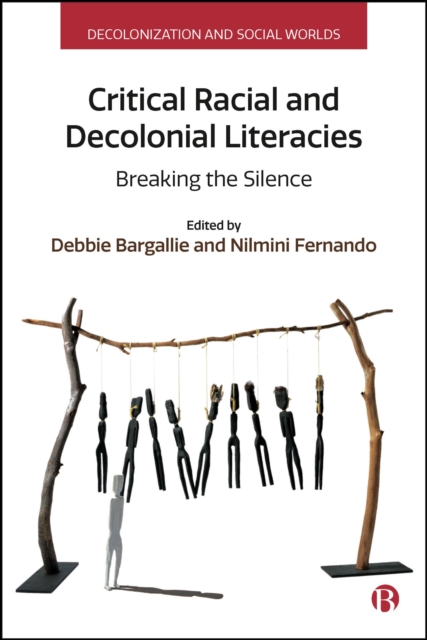
This book criticizes recent performative solutions to racism ("e;diversity"e; programs at universities, for example) and White people's "e;Fragility"e; or intolerance of mature criticism.
Traditionally, the most socially and academically selective UK universities expected students to move from the family home to the institution during term time.
Quan Simone de Beauvoir va publicar 'El segon sexe' (1949) va emprar com a epígraf una frase de 'Sobre la igualtat dels dos sexes' (1673), obra que reconeix explícitament com a referent del feminisme: «Tot el que n'hagen dit els homes [de les dones] ha de ser sospitós, perquè són jutges i part».
When Jodi Bondi Norgaard, an experienced entrepreneur, attempted to shake-up the toy industry with a sports doll that appeals to today's more athletic, adventurous girls, she came to realize the roadblocks to success weren't only reluctant toy buyers, but a patriarchal culture that perpetuates gender roles and sexism.
The Agenda for Social Justice 3: Solutions for 2024 provides accessible insights into some of the most pressing social problems and proposes public policy responses to those problems.
The material presented in this six-volume set moves away from courtly etiquette, adopting a more middle-class, domestic focus, and includes facsimile reproductions of sermons, poems, narratives and cookery books.
Throughout history women have struggled to reclaim their bodies from the meanings and assaults imposed on them by cultural practices, sexual mores, victimization, and concepts of how their bodies should be presented and managed in public, to intimate male partners, or in the workplace.
This timely and compelling volume explores the interdisciplinary perspectives on, and long-term consequences of, emotional neglect on children and adolescents, creating a theoretical model that considers the impact of emotional neglect in distinct phases of development.
sambo is racialised naming, deeply rooted in the colonial legacies of white European settler colonial societies globally, including Australia, the Caribbean, South Africa, the USA, Canada and Latin America.
Traditionally, the most socially and academically selective UK universities expected students to move from the family home to the institution during term time.
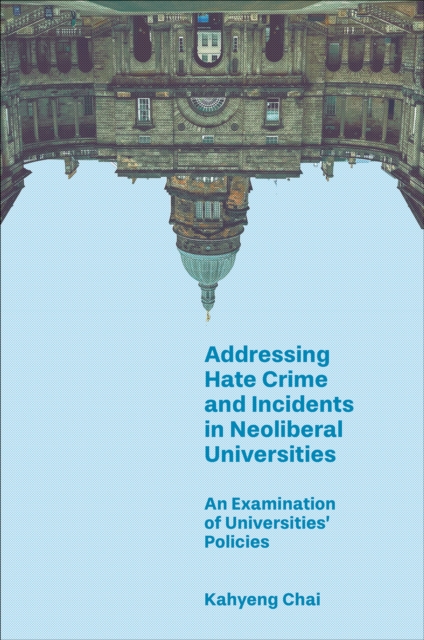
While contemporary European universities are often imagined to be a forward-thinking environment fostering acceptance and inclusivity, universities can be crucial sites for the reproduction of oppression.
Flexible Arbeitszeiten, schnelle Einarbeitung, Sport und frische Luft: Fahrradlieferdienste werben ihre Fahrer:innen mit einem niedrigschwelligen Einstig in den Job.
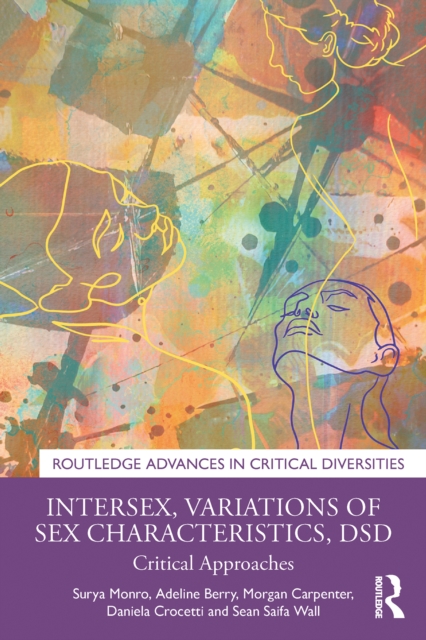
People with variations of sex characteristics (VSC) are born with chromosomal, gonadal, and/or anatomical diversities that do not fit the typical definition of male or female.
Drawing on the perspectives of women and children displaced from Ukraine, as well as local authority policy makers and service providers, this book provides a unique view of the direct and indirect consequences of war in Europe.
How a largely Latino/a workforce of immigration agents reconciles the moral ambiguities of its workImmigration agents have a frontline view of the racial, economic, and legal inequalities that undocumented migration reflectsand yet most agents do not think of the role their jobs play in those inequalities.
Fat Kinship examines the transformative power of self-selected relationships among fat people, exploring how fatness intersects with identity, intimacy, and community to challenge societal stigma and foster belonging.