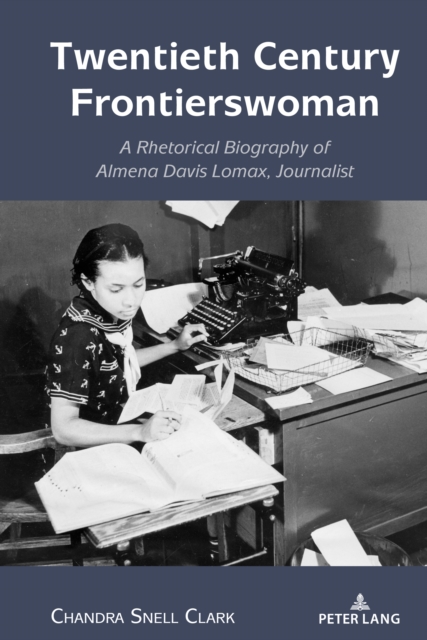
Starting in the early 1900s, many thousands of native Filipinos were conscripted as laborers in American West Coast agricultural fields and Alaska salmon canneries.
This unorthodox account of 1960s Black thought rigorously details the field's debts to German critical theory and explores a forgotten tradition of Black singularity.
In the aftermath of the 1906 San Francisco earthquake, residents of the city's iconic Mission District bucked the city-wide development plan, defiantly announcing that in their neighborhood, they would be calling the shots.
Winner of the 2018 Latin American Studies Association (LASA) Brazil Section Book Prize In 1982, the Brazilian Air Force arrived on the Alcantara peninsula to build a state-of-the-art satellite launch facility.
Evidence of Being opens on a grim scene: Washington DC's gay black community in the 1980s, ravaged by AIDS, the crack epidemic, and a series of unsolved murders, seemingly abandoned by the government and mainstream culture.
This book analyzes racism in Communist and post-Communist contexts, examining the 'Red' promise of an end to racism and the racial logics at work in the Soviet Union, Central and Eastern Europe, Cuba and China, placing these in the context of global racialization.
In a book made especially timely by the disastrous Exxon Valdez oil spill in March 1989, Joseph Jorgensen analyzes the impact of Alaskan oil extraction on Eskimo society.
Beyond the boundaries of the known Christian world during the Middle Ages, there were alien cultures that intrigued, puzzled, and sometimes frightened the people of Europe.
Since the establishment of the Red Army in 1927, China's military has responded to profound changes in Chinese society, particularly its domestic politics, shifting economy, and evolving threat perceptions.
During the Civil War many young Lumbee Indians of North Carolina hid in the swamps to avoid conscription into Confederate labor battalions and carried on a running guerilla war.
Walter Rodney claimed developing countries were heirs to uneven development and ethnic disequilibrium, including continued forms of oppression from the capitalist countries and their own leaders.
This study details how the development and maturation of New Negro politics and thought were shaped not only by New York-based intellectuals and revolutionary transformations in Europe, but also by people, ideas, and organizations rooted in the South.
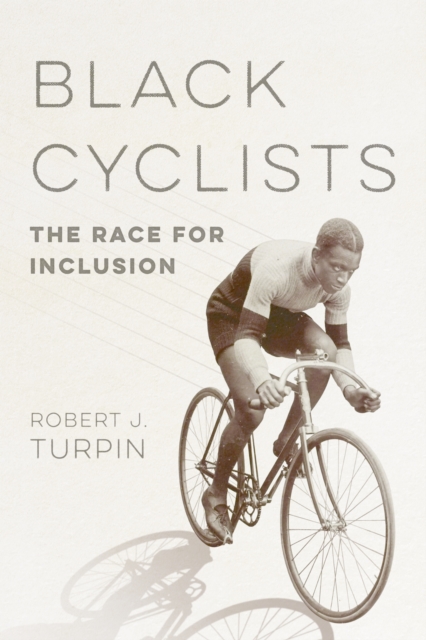
Historical accounts of racial discrimination in transportation have focused until now on trains, buses, and streetcars and their respective depots, terminals, stops, and other public accommodations.
Popular and academic representations of the free mulatta concubine repeatedly depict women of mixed black African and white racial descent as defined by their sexual attachment to white men, and thus they offer evidence of the means to and dimensions of their freedom within Atlantic slave societies.
Created in a world of empires, the United States was to be something new: an expansive republic proclaiming commitments to liberty and equality but eager to extend its territory and influence.
"e;Haff"e;-Breed is a memoir about the trials and tribulations of a mixed-race boy, now man, who grew up on a Indian reservation, traversing through the struggles of family dysfunction and the desire to leave his roots behind but later in life trying to reclaim what it means to be a Jicarilla Apache member and soon find out what it means to be made to feel like you are not.
This book critically examines the historical and ongoing influence of the British Broadcasting Corporation (BBC) on African broadcasting, tracing its colonial roots through to its post-colonial legacy.
A Legacy of Purpose offers an inspiring and timely exploration of how the Leadership Alliance has transformed academic diversity through its three-decade mission to support underrepresented students in pursuing research careers.
Proverbs are the Wisdom and Philosophy of the Tonga People, who live on the North Western shores of Lake Malawi (the "e;Lakeside Tonga"e;), they serve as powerful vehicles to convey moral instructions to young people and may help in character building.
This book offers the reader a portrait - a representation no less - of the social life and culture of the peasant-smallholders of the Shire Highlands, situated in Southern Malawi.
Combining history, ethnography, and culture theory, this book explores how residents in northwestern Malawi have responded over time to the early missionary assertion that local religious and healing practices were incompatible with Christianity and western medicine.
Although there have been a number of studies on Black resistance, very few of these have focused exclusively on such a wide range of resistance campaigns and strategies within a single volume.
In over forty portraits, African writers present extraordinary people from their continent: portraits of the women and men whom they admire, people who have changed and enriched life in Africa.
Facing Mount Kenya, first published in 1938, is a monograph on the life and customs of the Gikuyu people of central Kenya prior to their contact with Europeans.
Oral Literature of the Maasai offers an extensive collection of types of oral literature: oral narratives; proverbs; riddles; and a variety of songs for different occasions.
In Democratic Engineering in Rwanda and Burundi the author argues that a democratic model which is suitable for single-cultural societies may not be applicable in multicultural societies; he illustrates that the liberal and socialist theories have not addressed the issue of national minorities which threatens peace and stability in most African countries.
The importance of integrating indigenous knowledge systems into mainstream social work and ensuring context-specific, culturally relevant practice has long been emphasised in Africa and the Global South.
How does one think about the form of the State in its management of conflicting ethnic groups in positive light in Africa in the present and in the future?
Contemporary social science is a product of the capitalist world-system and Eurocentrism is constitutive of the geoculture of this system characterized by the parochiality of its universalism, assumptions about the superiority of Western civilization and imposition as the sole theory of global progress.
It is important to question some recurrent commonplaces about the (post)colonial order and the preservation of the environment if one wants to reconcile ecocriticism and postcolonial theories.
African societies have rich histories, cultural heritages, knowledge systems, philosophies, and institutions that they have shaped and reshaped through history.
Through multiple points of resistance, The Repressed Expressed underscores how hard it is to build a community in any nation with no beneficial qualities of hope and transparency.
This book questions colonial and apartheid ideologies on being human and being African, ideologies that continue to shape how research is conceptualised, taught and practiced in universities across Africa.
This book critically examines the relevance of the increasingly popular theories on relationality by interfacing those theories with the African [Shona] modes of engagement known as chivanhu [often erroneously narrowly translated as tradition].
This book questions colonial and apartheid ideologies on being human and being African, ideologies that continue to shape how research is conceptualised, taught and practiced in universities across Africa.