Kenneth Garcia presents an edited collection of papers from the 2015 conference on academic freedom at religiously affiliated universities, held at the University of Notre Dame.
This book focuses on the interconnections of religion and migration in the Black Sea region through case studies that explore shifting identities, community, and national boundaries, as well as social practices and networks.
This book is the first work that comprehensively presents the accounts of Lia Eden, a former flower arranger who claims to have received divine messages from the Archangel Gabriel and founded the divine Eden Kingdom in her house in Jakarta.
This book investigates the actions of marriage tribunals by analyzing the richest source of marriage suits extant in Italy, those of the Venetian ecclesiastical tribunal, between 1420 and the opening of the Council of Trent.
This volume brings sustainability studies into creative and constructive conversation with actions, practices, and worldviews from religion and theology supportive of the vision and work of the UN SDGs.
This book is about the basis and scope of impact that Taiwan - a democracy with a population of around 23 million - has on China, the most powerful remaining Leninist state which claims sovereignty over Taiwan and has a population of over 1.
This collection investigates the social and cultural history of trauma to offer a comparative analysis of its individual, communal, and political effects in the twentieth century.
This book explores everyday realities of young Muslim women in Britain, who are portrayed as antithetical to the British way of life in media and political discourse.
This book explores Muslims'civic and political participation in Australia and Germany, shedding light ontheir individual experiences, motives for, and personal implications of theirmulti-faceted engagement.
This book collects multiple disciplinary voices which explore current research and perspectives to discuss how spirituality is understood, interpreted and applied in a range of contexts.
This book highlights research on and examples of redemptive managerial behaviors used in the successful reinstatement and improved performance of employees previously terminated for cause.
This book, steeped in the traditions of both postcolonial theory and Continental philosophy, addresses fundamental questions about God and theology in the postcolonial world.
This book provides a significant new interpretation of China's rapid urbanization by analyzing its impact on the spread of Protestant Christianity in the People's Republic.
This book explores how the women's orchestra at Auschwitz-Birkenau has been remembered in both media and popular culture since the end of the Second World War.
This book draws upon ethical dimensions of Muslim education as a means through which to address contemporary issues, such as social and societal conflicts, exclusion and marginalisation, and violence.
This Year Book, now in its 115th year, provides insight into major trends in the North American Jewish communities and is the Annual Record of the North American Jewish Communities.
This book covers theoretical aspects of Catholic Religious Education in schools and examines them from multiple theoretical and contextual perspectives.
This salient text presents a culturally aware public health approach to the HIV epidemic in Malaysia, a country emblematic of the Muslim world's response to the crisis.
At the present time, when so-called Islamic radicalism, terrorism and Jihadism occupy major media space, with Islam often depicted as the main culprit, the book attempts a tour de force.
This book describes Martin Bucer (1491-1551) as a teacher of theology, focusing on his time as Regius Professor of Divinity at the University of Cambridge between 1549 and 1551.
This book, in its 114th year, provides insight into major trends in the North American Jewish communities, examining the recently completed Pew Report (A Portrait of Jewish American), gender in American Jewish life, national and Jewish communal affairs and the US and world Jewish population.
This edited volume offers a collection of papers that present a comparative analysis of the development of Shari'a in countries with Muslim minorities, such as America, Australia, Germany, and Italy, as well as countries with Muslim majorities, such as Malaysia, Bangladesh, Turkey, and Tunisia.
This book explores the development of the influential worldwide Hizmet movement inspired by the Turkish scholar Fethullah Gulen, known for his moderate Islamic emphasis on peaceful relations among diverse people.
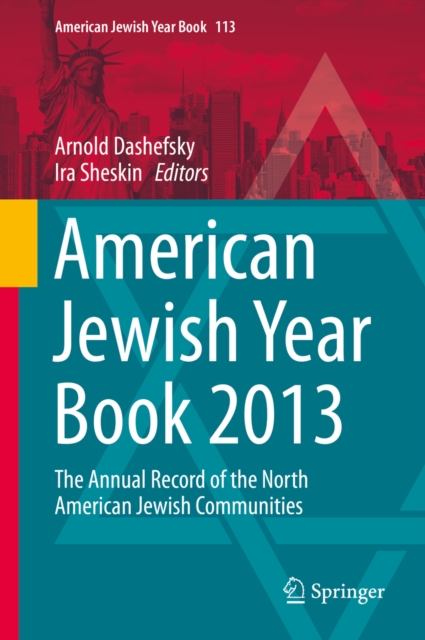
This book, in its 113th year, provides insight into major trends in the North American Jewish community, examining Jewish education, New York Jewry, national and Jewish communal affairs, and the US and world Jewish population.
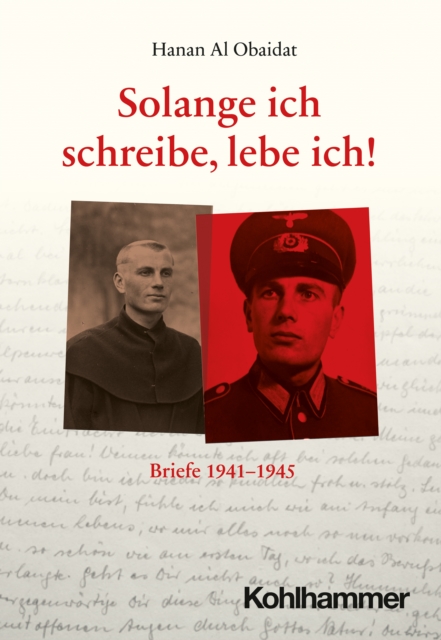
Beim Entrümpeln des Elternhauses findet Hanan Al Obaidat 1998 einen Koffer mit 630 Briefen ihres Großvaters, die ihr Bild von den Großeltern radikal verändern.