Over the second half of the 20th century, American politics was reorganized around race as the tenuous New Deal coalition frayed and eventually collapsed.
Over the second half of the 20th century, American politics was reorganized around race as the tenuous New Deal coalition frayed and eventually collapsed.
The city is a paradoxical space, in theory belonging to everyone, in practice inaccessible to people who cannot afford the high price of urban real estate.
The city is a paradoxical space, in theory belonging to everyone, in practice inaccessible to people who cannot afford the high price of urban real estate.
Not long ago, neighborhoods such as the South Bronx, South Central Los Angeles, and Boston's Roxbury were crime-ridden wastelands of vacant lots and burned-out buildings, notorious symbols of urban decay.
This study explains the parallel development of urbanization and modernization in late nineteenth-century American society, demonstrating how the successful features of big-city life spread across the country and transformed towns all over America.
Reigning theories of urban power suggest that in a world dominated by footloose transnational capital, cities have little capacity to effect social change.
Reigning theories of urban power suggest that in a world dominated by footloose transnational capital, cities have little capacity to effect social change.
In the Americas, debates around issues of citizen's public safety--from debates that erupt after highly publicized events, such as the shootings of Jordan Davis and Trayvon Martin, to those that recurrently dominate the airwaves in Latin America--are dominated by members of the middle and upper-middle classes.
In the Americas, debates around issues of citizen's public safety--from debates that erupt after highly publicized events, such as the shootings of Jordan Davis and Trayvon Martin, to those that recurrently dominate the airwaves in Latin America--are dominated by members of the middle and upper-middle classes.
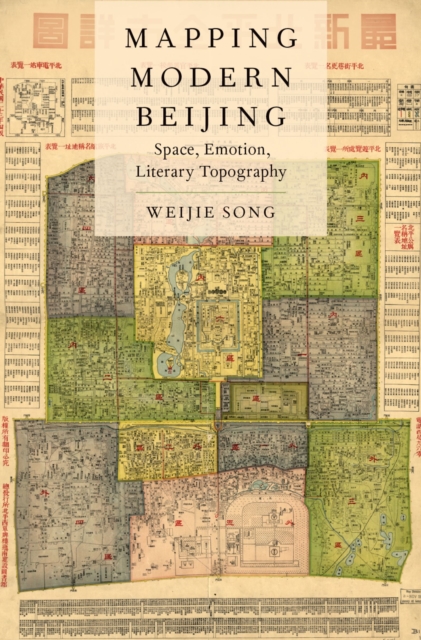
Mapping Modern Beijing investigates the five methods of representing Beijing-a warped hometown, a city of snapshots and manners, an aesthetic city, an imperial capital in comparative and cross-cultural perspective, and a displaced city on the Sinophone and diasporic postmemory-by authors travelling across mainland China, Taiwan, Hong Kong, and overseas Sinophone and non-Chinese communities.
Happy City is the story of how the solutions to this century's problems - from climate change to overpopulation - lie in unlocking the secrets to great city living This is going to be the century of the city.
From Dubai to Amsterdam, Memphis to South Korea, a new phenomenon is reshaping the way we live and transforming the way we do business: the aerotropolis.
'Paris is the World, the rest of the Earth is nothing but its suburbs' - MarivauxIn this intelligently-written and supremely entertaining new history, Colin Jones seeks to give a sense of the city of Paris as it was lived in and experienced over time.
A study which combines personal reminiscences with careful historical research, the myth of the 'good old days' is summarily dispensed with; Robert Roberts describes the period of his childhood, when the main affect of poverty in Edwardian Salford was degredation, and, despite great resources of human courage, few could escape such a prison.
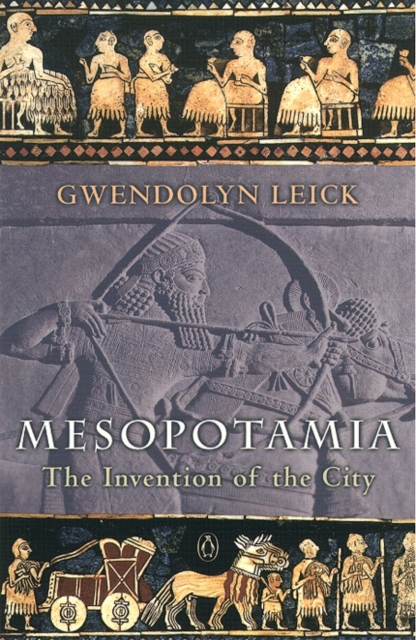
Situated in an area roughly corresponding to present-day Iraq, Mesopotamia is one of the great, ancient civilizations, though it is still relatively unknown.
Surveying the Covid-19 Pandemic and Its Implications: Urban Health, Data Technology and Political Economy explores social, economic, and policy impacts of COVID-19 that will persist for some time.
Sustainable Energy Transition for Cities brings together empirical and applied research in both urban planning and sustainable energy, offering coherent and innovative best practices for urban energy transition planning.
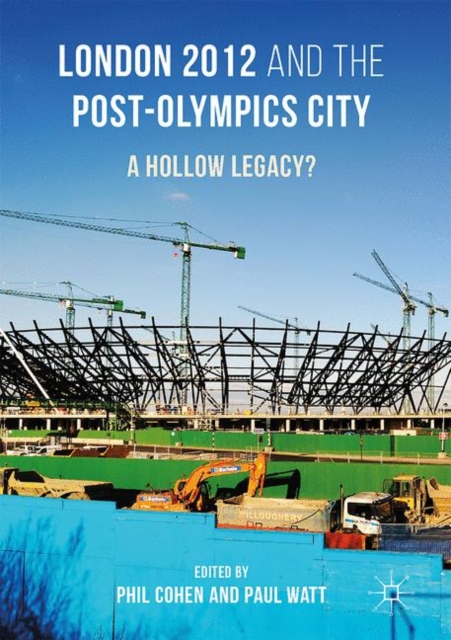
This book brings together a body of new research which looks both backwards and forwards to consider how far the London 2012 Olympic legacy has been delivered and how far it has been a hollow promise.
Implementing Data-Driven Strategies in Smart Cities is a guidebook and roadmap for practitioners seeking to operationalize data-driven urban interventions.
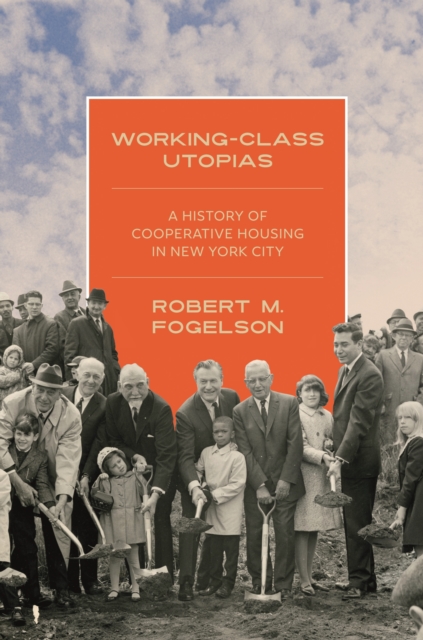
One of the nation's foremost urban historians traces the history of cooperative housing in New York City from the 1920s through the 1970sAs World War II ended and Americans turned their attention to problems at home, union leaders and other prominent New Yorkers came to believe that cooperative housing would solve the city's century-old problem of providing decent housing at a reasonable cost for working-class families.