This book explores how the design characteristics of homes can support or suppress individuals' attempts to create meaning in their lives, which in turn, impacts well-being and delineates the production of health, income, and educational disparities within homes and communities.
This book makes a timely and engaging contribution to geography's resurgent interest in art and artistic practice, as well as to growing geographical concerns with embodied or pre-reflective experience.
This book analyzes how the socio-demographic and cultural diversity of societies affect the social interactions and attitudes of individuals and groups within them.
This book details the current neoliberal restructuring of cities and its impact on the rise and spread of resistance and uprisings in different cities throughout the world.
This book offers new research on urban policy innovations that promote the application of blue-green infrastructure in managing water resources sustainably.
This thought-provoking book is an exploration of the ways religion and diverse forms of mobility have shaped post-apartheid Johannesburg, South Africa.
This book assesses recent migration patterns in Europe, which have significantly included 'return migration' against the stream of East-West migration.
This book provides critical insight into the experience of multi-owned property, and showcases different cultural responses across the Asia-Pacific region.
While urban films often reinforce spatial stereotypes, they can also produce a resistant reading that helps transgress spatial boundaries, especially in in urban contexts where spatial inequalities and urban divisions are stark.
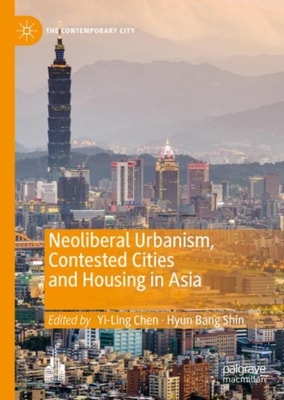
Considering Asian cities ranging from Taipei, Hong Kong and Bangkok to Hanoi, Nanjing and Seoul, this collection discusses the socio-political processes of how neoliberalization entwines with local political economies and legacies of 'developmental' or 'socialist' statism to produce urban contestations centered on housing.
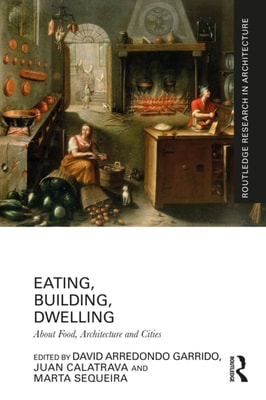
The intricate relationship between food, city and architecture, spanning from ancient civilizations to the present, serves as a focal point for interdisciplinary discourse.
Proposing a renovation of the metaphor of the urban fabric, Interwoven Cities develops an analysis of how cities might be woven into alternative patterns, to better sustain social and ecological life.
As the former capital of two great empires-Eastern Roman and Ottoman-Istanbul has been home to many diverse populations, a condition often glossed as cosmopolitanism.
This interdisciplinary work discusses the construction, maintenance, evolution, and destruction of home and community spaces, which are central to the development of social cohesion.
Pairing cultural analysis in urban contexts with interdisciplinary approaches to political culture, this book argues that recent cultural production in Spain grapples with the conditions and possibilities for social transformation in dialogue with the ongoing crisis, neoliberal governance, and political culture in Spain's democratic history.
In the decade between 1998-2008, Spain became the main destination for Ecuadorian migrants, and Madrid, Spain's capital, became the city with the largest Ecuadorian population outside of Ecuador.
Male Circumcision in Japan offers an analysis of the surgical procedure based on extensive ethnographic investigation, and is framed within historical and current global debates to highlight the significance of the Japanese case.