Houses in Motion: The Experience of Place and the Problem of Belief in Urban Malaysia is about the transformation of urban space and the reordering of the demographic character of Brickfields, one of the oldest neighborhoods in Kuala Lumpur.
With rapid commercialization, a booming urban economy, and the relaxation of state migration policies, over 100 million peasants, known as China's "e;floating population,"e; have streamed into large cities seeking employment and a better life.
Urban transportation problems abound across America, including jammed highways during rush-hours, deteriorating bus service, and strong pressures to build new rail systems.
This book is based on a national literature search focusing on the best practices of cities, of all sizes and geographic locations, intended to maintain public services while holding down taxes.
This work describes the operations of a typical municipal government and examines the many productivity trends that are occurring in city halls across America.
In recent years, the rapidly growing field of community participation has promised to give people formerly excluded from decision making an influential voice about issues that affect their lives.
Community-based research (CBR) offers useful insights into the challenges associated with conducting research and ensuring that it generates both excellent scholarship and positive impacts in the communities where the research takes place.
Community-based research (CBR) offers useful insights into the challenges associated with conducting research and ensuring that it generates both excellent scholarship and positive impacts in the communities where the research takes place.
Media are incorporated into our physical environments more dramatically than ever before - literally opening up new spaces of interactivity and connection that transform the experience of being in the city.
Individual chapters highlight the unique issues related to policy making in this field - the important role of diverse Aboriginal organizations, the need to address Aboriginal and Treaty rights and the right to self-government, and the lack of governmental leadership - revealing a complex jurisdictional and programming maze.
A series of rich case studies examine a range of topics, including neighbourhood gentrification, subway busking, yard sales, electronic waste, and language, refining the touchstone principle of circulation for the study of urban culture, both materially and theoretically.
This collection of original essays serves both the historians and geographers who seek a deeper understanding of Canada's urban past, and the planners, politicians and citizens who seek to preserve or to change their cities today.
Montreal in Evolution presents the rich and complex history of Montreal's architectural and environmental development from the first fort of Ville-Marie to the skyscrapers of today.
Andrew Sancton combines his own broad knowledge of global changes with an outline and comparison of the viewpoints of prominent social scientists to argue that city regions in western liberal democracies will not and cannot be self-governing.
Using capital cities in Australia, Belgium, Canada, Ethiopia, Germany, India, Mexico, Nigeria, South Africa, Switzerland, and the United States as case studies, contributors examine federal policies towards capital cities, with a particular emphasis on how capital cities are funded and governed, and the extent to which the federal government compensates them for their unique role.
Andrew Sancton combines his own broad knowledge of global changes with an outline and comparison of the viewpoints of prominent social scientists to argue that city regions in western liberal democracies will not and cannot be self-governing.
With economic restructuring, demographic shifts, and lifestyle changes, the traditional family - working father, stay-at-home mother, two to three children - is no longer the norm and the need for smaller homes at moderate cost has skyrocketed.
In Community Besieged Garth Stevenson describes the unusual circumstances that allowed English-speaking Quebecers to live in virtual isolation from their francophone neighbours for almost a century after Confederation.
Bonner analyses historical contributions to the urban-rural debate by Karl Marx, Ferdinand Tonnies, Max Weber, Georg Simmel, Louis Wirth, and Robert Redfield, as well as contributions by contemporary theorists, such as Ray Pahl, Anthony Giddens, and Peter Berger.
The town of Arvida provides a field on which we can observe in microcosm the birth of an industrial town and the development of the population's identity as a community.
Rayside conducted informal interviews with more than 150 Glengarrians and attended numerous meetings of local councils, school boards, planning boards, and conservation authorities.
Doucet and Weaver begin this empirical, analytical, and narrative study with an analysis of the evolution of land development as an enterprise and continue with an examination of house design and construction practices, the development of the apartment building, and an account of class and age as they relate to housing tenure.
Using Jane Jacobs' critique of postwar city-building as a starting point, Fowler shows that recent North American urban development has been characterized by development projects on a massive scale, an indiscriminate use of vast areas of land, and an increasingly evident homogeneity.
The contributors to this volume demonstrate the richness and diversity of the social landscapes and communities in Canadian urban centres, emphasizing changes which occurred in the period from the mid 1960s to the early 1990s.
Mi Rinconcito en el Cielo (My Little Corner of the Sky) tells the remarkable story of Alberto "e;Beto"e; Gonzales, who overcame a childhood of poverty, addiction, bigotry, and violence and went on to change the lives of thousands of children and adults as a mentor and gang prevention specialist.
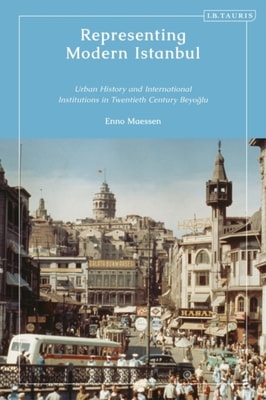
Following the collapse of the Ottoman Empire, Istanbul would lose its position as capital yet remain a crucial urban centre in the new Turkish republic.
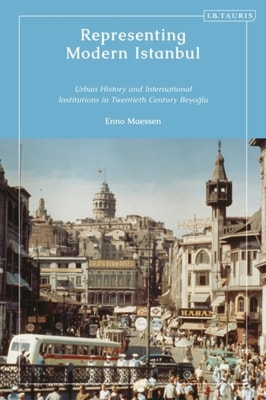
Following the collapse of the Ottoman Empire, Istanbul would lose its position as capital yet remain a crucial urban centre in the new Turkish republic.
Examining the interrelationship between political rhetoric, reactionarygovernments and discriminatory ideologies, this book offers a fuller account of how our views on crime are formed.
Reformatting Agrarian Life presents a stealth urban history from the countryside that foregrounds the mutual entanglements of agrarian and urban expertise.